
Advertisement


Sections
What is the ‘parity clause’ invoked by India to downsize Canada’s diplomatic staff?
Ottawa withdrew 41 of its diplomats last Friday, accusing India of not following the Vienna Convention on Diplomatic Relations. However, External Affairs Minister S Jaishankar has defended New Delhi’s actions of downsizing the Canadian mission on the grounds of the parity clause

The tensions between India and Canada continue, with no signs of it abating. Canada is fuming after India invoked diplomats’ parity as provided by the Vienna Convention and forced the North American country to withdraw 41 of its diplomats on Friday.Speaking on the same, External Affairs Minister S Jaishankar said on Sunday at the Kautilya Economic Conclave, “Parity is very much provided for by the Vienna Convention, which is the relevant international rule on this. In our case, we invoked parity because we had concerns about continuous interference in our affairs by Canadian personnel.“We haven’t made much of that public. My sense is over a period of time more stuff will come out and people will understand why we had the kind of discomfort with many of them which we did,” said the Union minister.The comments come after Canada last Friday withdrew 41 of its 62 diplomats from India, with Ottawa saying that the move was in contravention of the Vienna Convention governing diplomacy. Canadian foreign minister Melanie Joly had said then, “A unilateral revocation of diplomatic privileges and immunities is contrary to international law. Threatening to do so is unreasonable and escalatory. If we allow the norm of diplomatic immunity to be broken, no diplomats anywhere… would be safe.”As the row between the two countries continue – it all began with Ottawa accusing New Delhi of have a role in the slaying of Khalistan leader Hardeep Singh – we take a closer look at what the Vienna Convention is and if India’s actions in line with the laws.The Vienna Convention, explainedThe Vienna Convention on Diplomatic Relations (1961) is a United Nations treaty that sets the rules on how countries should treat diplomatic representatives from other nations, in order to ensure friendly relations and maintain proper communication channels between countries.The Vienna Convention is signed by 61 countries in 1961 and presently, 193 countries, including India and Canada, are party to the document.The Vienna Convention lays out special rules – privileges and immunities – for diplomats, which allows them to act without fear or harassment through enforcement of local laws and to communicate securely with their sending Governments. Apart from the privileges, the Vienna Convention also has rules laid out for a withdrawal of a mission. It could take place on grounds of economic or physical security and breach of diplomatic relations.One of the main points of the Vienna Convention on Diplomatic Relations is diplomatic immunity. Diplomats are granted exemption from certain laws and taxes in the country they are posted. This is done in order to allow them to function without fear, threat or intimidation from the host country.Article 29 of the Convention reads: “The person of a diplomatic agent shall be inviolable. He shall not be liable to any form of arrest or detention. The receiving State shall treat him with due respect and shall take all appropriate steps to prevent any attack on his person, freedom or dignity.”[caption id="attachment_13284362" align="alignnone" width="640"]![]() A man on a bicycle passes by the Canadian High-Commission in New Delhi. Canada on Friday withdrew 41 of its diplomats in India amid the Hardeep Singh Nijjar killing row. Reuters[/caption]Withdrawing diplomats and the Vienna ConventionAmid the Hardeep Singh Nijjar killing row, India had two weeks ago asked Canada to withdraw some of its diplomatic staff and threatened to remove their immunity if they remained.Last Friday, Ottawa withdrew some of their staff from India with Melanie Joly confirming that many Canadian diplomats and their dependents in India have left the country. She said India had said that immunity for “all but 21 diplomats” would be “unilaterally removed” by 20 October.She added that the withdrawal meant that Canada would have to limit its consular services in the country due to a shortage of staff. In fact, operations in Bengaluru, Mumbai, and Chandigarh have been put on hold for now.Also read: Canada removes 41 of its diplomats from India: What happens next?In her announcement in Ottawa, Joly described India’s move as contrary to international law, including the Vienna Convention on Diplomatic Relations.“This action taken by India is completely unreasonable and escalatory. India accredited each and every one of the Canadian diplomats they are now expelling. And all of those diplomats were carrying out their duties in good faith, and to the greater benefit of both countries,” she said.Canadian prime minister Justin Trudeau had also said that India’s decision to revoke diplomatic immunity for his country’s diplomats was making life “unbelievably difficult” for millions of people with ties to that country. “This is a violation of the Vienna Convention governing diplomacy,” Trudeau said. “This is them choosing to contravene a very fundamental principle of international law and diplomacy. It is something that all countries in the world should be very worried about.”However, the Ministry of External Affairs has countered, saying their actions are in line with the Vienna Convention. In a press release, the MEA said, “The state of our bilateral relations, the much higher number of Canadian diplomats in India, and their continued interference in our internal affairs warrant a parity in mutual diplomatic presence in New Delhi and Ottawa.” It added, “Our actions in implementing this parity are fully consistent with Article 11.1 of the Vienna Convention on Diplomatic Relations.”Article 11.1 of the Convention clearly states: “In the absence of specific agreement as to the size of the mission, the receiving State (India) may require that the size of a mission be kept within limits considered by it to be reasonable and normal, having regard to circumstances and conditions in the receiving State and to the needs of the particular mission.”What this means is that the Convention allows the receiving State, in this case India, to decide how many diplomats they want of a foreign country.It’s also important to note here that Article 9 of the Vienna Convention gives the receiving State the right to notify the sending State that any member of the diplomatic staff is considered a persona non grata at any time, including before arrival. After being notified, the sending State must either recall the member or terminate his or her functions.Also read: How the India-Canada diplomatic row could cost Ottawa $700 million in 2024Interestingly, India isn’t the first to take such action. In August 2017, Russia and the United States asked for each other’s diplomats to be recalled on the principle of parity, following a low in their relations.In August this year, Moldova also demanded a reduction of diplomats from Russia on the grounds of parity. Moldova demanded that Russia reduce the number of its embassy’s employees to 10 diplomats and 15 administrative and technical employees by 15 August, to bring them to parity with the employees of the Moldovan embassy in Moscow.The Moldovan deputy prime minister had explained this step by saying that Russian diplomats were suspected of being involved in “unfriendly” activities, “espionage,” and attempts to destabilise the political situation in the country.[caption id="attachment_13284372" align="alignnone" width="640"]
A man on a bicycle passes by the Canadian High-Commission in New Delhi. Canada on Friday withdrew 41 of its diplomats in India amid the Hardeep Singh Nijjar killing row. Reuters[/caption]Withdrawing diplomats and the Vienna ConventionAmid the Hardeep Singh Nijjar killing row, India had two weeks ago asked Canada to withdraw some of its diplomatic staff and threatened to remove their immunity if they remained.Last Friday, Ottawa withdrew some of their staff from India with Melanie Joly confirming that many Canadian diplomats and their dependents in India have left the country. She said India had said that immunity for “all but 21 diplomats” would be “unilaterally removed” by 20 October.She added that the withdrawal meant that Canada would have to limit its consular services in the country due to a shortage of staff. In fact, operations in Bengaluru, Mumbai, and Chandigarh have been put on hold for now.Also read: Canada removes 41 of its diplomats from India: What happens next?In her announcement in Ottawa, Joly described India’s move as contrary to international law, including the Vienna Convention on Diplomatic Relations.“This action taken by India is completely unreasonable and escalatory. India accredited each and every one of the Canadian diplomats they are now expelling. And all of those diplomats were carrying out their duties in good faith, and to the greater benefit of both countries,” she said.Canadian prime minister Justin Trudeau had also said that India’s decision to revoke diplomatic immunity for his country’s diplomats was making life “unbelievably difficult” for millions of people with ties to that country. “This is a violation of the Vienna Convention governing diplomacy,” Trudeau said. “This is them choosing to contravene a very fundamental principle of international law and diplomacy. It is something that all countries in the world should be very worried about.”However, the Ministry of External Affairs has countered, saying their actions are in line with the Vienna Convention. In a press release, the MEA said, “The state of our bilateral relations, the much higher number of Canadian diplomats in India, and their continued interference in our internal affairs warrant a parity in mutual diplomatic presence in New Delhi and Ottawa.” It added, “Our actions in implementing this parity are fully consistent with Article 11.1 of the Vienna Convention on Diplomatic Relations.”Article 11.1 of the Convention clearly states: “In the absence of specific agreement as to the size of the mission, the receiving State (India) may require that the size of a mission be kept within limits considered by it to be reasonable and normal, having regard to circumstances and conditions in the receiving State and to the needs of the particular mission.”What this means is that the Convention allows the receiving State, in this case India, to decide how many diplomats they want of a foreign country.It’s also important to note here that Article 9 of the Vienna Convention gives the receiving State the right to notify the sending State that any member of the diplomatic staff is considered a persona non grata at any time, including before arrival. After being notified, the sending State must either recall the member or terminate his or her functions.Also read: How the India-Canada diplomatic row could cost Ottawa $700 million in 2024Interestingly, India isn’t the first to take such action. In August 2017, Russia and the United States asked for each other’s diplomats to be recalled on the principle of parity, following a low in their relations.In August this year, Moldova also demanded a reduction of diplomats from Russia on the grounds of parity. Moldova demanded that Russia reduce the number of its embassy’s employees to 10 diplomats and 15 administrative and technical employees by 15 August, to bring them to parity with the employees of the Moldovan embassy in Moscow.The Moldovan deputy prime minister had explained this step by saying that Russian diplomats were suspected of being involved in “unfriendly” activities, “espionage,” and attempts to destabilise the political situation in the country.[caption id="attachment_13284372" align="alignnone" width="640"]![]() A sign asking for an investigation on India's role in the killing of Hardeep Singh Nijjar is seen at the Guru Nanak Sikh Gurdwara temple, in Surrey, British Columbia, Canada. File image/Reuters[/caption]US, UK react to India-Canada spatEarlier, on Saturday, the United States and the United Kingdom lent support to Canada on the issue, expressing concern on the issue.“We are concerned by the departure of Canadian diplomats from India, in response to the Indian government’s demand of Canada to significantly reduce its diplomatic presence in India,” US State Department spokesperson Matthew Miller said.Britain’s Foreign Office also said that it “did not agree with the decisions taken by the Indian government that have resulted in a number of Canadian diplomats departing India”. Britain's Foreign Office also cited the Vienna Convention. It said “the unilateral removal of the privileges and immunities that provide for the safety and security of diplomats is not consistent with the principles or the effective functioning of the Vienna Convention”.The deterioration of ties between India and Canada began in September after Trudeau accused the Indian government of being involved in the killing of Khalistani leader Hardeep Singh Nijjar. New Delhi vehemently denied what it called an “absurd” allegation and responded by suspending visa services in all categories for Canadian nationals due to “security threats” to its consulates.However, on Sunday, External Affairs Minister S Jaishankar said that it might resume visa services for Canadian nationals “very, very soon”.With inputs from agencies
A sign asking for an investigation on India's role in the killing of Hardeep Singh Nijjar is seen at the Guru Nanak Sikh Gurdwara temple, in Surrey, British Columbia, Canada. File image/Reuters[/caption]US, UK react to India-Canada spatEarlier, on Saturday, the United States and the United Kingdom lent support to Canada on the issue, expressing concern on the issue.“We are concerned by the departure of Canadian diplomats from India, in response to the Indian government’s demand of Canada to significantly reduce its diplomatic presence in India,” US State Department spokesperson Matthew Miller said.Britain’s Foreign Office also said that it “did not agree with the decisions taken by the Indian government that have resulted in a number of Canadian diplomats departing India”. Britain's Foreign Office also cited the Vienna Convention. It said “the unilateral removal of the privileges and immunities that provide for the safety and security of diplomats is not consistent with the principles or the effective functioning of the Vienna Convention”.The deterioration of ties between India and Canada began in September after Trudeau accused the Indian government of being involved in the killing of Khalistani leader Hardeep Singh Nijjar. New Delhi vehemently denied what it called an “absurd” allegation and responded by suspending visa services in all categories for Canadian nationals due to “security threats” to its consulates.However, on Sunday, External Affairs Minister S Jaishankar said that it might resume visa services for Canadian nationals “very, very soon”.With inputs from agencies
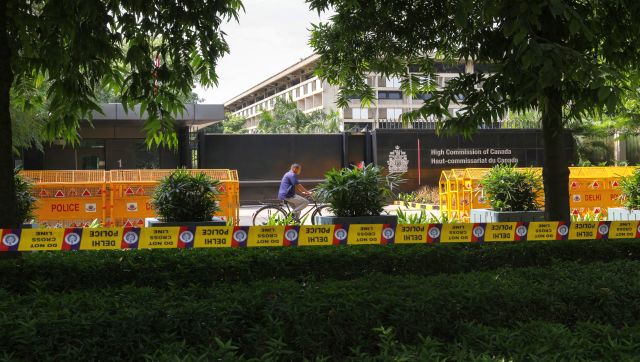 A man on a bicycle passes by the Canadian High-Commission in New Delhi. Canada on Friday withdrew 41 of its diplomats in India amid the Hardeep Singh Nijjar killing row. Reuters[/caption]Withdrawing diplomats and the Vienna ConventionAmid the Hardeep Singh Nijjar killing row, India had two weeks ago asked Canada to withdraw some of its diplomatic staff and threatened to remove their immunity if they remained.Last Friday, Ottawa withdrew some of their staff from India with Melanie Joly confirming that many Canadian diplomats and their dependents in India have left the country. She said India had said that immunity for “all but 21 diplomats” would be “unilaterally removed” by 20 October.She added that the withdrawal meant that Canada would have to limit its consular services in the country due to a shortage of staff. In fact, operations in Bengaluru, Mumbai, and Chandigarh have been put on hold for now.Also read: Canada removes 41 of its diplomats from India: What happens next?In her announcement in Ottawa, Joly described India’s move as contrary to international law, including the Vienna Convention on Diplomatic Relations.“This action taken by India is completely unreasonable and escalatory. India accredited each and every one of the Canadian diplomats they are now expelling. And all of those diplomats were carrying out their duties in good faith, and to the greater benefit of both countries,” she said.
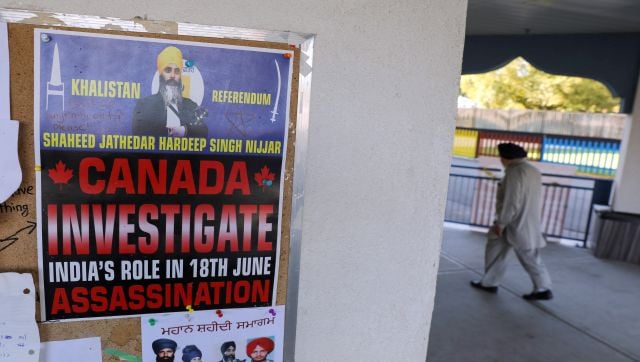 A sign asking for an investigation on India's role in the killing of Hardeep Singh Nijjar is seen at the Guru Nanak Sikh Gurdwara temple, in Surrey, British Columbia, Canada. File image/Reuters[/caption]US, UK react to India-Canada spatEarlier, on Saturday, the United States and the United Kingdom lent support to Canada on the issue, expressing concern on the issue.“We are concerned by the departure of Canadian diplomats from India, in response to the Indian government’s demand of Canada to significantly reduce its diplomatic presence in India,” US State Department spokesperson Matthew Miller said.Britain’s Foreign Office also said that it “did not agree with the decisions taken by the Indian government that have resulted in a number of Canadian diplomats departing India”. Britain's Foreign Office also cited the Vienna Convention. It said “the unilateral removal of the privileges and immunities that provide for the safety and security of diplomats is not consistent with the principles or the effective functioning of the Vienna Convention”.The deterioration of ties between India and Canada began in September after Trudeau accused the Indian government of being involved in the killing of Khalistani leader Hardeep Singh Nijjar. New Delhi vehemently denied what it called an “absurd” allegation and responded by suspending visa services in all categories for Canadian nationals due to “security threats” to its consulates.However, on Sunday, External Affairs Minister S Jaishankar said that it might resume visa services for Canadian nationals “very, very soon”.With inputs from agencies
First Published:Oct 23, 2023, 09:57:30 IST
Advertisement
Advertisement

Who is Sandeep Lamba, the Delhi cop removed from protest site duty after slapping female protester?
Sandeep Lamba, an Additional Deputy Commissioner of Police (DCP) (North East District), was seen slapping a female CJP protester in a video on July 20. Lamba has now been removed from the protest site and sent back to his original station. In 2021, Lamba was awarded the Union Home Minister’s medal for excellent investigation
4 min read
Explorers discover wreckage of plane 72 years later. Will this help in finding MH370?
On April 11, 1952, a Pan Am Flight 526A, crashed into the Atlantic Ocean, killing 52 of the 69 people on board. After decades of effort, explorers have found the wreck of the plane at the bottom of the seabed near Puerto Rico. The discovery offers new hope to families who lost loved ones in the Malaysia Airlines Flight 370 crash in 2014
5 min read
Cruise missiles, drones and more... The deadly arsenal of the Houthis
The Houthis have evolved into one of the world's most formidable non-state military forces, deploying anti-ship ballistic missiles, cruise missiles, drones and explosive boats to threaten Red Sea shipping. Their latest attacks on Saudi oil tankers have raised concerns over shipping through the Bab el-Mandeb Strait amid the Strait of Hormuz crisis
10 min read
Why India may not witness a medal rush at 2026 Commonwealth Games
A 125-strong Indian contingent is in Glasgow for the 2026 Commonwealth Games, starting today (July 23), chasing international glory. However, with a roster of sports such as badminton and wrestling being cut from the event, the country’s medal chances have been drastically reduced
4 min read
Delhi Police asks personnel to wear uniform: What the law says on cops in plainclothes during protests
The Delhi Police has instructed all its personnel to wear uniforms when they report for duty at Jantar Mantar for crowd control. This comes after outrage grew over videos of men in civilian clothes or without name tags hitting protesters in the Capital. Is it legal for the police to ditch uniforms during protests?
4 min read
Advertisement
Advertisement