


Explained: India’s ban on sugar exports and how it will make chocolates, desserts costlier
India has prohibited the export of raw, white and refined sugar until September 30, 2026, or until further orders. The government’s notification on Wednesday comes as the country’s sugar output is likely to fall below consumption for a second straight year. As India is the second largest exporter of the sweetener, the move is expected to make sugar costlier for the world

India has banned the export of raw, white and refined sugar until September in a bid to rein in domestic prices. However, there are some exceptions to this order.
In recent years, New Delhi has taken similar measures due to a fall in production of the sweetener. As concerns about a gap in production and consumption widen, India has again prohibited sugar exports.
Let’s take a closer look.
India bars sugar exports
India has banned the export of sugar until September 30, 2026, or until further orders, the government said in a notification on Wednesday (May 13).
It amended the export policy from “restricted” to “prohibited” for raw, white and refined sugar.
However, shipments already in the export pipeline will be allowed to proceed under specified conditions, the Directorate General of Foreign Trade (DGFT) said in a statement.
 More from Explainers
The government said consignments will be permitted if the loading of sugar on the ship commenced before the publication of the notification in the Official Gazette.
Exports will be authorised where a shipping bill had been filed and the vessel had already berthed, arrived or anchored at an Indian port.
Consignments handed over to customs or custodians before the notification will also be allowed.
The notification also clarified that the export ban does not apply to the European Union (EU) and the United States under the existing tariff-rate quota scheme.
"The export of sugar shall be allowed on the basis of permission granted by the Government of India to other countries to meet their food security needs and based on the request of their governments," the order read.
How much sugar does India export?
India is the world's second-largest sugar producer and exporter after Brazil. The South Asian country's sugar production stood at 27.12 million tonnes in the first half of the 2025-26 marketing year, ending in September 2026.
India exported 3.15 lakh tonnes of sugar during October-February in the 2025-26 marketing year, the All India Sugar Trade Association (AISTA) said in March, as per PTI.
Of this, white sugar made up 2,57,971 tonnes of total shipments, followed by refined sugar at 53,664 tonnes.
The United Arab Emirates (UAE) remained the top destination for Indian sugar exports, receiving 79,683 tonnes. Afghanistan procured 71,813 tonnes of sugar from India, followed by Djibouti (45,801 tonnes) and Tanzania (21,330 tonnes).
In February, India had increased its sugar export quota to 2 million tonnes, including approving an additional 500,000 tonnes.
How will India’s ban impact sugar prices?
India’s ban on exports comes as sugar production is expected to fall below consumption for a second year in a row, trade officials told the Reuters news agency last month.
Before the season began, industry bodies such as the Indian Sugar & Bio-Energy Manufacturers Association (ISMA) and the National Federation of Cooperative Sugar Factories Ltd (NFCSF) had predicted output of around 31 million tonnes compared with local demand of 28.5 to 29 million tonnes.
NFCSF data revealed that lower cane yields due to excessive precipitation forced 467 of the 541 sugar mills that kick-started operations this year to close by the end of March.
"The government allowed exports hoping for a large surplus. But now it is certain that production will not even meet domestic consumption," a New Delhi-based dealer with a global trade house told the news agency in April.
There are concerns due to forecasts of El Niño weather conditions that could suppress this year's monsoon. It has also increased worries that next season's output could plunge below initial estimates.
As India is a major exporter of sugar, the ban could disrupt the supply of the sweetener, potentially leading to a surge in global sugar prices. This is also likely as output is at risk in other sugar-producing countries due to weather-related challenges.
Of the 1.59 million metric tonnes of sugar approved for export, traders signed contracts for about 800,000 tonnes, Reuters reported. Of this, more than 600,000 tons have already been shipped, dealers told the news agency.
India's ban on sugar exports will benefit rival producers, such as Brazil and Thailand, to boost shipments to Asian and African buyers.
"The government had provided additional export quotas in February, which encouraged traders to sign export deals. It will now be a headache for traders to fulfill those export orders," a Mumbai-based dealer with a global trade house was quoted as saying.
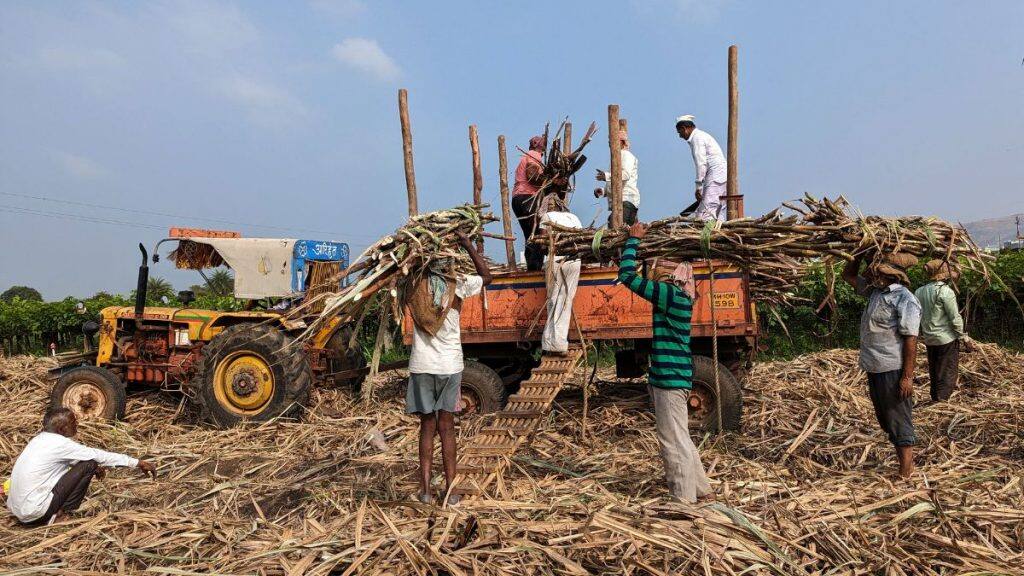
Following India's announcement on Wednesday, New York raw sugar futures enhanced gains to over two per cent, while London white sugar futures rose three per cent.
The step comes as officials fear that continued sugar exports are likely to reduce India's buffer stocks as global supply chains remain volatile due to geopolitical tensions, as per Economic Times (ET). The ban is expected to affect countries in Asia, Africa and West Asia that are highly reliant on India for their sugar needs.
Sugar is a staple in Indian households and its supply also affects the food and beverage industry.
Government sources told Reuters that the Centre is trying to avoid a situation where domestic prices jump sharply due to speculative demand or supply disruptions associated with higher fuel and shipping costs.
With inputs from agencies
Tags

Who is Sandeep Lamba, the Delhi cop removed from protest site duty after slapping female protester?
Explorers discover wreckage of plane 72 years later. Will this help in finding MH370?
Cruise missiles, drones and more... The deadly arsenal of the Houthis
Why India may not witness a medal rush at 2026 Commonwealth Games
Delhi Police asks personnel to wear uniform: What the law says on cops in plainclothes during protests