


In Graphics | Will COP28's UAE Consensus spell doom for fossil fuels?
The controversial COP28 summit concluded in Dubai on Wednesday with the UAE Consensus. Let’s examine its key takeaways, other deals achieved, why it matters and why it may not be enough

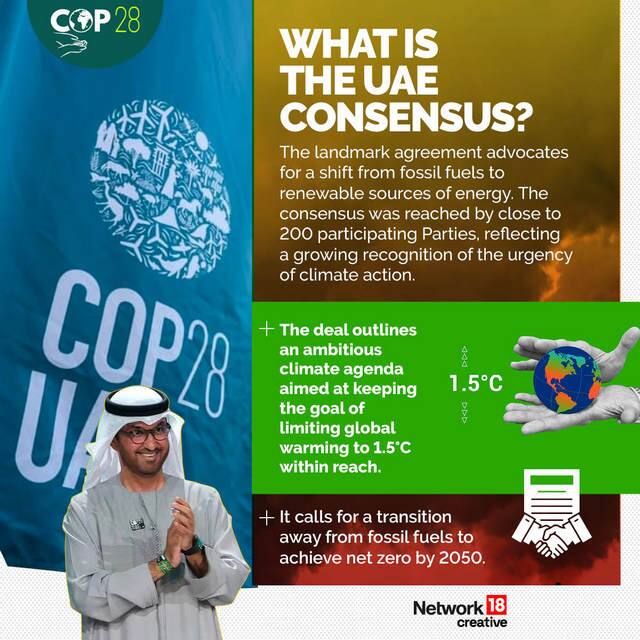
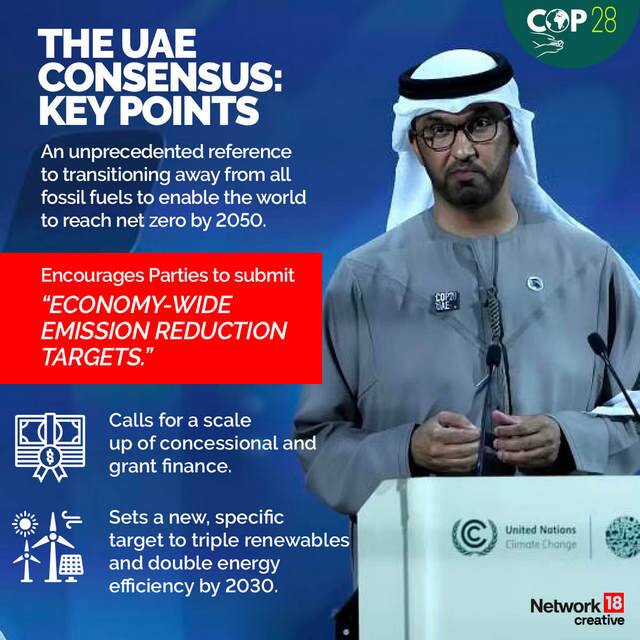
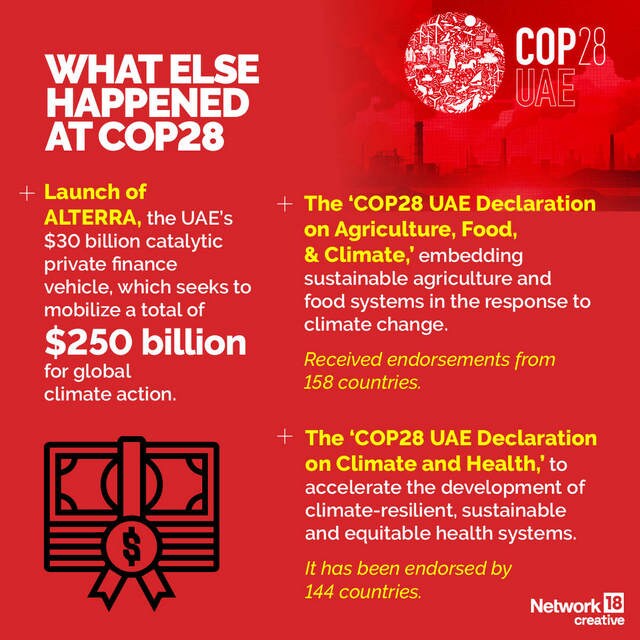
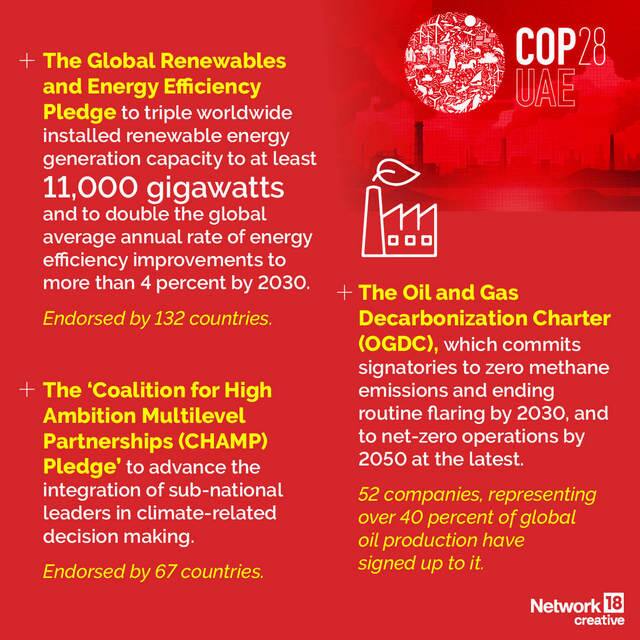
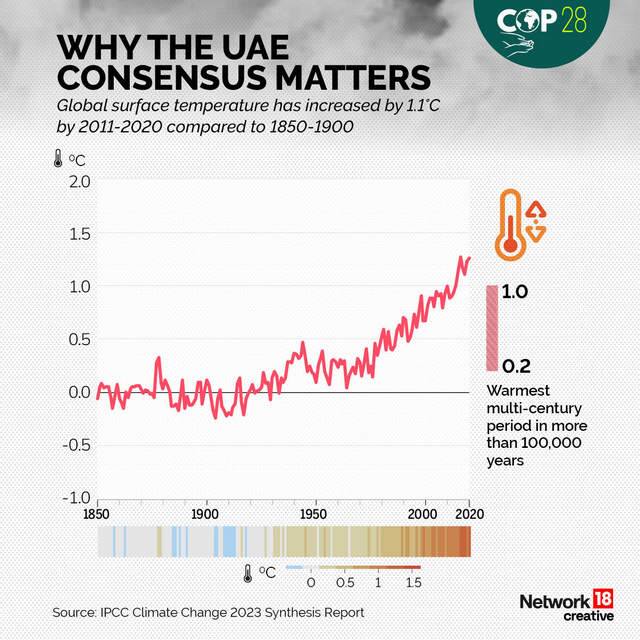
The COP28 concluded in Dubai on Wednesday with a deal known as the UAE Consensus.The controversial summit this year – the hottest in recorded history – was headed up by the UAE’s Sultan al-Jaber.The deal, a compromise wrestled out of countries with sharply conflicting interests by the oil-rich United Arab Emirates, calls for “transitioning away from fossil fuels in energy systems, in a just, orderly and equitable manner.”However, the deal did not name the main driver of planet-heating pollution.With rapidly-accelerating climate impacts slamming communities across the planet, observers said this was both a major milestone and the very minimum needed to steer the world onto a safer track.The bigger challenge will be turning the promise of the COP28 agreement into sweeping global decarbonisation that comes close to the goal of limiting warming to 1.5 degrees Celsius from preindustrial levels.Let’s take a closer look at the UAE Consensus, the key takeaways, the other deals achieved in Dubai, why it matters and why it may not be enough: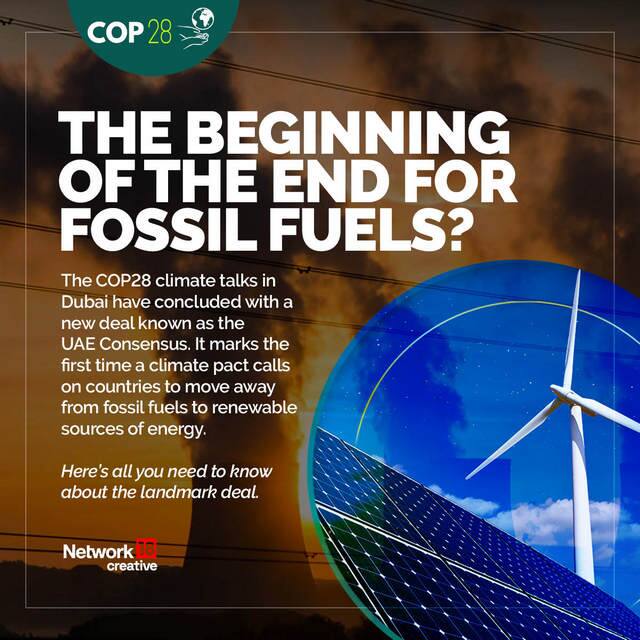

Military drones & police check-ups: How Sri Lanka is fighting against worst dengue outbreak in a decade
How Facebook job ad lured 2 Karnataka men into Myanmar cyber scam camp
Why is India seeing 95% cloud cover despite a Super El Niño?
What is CJP’s fourth demand to the government as protests in Delhi intensify?
The new geography of war: Why the Houthis can no longer be ignored