


In Graphics | Why 2023 was the hottest year on record
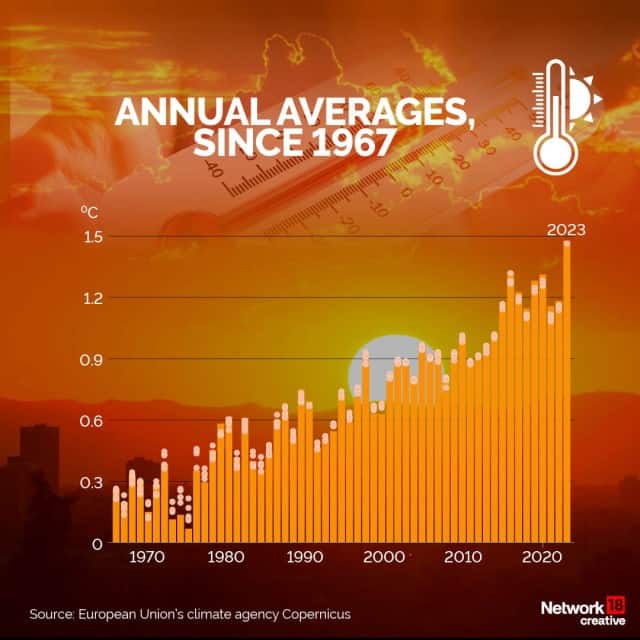
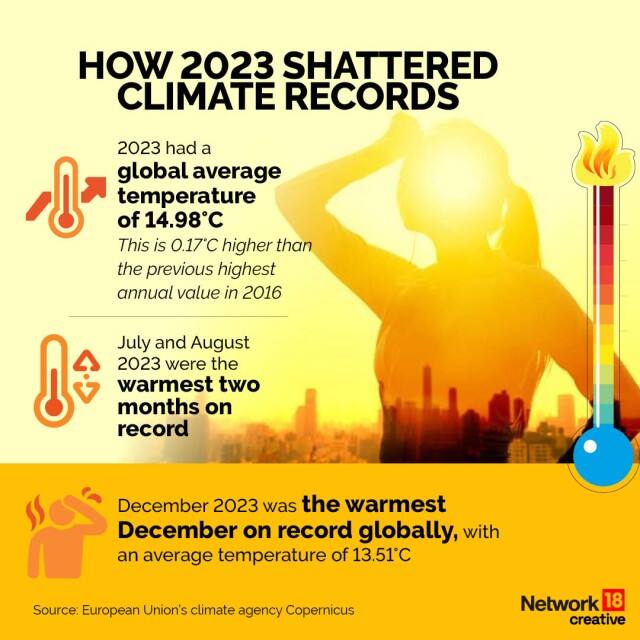
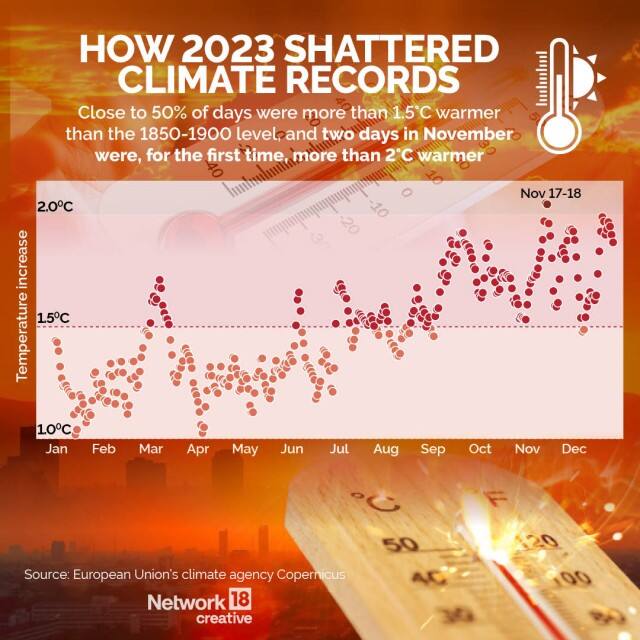
2023 goes as the warmest calendar year in world temperature data records dating back to 1850. With 1.48 degrees Celsius, Earth verged on the global warming threshold and showed symptoms of a feverish planet. As January 2024 is also on track to be warm, we look at the reasons why 2023 was so hot

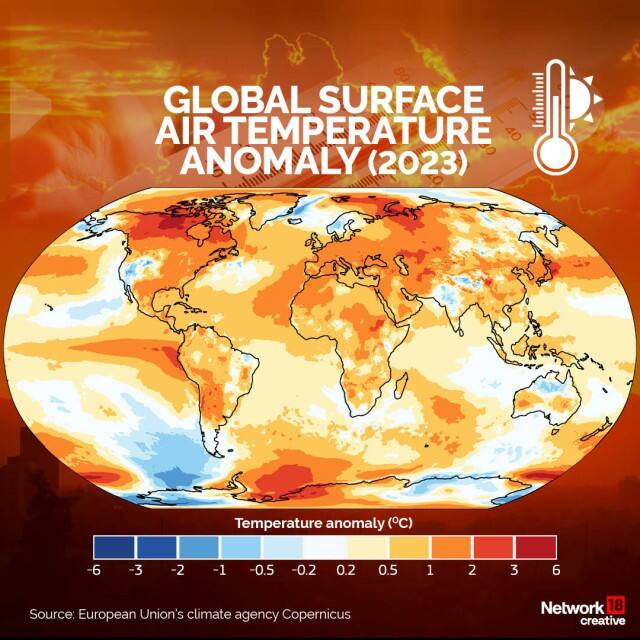
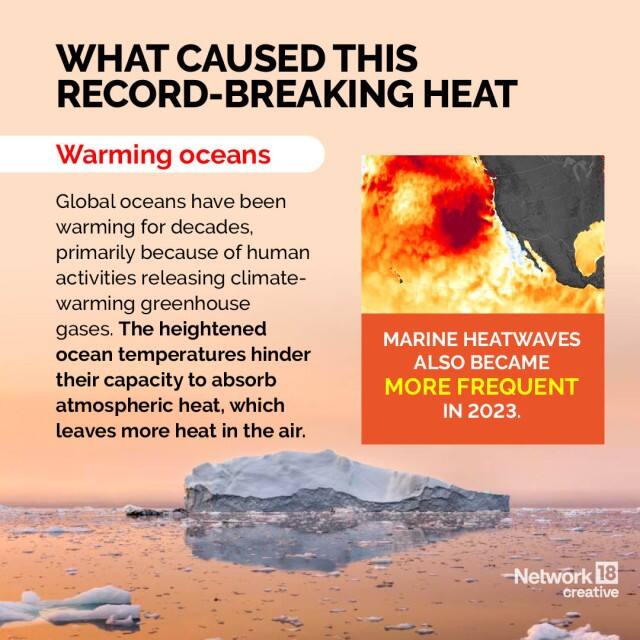
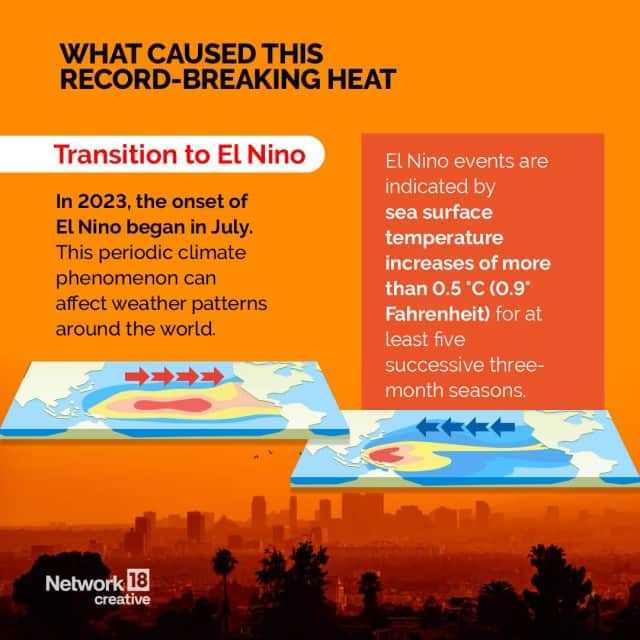
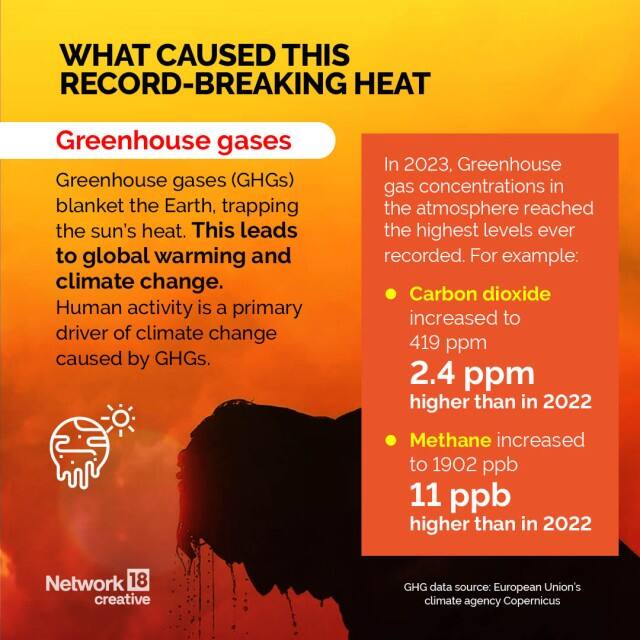
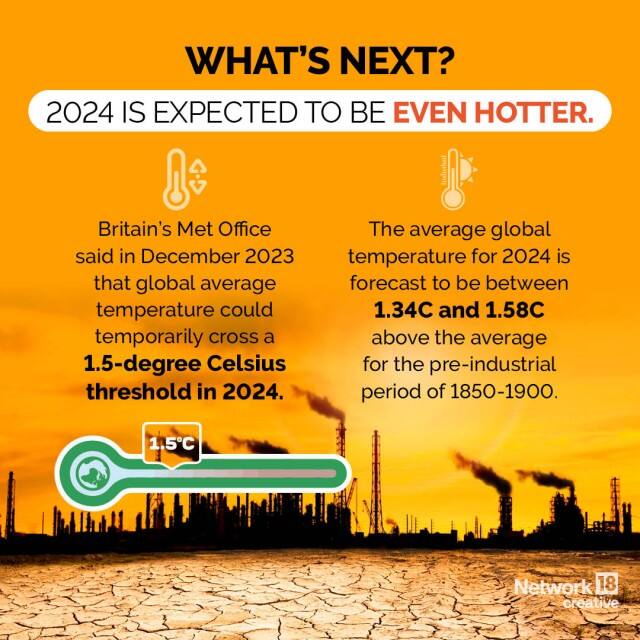
2023 was the warmest calendar year in global temperature data records dating back to 1850, according to a report released on Tuesday by the European Climate Agency.Earth broke all previous records for annual heat, verged on the global warming threshold, and displayed additional symptoms of a feverish planet last year, the report said.The European Union's climate agency, Copernicus, added the year was 1.48 degrees Celsius (2.66 degrees Fahrenheit) above pre-industrial times. That’s barely below the 1.5 degree Celsius limit that the world hoped to stay within in the 2015 Paris climate accord to avoid the most severe effects of warming. The record heat made life miserable and sometimes deadly in Europe, North America, China, and many other places last year.Scientists claim that additional extreme weather events, such as the prolonged drought that devastated the Horn of Africa, the torrential rains that destroyed dams and killed thousands in Libya, and the wildfires in Canada that polluted the air between North America and Europe, are also caused by global warming.January 2024 is also on track to be so warm that, for the first time, a 12-month period will exceed the 1.5 degree threshold, Copernicus Deputy Director Samantha Burgess said, according to The Associated Press.The 1.5 degree goal “has to be (kept) alive because lives are at risk and choices have to be made,” Burgess said, adding, “And these choices don’t impact you and I but they impact our children and our grandchildren.”But why was 2023 the hottest year? Let's take a closer look.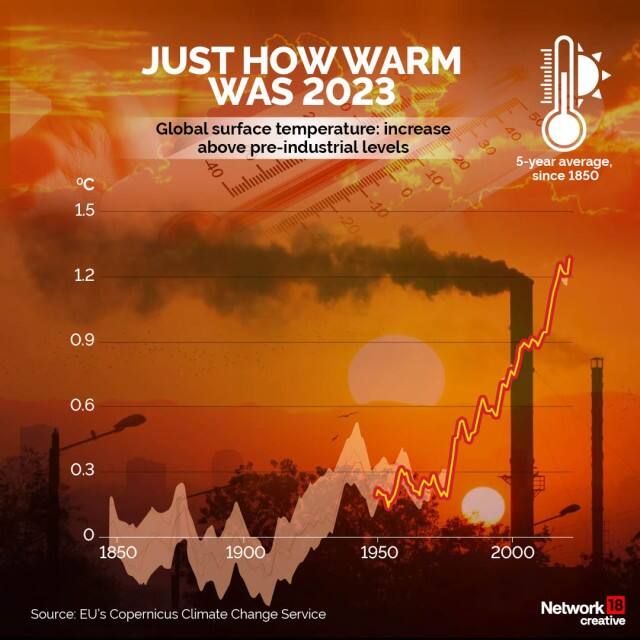
 All creatives designed by Network18

Military drones & police check-ups: How Sri Lanka is fighting against worst dengue outbreak in a decade
How Facebook job ad lured 2 Karnataka men into Myanmar cyber scam camp
Why is India seeing 95% cloud cover despite a Super El Niño?
What is CJP’s fourth demand to the government as protests in Delhi intensify?
The new geography of war: Why the Houthis can no longer be ignored