


In Graphics | The devastating impact of cyclones
Cyclones Tej and Hamoon, which have developed over the north Indian Ocean, are considered twin cyclonic storms. This occurrence last happened in 2018 when ‘Luban’ and ‘Titli’ hit. What happens when cyclones make landfall and how devastating can they be?

The Indian Ocean experienced twin cyclonic storms this week – Cyclone Tej, which brewed over the southwest Arabian Sea, and Cyclone Hamoon which formed in the Bay of Bengal. In 2018, twin cyclones, ‘Luban’ and ‘Titli’, had formed over the north Indian Ocean.
Cyclone Hamoon intensified into a very severe cyclonic storm on Tuesday (24 October), according to the Indian Meteorological Department (IMD). It is currently centered around 290 km east of Odisha's Paradip, 270 km southeast of Digha in West Bengal, and 230 km south-southwest of Bangladesh's Khepupara.
The weather agency has forecast that the cyclone will “weaken gradually while moving northeastwards and cross Bangladesh coast between Khepupara and Chittagong” by Wednesday evening moving with a wind speed of 65 to 75 kmph gusting to 85 kmph.
Cyclone Hamoon is not likely to have a major impact on the Indian coast, as per the IMD.
 More from Explainers
Tropical Cyclone Tej crossed the Yemen coast Tuesday morning, weakening into a severe cyclonic storm. The IMD predicted it has now weakened into a cyclonic storm and would turn into a deep depression later in the day. Tej is only the second storm to make landfall in Yemen as a very severe cyclonic storm since November 2015 when Tropical Cyclone Chapala had hit.
Amid all these discussions about cyclones, let’s learn through graphics at how devastating these storms can be.


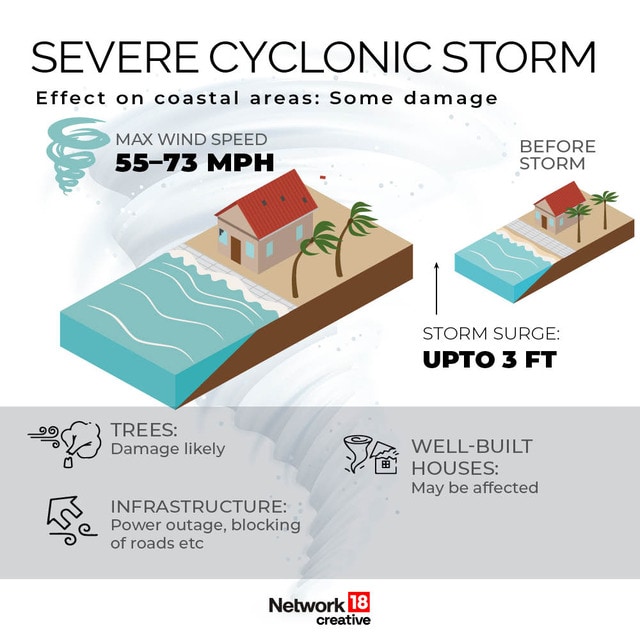
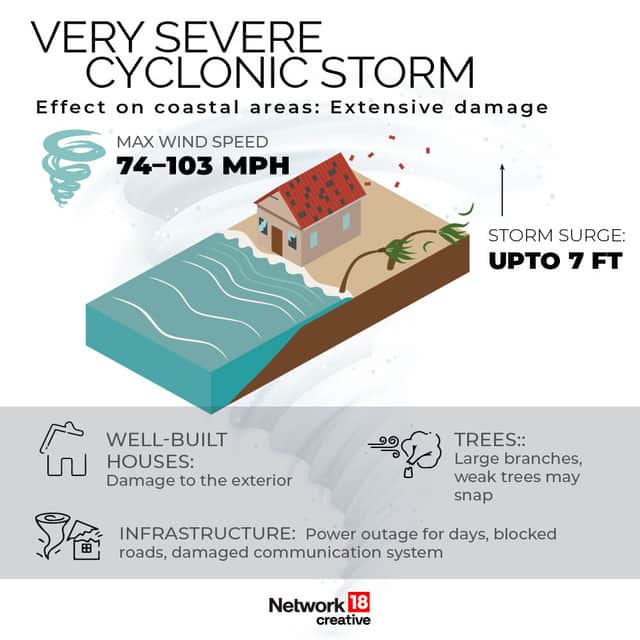
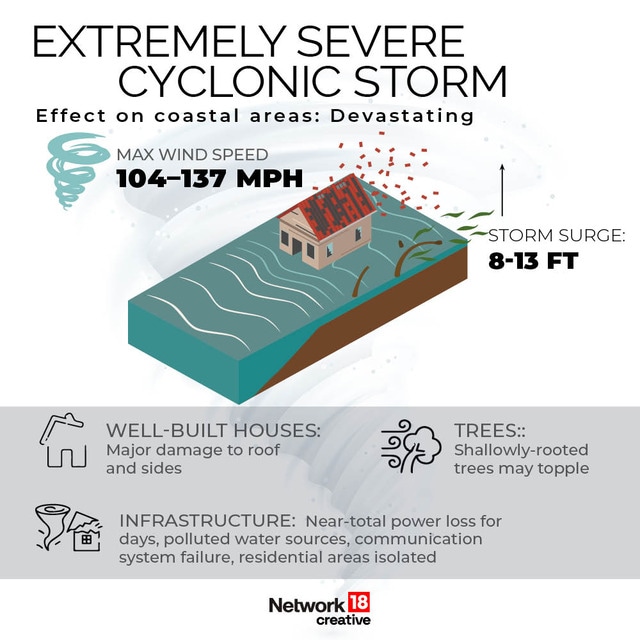
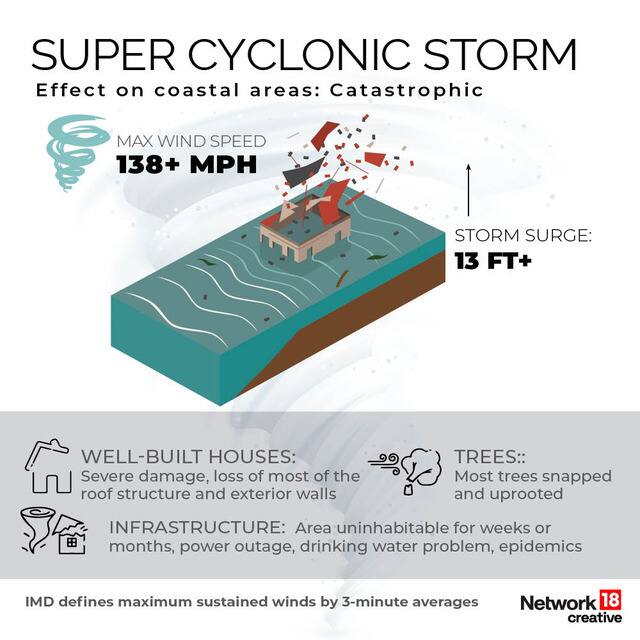
All creatives designed by News18

Military drones & police check-ups: How Sri Lanka is fighting against worst dengue outbreak in a decade
How Facebook job ad lured 2 Karnataka men into Myanmar cyber scam camp
Why is India seeing 95% cloud cover despite a Super El Niño?
What is CJP’s fourth demand to the government as protests in Delhi intensify?
The new geography of war: Why the Houthis can no longer be ignored