


In graphics | How anti-smog guns can help fight Delhi's air pollution
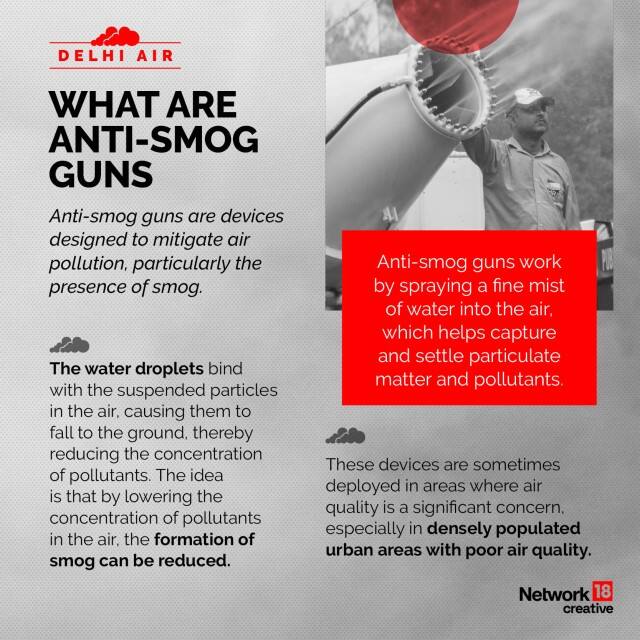
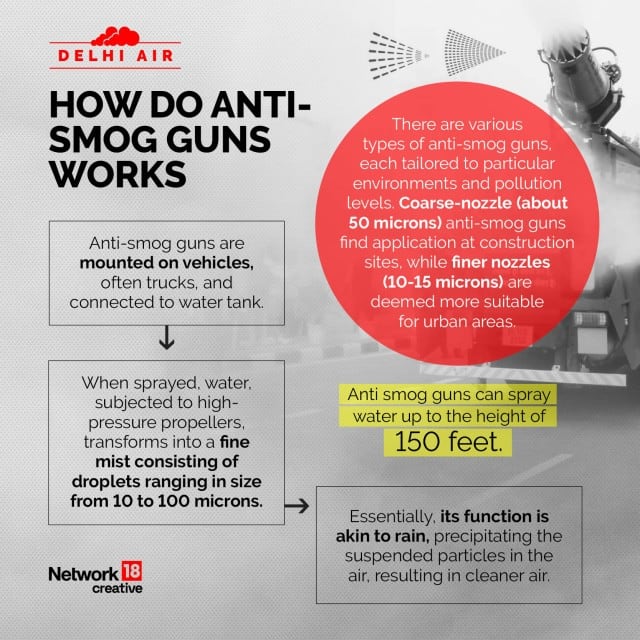
In New Delhi, one of the cities in India that suffers from extreme pollution, anti-smog guns and sprinklers have been deployed. The device produces an ultra-fine fog with minuscule water droplets by utilising high-pressure water fogging along with turbo airflow

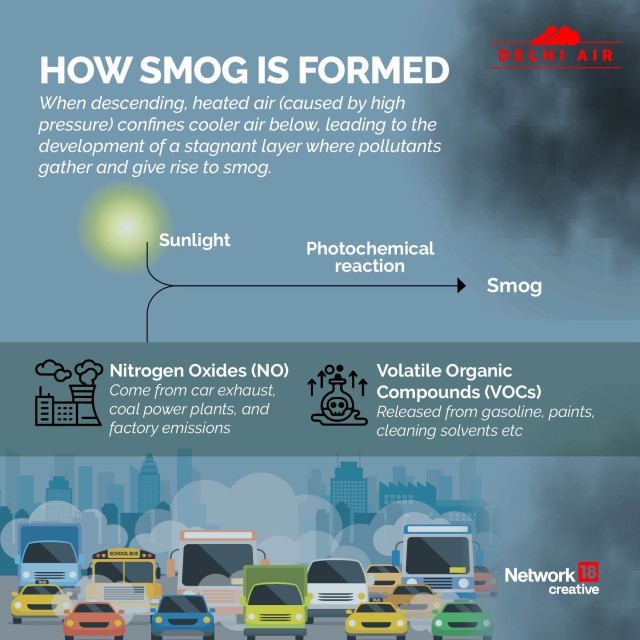
Delhi and its neighbouring regions continue to breathe “very poor” air, with the overall air quality being 386.According the Central Pollution Control Board (CPCB), the air quality at 7 am in Bawana stood at 442, 418 in RK Puram, 418 in Jahangirpuri, 441 in Dwarka, 412 in Anand Vihar, 412 in ITO and 401 near the Delhi airport.The National Capital is currently in the final stage of the central government’s air pollution control plan, known as the Graded Response Action Plan (GRAP).To curb the air pollution, the Delhi government has implemented strict measures, including a ban on firecrackers, construction activities and pollution-emitting trucks into the Capital.In order to reduce dust emissions, it has also asked agencies to use anti-smog guns more frequently at building sites and other strategic locations.According to The Hindu, Environment Minister Gopal Rai on Tuesday said, “We are starting a mega campaign of sprinkling water on the roads of Delhi from today. I am optimistic that there will be immediate reduction in the pollution levels. The campaign will run across the city.”In addition to the 70 anti-smog guns assigned to each Assembly constituency, he stated that 60 mobile anti-smog guns have been placed in the designated pollution hotspots.But what exactly is anti-smog guns? How will it help reduce air pollution? Let’s take a look.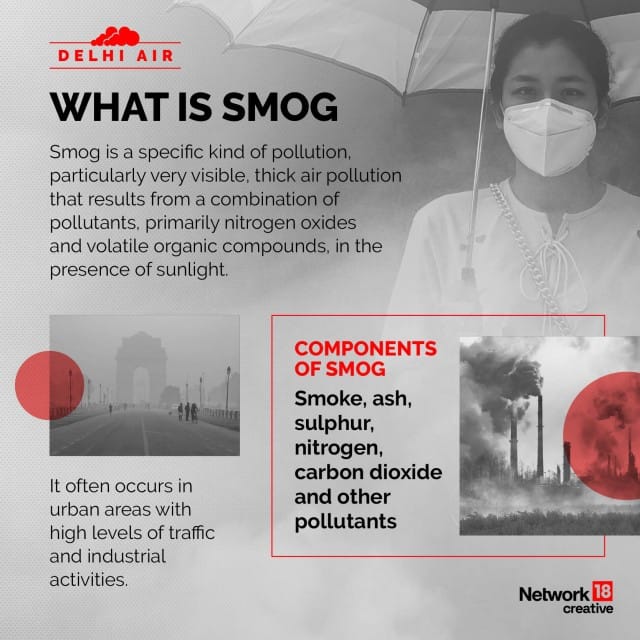
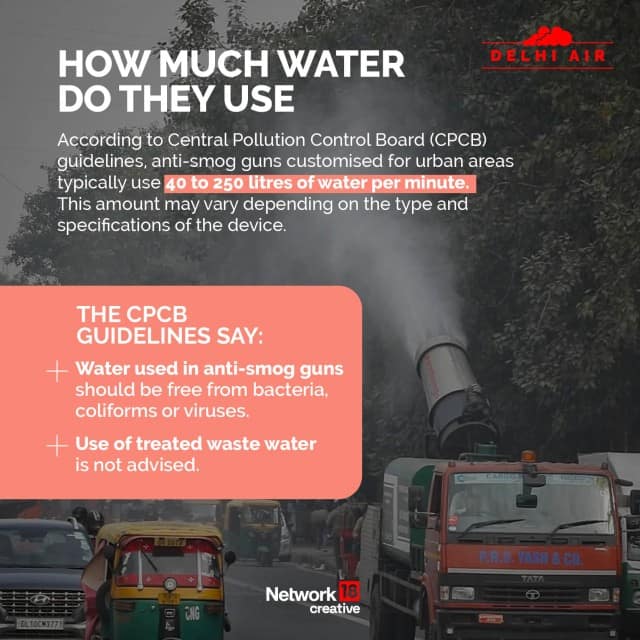
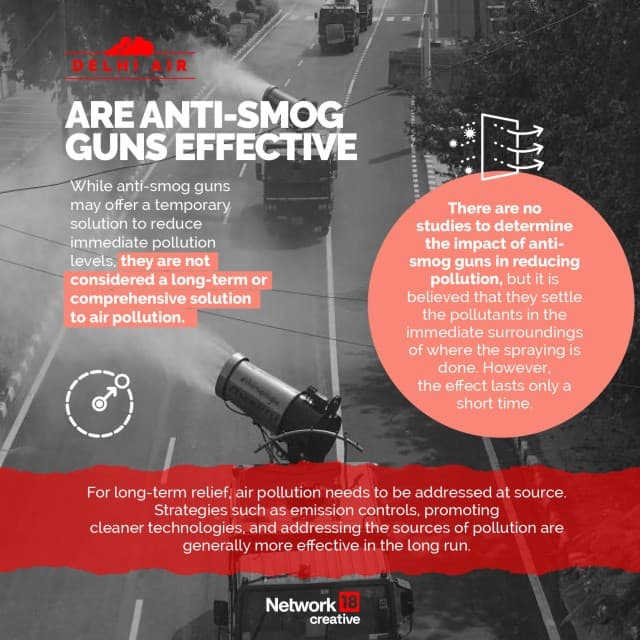 All creatives designed by News18

Military drones & police check-ups: How Sri Lanka is fighting against worst dengue outbreak in a decade
How Facebook job ad lured 2 Karnataka men into Myanmar cyber scam camp
Why is India seeing 95% cloud cover despite a Super El Niño?
What is CJP’s fourth demand to the government as protests in Delhi intensify?
The new geography of war: Why the Houthis can no longer be ignored