


In Graphics | A guide to understanding ISRO’s Aditya L-1 mission to the Sun
After travelling almost 3.7 million km in 126 days, ISRO’s Aditya-L1 satellite will finally reach its destination on 6 January. Once landed, it will undertake scientific tests from its vantage point, L-1, to better comprehend the Sun, which remains a mystery

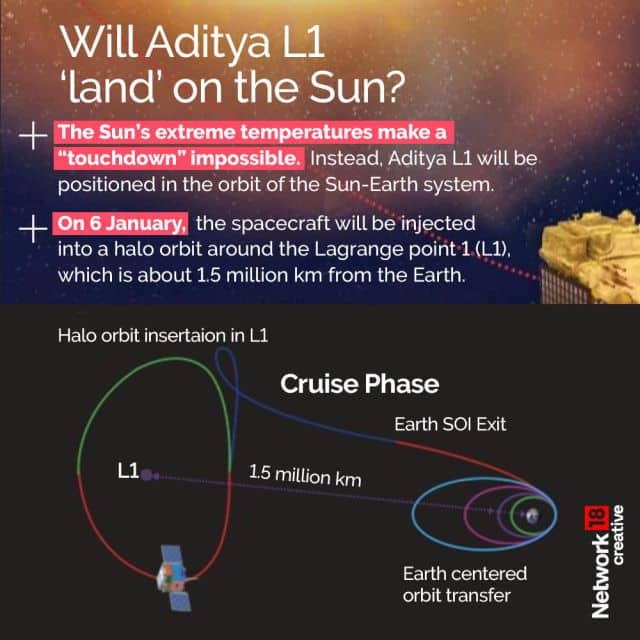
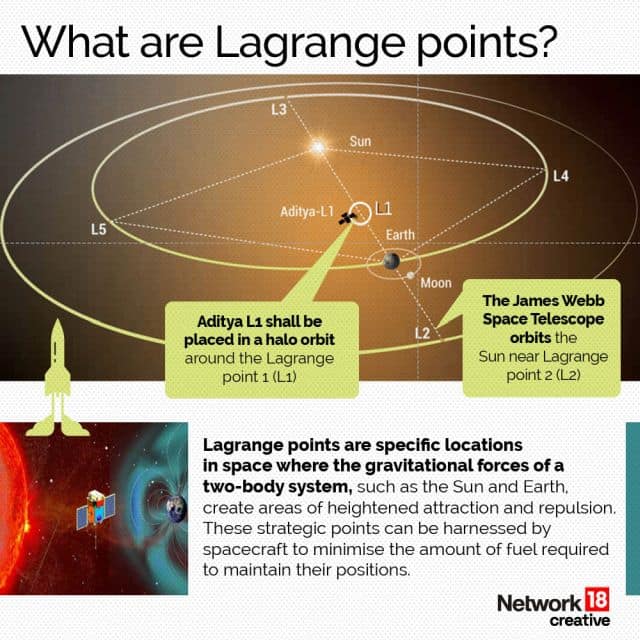
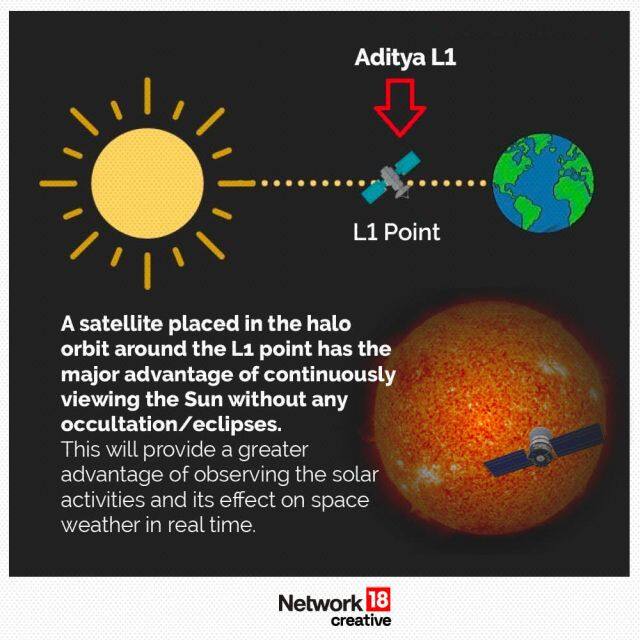
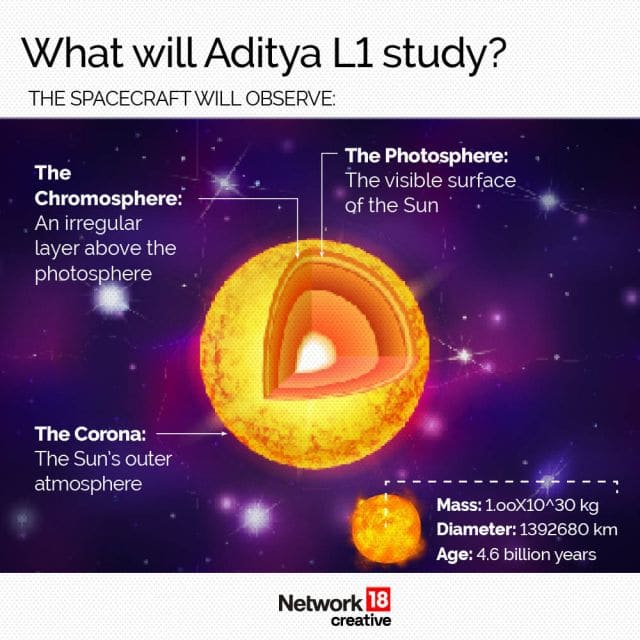
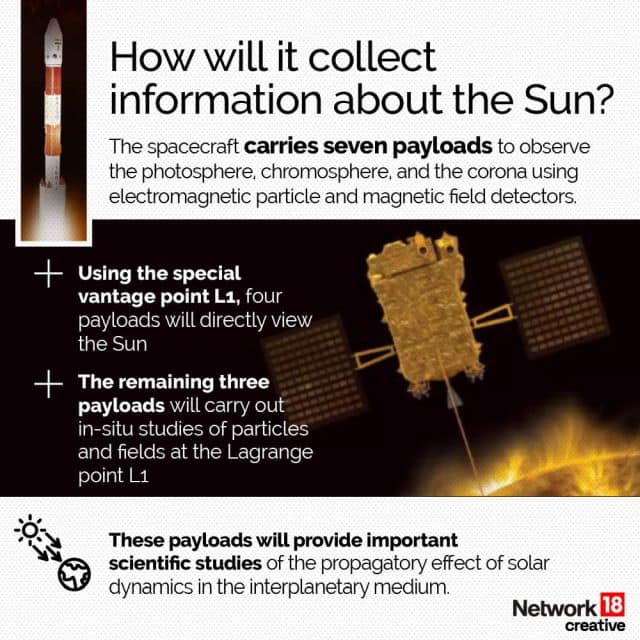
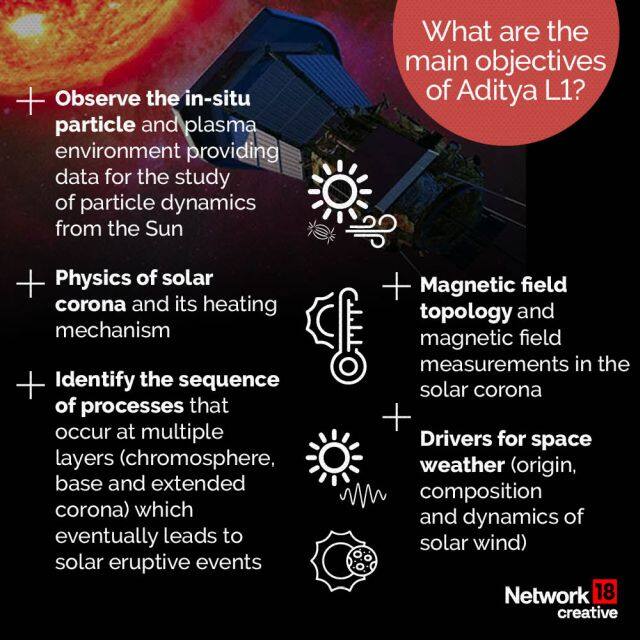
Aditya-L1 is heading closer to its destination, and Indian Space Research Organisation (ISRO) hopes to successfully place the spacecraft into its final orbit tomorrow (on 6 January) evening around 4 pm.A 'halo orbit' around Lagrange Point 1 (L1), located approximately 1.5 million kilometres from Earth — constituting only one per cent of the total distance between the Earth and the Sun — will be the satellite's home for the next five years.Aditya-L1 has travelled almost 3.7 million km in its 126-day voyage, which began on 2 September, last year, to reach its "karambhoomi," or "land of action." According to ISRO, Aditya is in good health, and scientific results have already begun to flood in as it has returned stunning photographs of the Sun's entire disc.The 1,475 kilogramme Aditya-L1 satellite will undertake scientific tests from its last vantage point, L-1, in order to better comprehend the star of our solar system, which remains a mystery.Here’s everything you need to know about India’s solar mission.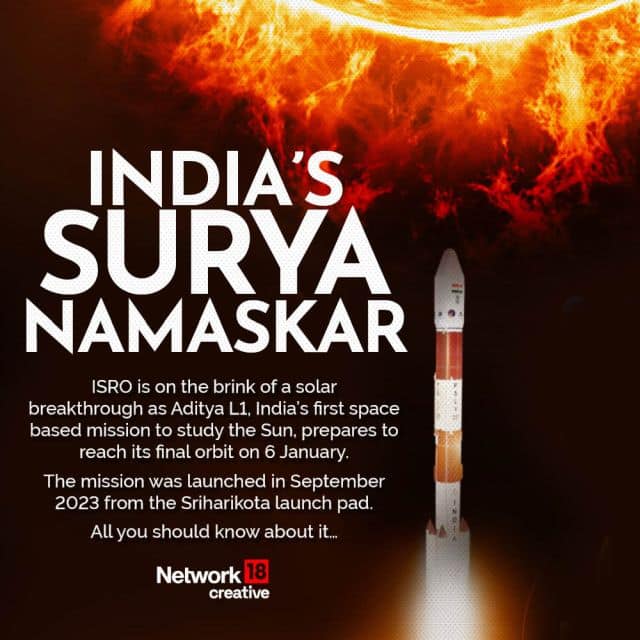
Tags

Military drones & police check-ups: How Sri Lanka is fighting against worst dengue outbreak in a decade
How Facebook job ad lured 2 Karnataka men into Myanmar cyber scam camp
Why is India seeing 95% cloud cover despite a Super El Niño?
What is CJP’s fourth demand to the government as protests in Delhi intensify?
The new geography of war: Why the Houthis can no longer be ignored