


Why IAF’s Shubhanshu Shukla is only the 2nd astronaut to be awarded Ashoka Chakra
President Droupadi Murmu on Monday (January 26) conferred the Ashoka Chakra to Indian Air Force (IAF) Group Captain Shubhanshu Shukla at the Republic Day celebrations on Kartavya Path in New Delhi. The 40-year-old was the pilot for the Axiom Mission-4 (Ax-4) that saw the first Indian fly to the International Space Station (ISS) last year. Which other astronaut has been honoured with India's highest peacetime gallantry award?

Indian Air Force (IAF) Group Captain Shubhanshu Shukla, who became the first Indian to go to the International Space Station (ISS), has been awarded the Ashoka Chakra. He is only the second astronaut to be conferred with India’s highest peacetime gallantry award after Rakesh Sharma.
Shukla’s colleague, IAF Group Captain Prasanth B Nair, has been conferred with the Kirti Chakra. He was a backup crew for the Axiom-4 mission that saw Shukla venture into space last year.
Here’s why Shubhanshu Shukla’s Ashoka Chakra award matters.
Shubhanshu Shukla conferred with Ashoka Chakra
President Droupadi Murmu on Monday (January 26) awarded the Ashoka Chakra to Group Captain and astronaut Shubhanshu Shukla at the Republic Day celebrations on the Kartavya Path in New Delhi.
Last June, Shukla became only the second Indian to enter space after Rakesh Sharma flew aboard a Russian Soyuz spacecraft in 1984.
 More from Explainers
The IAF officer scripted history by visiting the ISS as part of the historic Axiom-4 mission, executed by United States-based private firm Axiom Space.
President Murmu approved gallantry awards for 70 personnel from the Indian armed forces, including six posthumous, on the eve of the 77th Republic Day, a statement issued by the Union Ministry of Defence on Sunday (January 25) evening said.
Besides Prashanth Nair, Major Arshdeep Singh, Naib Subedar Doleshwar Subba have also been awarded the Kirti Chakra.
Thirteen Shaurya Chakras, including one posthumous, one Bar to Sena Medal, 44 Sena Medals, including five posthumous, six Nao Sena Medals, and two Vayu Sena Medals were also announced.
Why is Shukla's award significant?
The honour bestowed upon 40-year-old Shukla assumes importance as he is only the second astronaut to be conferred with India's highest peacetime gallantry award.
This shows the growing significance India attaches to space missions. Shukla had spent 18 days on the ISS last June, conducting several India-specific experiments which would aid in future space missions as well as ease life on Earth.
Shukla served as the pilot for the Axiom Mission-4 (Ax-4) to the ISS, playing a key role in the launch of the spaceflight, its orbital insertion, docking and undocking at the ISS, along with re-entry and landing of the spacecraft.
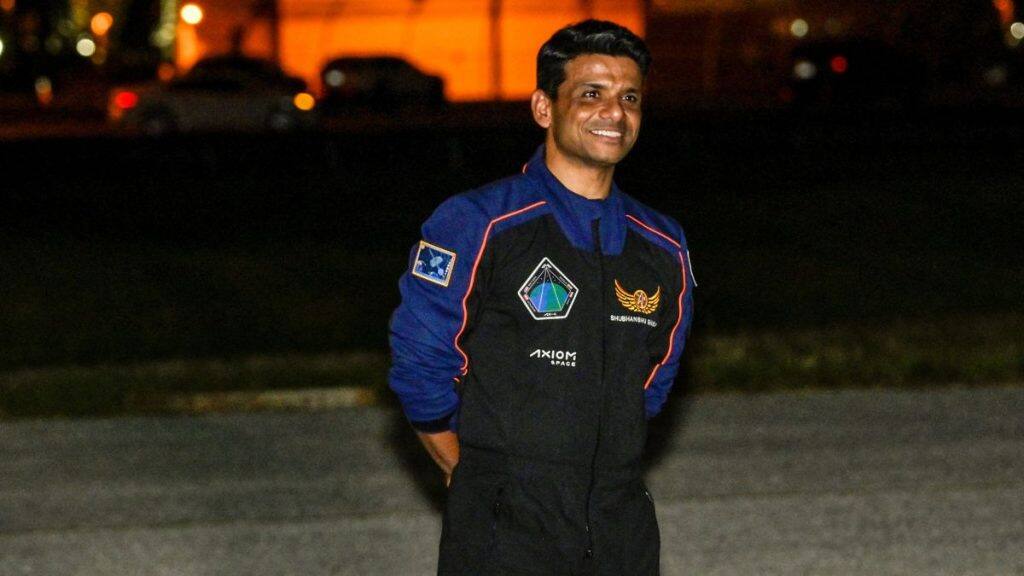
The IAF officer is set for India’s first human spaceflight, Gaganyaan, which is likely to be launched in the first half of 2027. Nair is also among the four astronauts likely to undertake the ambitious mission.
Shukla and Nair have trained at Russia’s Yuri Gagarin Cosmonaut Training Centre in Star City, Moscow, and at Bengaluru’s Astronaut Training Centre for manned spaceflight.
The government’s decision to award India's highest peacetime gallantry award to an astronaut after four decades signifies the importance it has attached to the space sector, as the Ashoka Chakra is usually bestowed upon military personnel for showing "most conspicuous bravery", as per PTI.
Wing Commander and cosmonaut Rakesh Sharma was the first Indian to fly to space aboard a Russian Soyuz in 1984. A year later, he was conferred the Ashoka Chakra. Air Commodore Ravish Malhotra, the backup astronaut for that mission, was awarded the Kirti Chakra.
History has repeated itself with the awards bestowed upon Shukla and Nair.
The government has recognised that bravery can not only be displayed on the battlefield or the ground but also beyond the Earth. Travelling to space requires technological prowess, courage and unwavering professionalism.
Shukla, who has become a household name in India, has inspired millions with his journey. Now, India has set in motion the work for its own space station, his experience will benefit in training the next generation of space explorers.
Who is Shubhanshu Shukla?
Group Captain Shukla was born in Uttar Pradesh's Lucknow on October 10, 1985. He was commissioned into the fighter stream of the Indian Air Force in June 2006.
A seasoned fighter pilot, he has amassed 2,000 hours of flight experience on various aircraft, including the Su-30 MKI, MiG-21, MiG-29, Jaguar, Hawk, Dornier, and An-32.
After scripting history as the first Indian to go to the ISS, he said last year, "This mission is a big achievement for our country, and it has come at the right time. India is on course for its human spaceflight mission, Gaganyaan, Bharatiya Antariksh Station and eventually landing on the Moon."
"Whatever we have learnt from this (Axiom) mission, I think they are very unique and critical for our mission. Our efforts in the coming months and years would be to employ those learnings in our mission," he added.
With inputs from agencies
Tags

Military drones & police check-ups: How Sri Lanka is fighting against worst dengue outbreak in a decade
How Facebook job ad lured 2 Karnataka men into Myanmar cyber scam camp
Why is India seeing 95% cloud cover despite a Super El Niño?
What is CJP’s fourth demand to the government as protests in Delhi intensify?
The new geography of war: Why the Houthis can no longer be ignored