


How Paris’ dreamy rooftops could turn into death traps in the heatwave
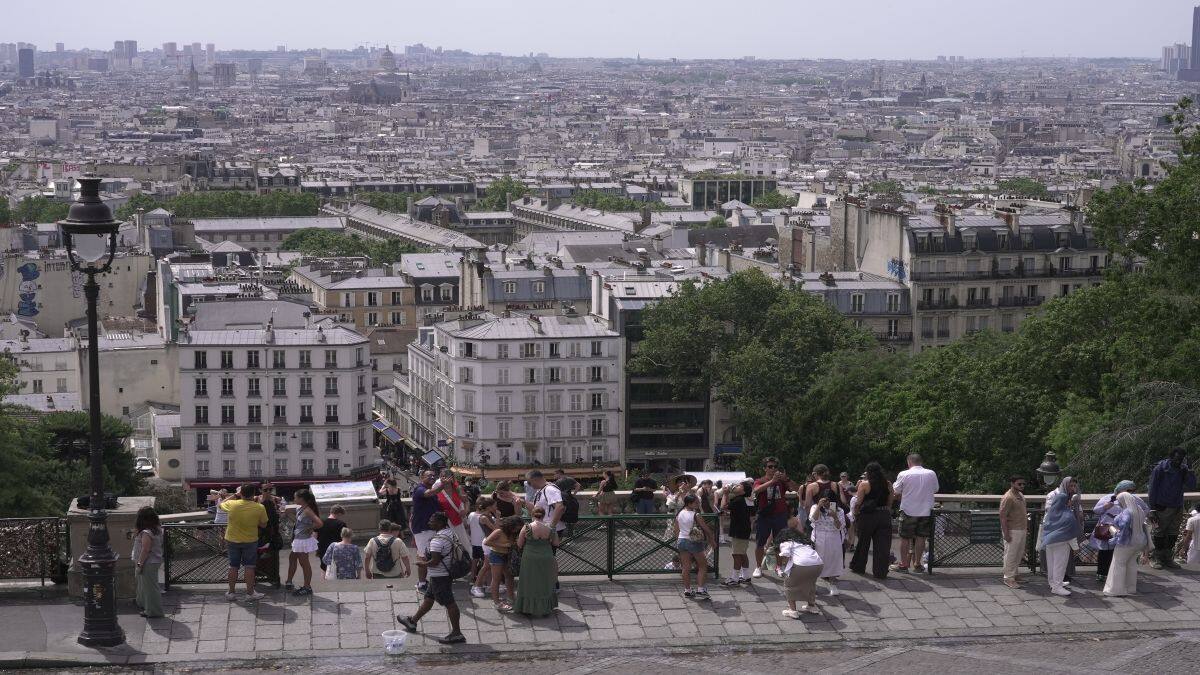
Many of the Paris buildings that look so picturesque from the outside are proving to be hostile amid the unrelenting heat. According to one study, living in a room directly under the zinc roof increases the risk of death by more than fourfold

Before the heat struck, Amelie Kenney could boast that she almost had it all: a tiny but cheap top-floor apartment in Paris, with an enviable view from its minuscule balcony of the French capital’s iconic gray roofs and even, when she leans out far enough, up to the Sacré-Cœur basilica atop Montmartre.
But with a historic heatwave making attic apartments like hers potentially hazardous for health, the 23-year-old recent graduate isn’t feeling quite so fortunate. “It’s been the worst week that we’ve had in this apartment,” she said this week as the capital and other parts of Europe roasted. “It’s just baking in the whole afternoon and it’s impossible to just get a respite.”
 More from Explainers
Paris’ picturesque but hostile houses
Many of Paris’ buildings that look so picturesque from the outside are proving to be hostile, even dangerous for health, during the unrelenting record heat that is turning both the long summer days and short sweaty nights into battles.
That’s particularly true for those living directly under the roofs of Paris — who often cannot afford larger, lower-floor apartments less impacted by direct sun.
Extreme heat can make them deadly. A study of a record-breaking 2003 heatwave blamed for 15,000 heat-related deaths found that living in a Paris attic room directly under the roof increased the risk of death by more than fourfold, France’s public health agency said in a report last year.
And researchers who studied heat-related deaths in European cities for a study published in The Lancet Planetary Health journal in 2023 found that Paris had the highest risks of heat-related deaths out of 30 European capitals they looked at.
The Zinc factor
About three-quarters of Paris rooftops use sheets of zinc as covering, producing the city’s magnificent gray vistas that have long inspired artists and filmmakers. The tradecraft of its zinc roofers is recognised as a valued cultural heritage for humanity by the UN cultural agency UNESCO. Zinc is weather-resistant, malleable and can be recycled. But as a metal, it also absorbs and conducts heat.
“People find the rooftops of Paris charming. There’s the image of the attic room. But in reality, when you look at who lives in these apartments, it’s often students paying a great deal of money for a small room,” said Maider Olivier, with The Foundation for Housing for the Disadvantaged campaign group.
“Not only are they extremely exposed to heat, but it’s also impossible to create cross-ventilation to get rid of the heat at night.”
In the sixth-floor walk-up that Kenney shares with her partner, Francesca Pilia, also 23, they’ve squeezed a desk, a double bed and a small electric piano. The apartment’s one window, protruding from the zinc roof, faces west, putting it in direct sun from midday to dusk. They split the rent of €735 ($835) a month.
“It was the cheapest place to be,” Kenney said. “I like that it looks out onto the square. I can see marriages almost every Saturday morning.”
“But now I think if I could spend extra money to be somewhere else, I would.”
Homes not fit for extreme heat
Although office blocks, shopping centres, cinemas and other modern places where people congregate often have air conditioning, private apartments rarely do, especially in densely populated central Paris with its classic Haussmann-style buildings — named after the 19th century urban planner who transformed the city, giving it wide, tree-lined avenues and much of its architectural look.
Olivier, the housing campaigner, said that zoning regulations intended to preserve Paris’ character, including its signature rooftops, hinder efforts to adapt housing to extreme heat.
“There are people who are unable to insulate their roofs or install shutters to block the sun and prevent their homes from overheating because of regulations to protect the rooftops,” she said. “But these regulations which protect the rooftops of Paris do not protect the people who live beneath those rooftops.”
Kenney, from Australia, and Pilia, who’s Italian, are no strangers to heat. But the temperatures in Paris — with record highs for June nudging past 40 degrees C (104 F) during the day and 25 degrees C (77 F) at night — have been gruelling.
They’ve invested in a small electric fan, take cold showers, sponge themselves down with a wet rag, hydrate, and battle with the dilemma of whether to keep their window open. “I’ll wake up and I’ll decide, it’s too hot, I have to open the window,” Kenney said. “An hour later, I wake up, I say, ‘It is too loud, I have to close the window’.”
“It’s a very, very Kafkaesque cycle.”

Military drones & police check-ups: How Sri Lanka is fighting against worst dengue outbreak in a decade
How Facebook job ad lured 2 Karnataka men into Myanmar cyber scam camp
Why is India seeing 95% cloud cover despite a Super El Niño?
What is CJP’s fourth demand to the government as protests in Delhi intensify?
The new geography of war: Why the Houthis can no longer be ignored