


How Pakistan ignited Iran’s nuclear ambitions in the 1980s: From proliferator to mediator
Though Pakistan is serving as a mediator between the US and Iran to resolve the issue of uranium enrichment, Islamabad’s involvement in facilitating Tehran's nuclear journey undercuts its standing. In 2004, AQ Khan, the ‘father of Pakistan’s nuclear bomb’, admitted to transferring nuclear tech to Iran, North Korea and Libya

Almost since the outset of the war on February 28, Pakistan has sought to position itself as a mediator between Iran and Israel and the United States.
However, with the US and Iran still at odds over the subject of uranium enrichment by Tehran, many are shining a light on Pakistan’s involvement in facilitating Iran’s nuclear journey.
The question many are asking is this: can Pakistan, which has a history of nuclear proliferation, be trusted as a neutral broker?
Let’s take a closer look.
Why Pakistan is acting as a mediator
First, let’s take a brief look at why Pakistan has positioned itself as a mediator. Islamabad has sought to cosy up to the White House ever since Donald Trump’s return to the Oval Office in January 2025.
 More from Explainers
The two countries have struck an oil deal. The US president has publicly praised Pakistani army chief Asim Munir, who has visited the White House a number of times to meet with Trump personally. Pakistan has nominated Trump for the Nobel Peace Prize and ‘acknowledged’ his role in the Operation Sindoor ceasefire – which India has denied – and, perhaps most importantly, Pakistan has struck a crypto deal with Trump-linked firm World Liberty Financial.
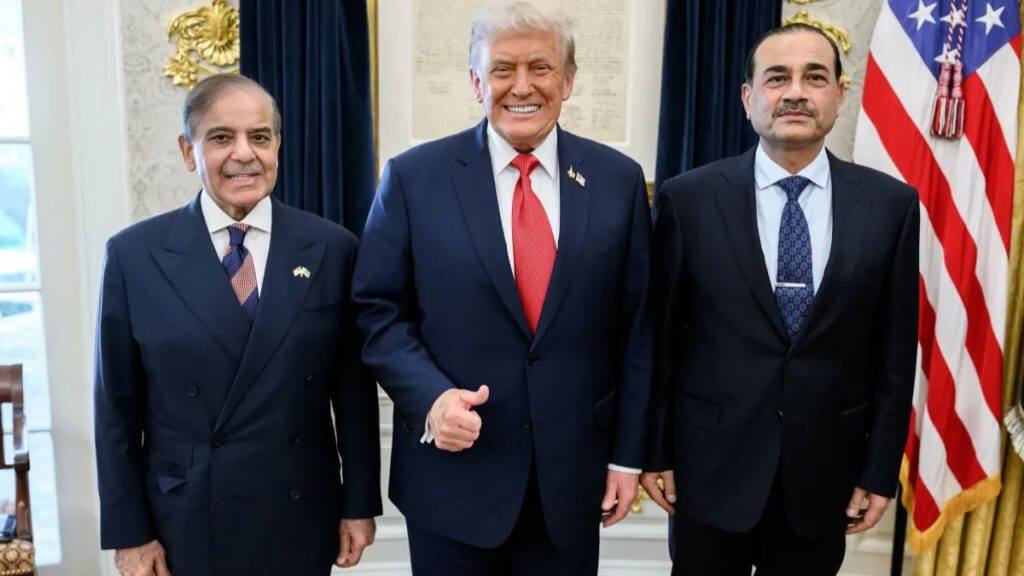
Pakistan’s ties with Iran also position it as a useful backchannel facilitator between Washington and Tehran. However, many are questioning Pakistan’s credibility to stand as a mediator on uranium enrichment, given its track record of being at the centre of clandestine nuclear proliferation networks.
The AQ Khan network
To this day, the shadow of Abdul Qadeer Khan, better known as AQ Khan, lingers over the Iran nuclear programme. Khan, a nuclear physicist who died in 2021 after being hospitalised with Covid-19, is known as the “father of Pakistan’s nuclear bomb” and is widely considered a hero across the nation.
However, to Western agencies, he was a criminal no less dangerous than Osama bin Laden, according to Babel.UA. Khan, in 1975, was working at Urenco, a British-German-Dutch uranium enrichment firm in Amsterdam.
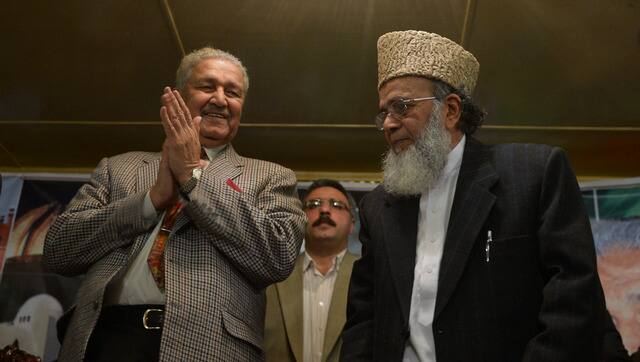
Khan stole blueprints for uranium centrifuges, which transform uranium into weapons-grade fuel for nuclear fissile material and other components, from Urenco. Khan, who was then put in charge of Pakistan’s nuclear programme by then Prime Minister Zulfikar Ali Bhutto, made key contributions to Islamabad’s nuclear programme and the eventual tests.
However, more importantly, Khan ran a global black market ring known as the AQ Khan network that was linked to nearly two dozen middlemen and businesses across the world. This cabal sold nuclear secrets, technology and equipment to Iran, North Korea, Libya and others. No less than former US President George W Bush referred to it as “an extensive international network for the proliferation of nuclear technology and know-how”.
How Pakistan inflamed Iran's nuclear ambitions
According to the Carnegie Endowment for International Peace, Islamabad and Tehran, between 1986 and 1987, are said to have signed a secret pact on nuclear cooperation. The deal allegedly called for at least half a dozen Iranians to receive training at the Institute of Nuclear Science and Technology in Islamabad, as well as the Nuclear Studies Institute. It also called for Iranian scientists to receive centrifuge training at KRL.
Khan is said to have visited the Iranian reactor at Bushehr in February 1986 as well as in January 1987. While what exactly transpired during the visits remains unknown, many speculate that Khan, during his visits, helped Iran bolster its nuclear programme.
The AQ Khan network is said to have supplied nuclear secrets, including P-2 centrifuge components, to Iran till at least 1995. German intelligence also launched a probe into Pakistan possibly offering help to Iraq, and possibly Iran and North Korea, with regard to melting uranium. Khan is also said to have proposed offering Iran several nuclear technologies, including help on how to cast uranium metal. The price for the package is reported to be from the tens of millions to the hundreds of millions.
According to Babel.UA, Tehran is said to have received tens of thousands of components for uranium enrichment centrifuges, as well as equipment for the construction of a secret plant, by 1995. Iran, at the time, turned to Pakistan amid the war with Iraq, when it was seeking to revive its nuclear programme as a means of deterrence. Tehran, at the time, was also isolated after the 1979 revolution.
Khan’s network was long under the watchlist of Western intelligence agencies, including the US and the UK. Khan, who eventually admitted his culpability in the same and confessed to ‘errors of judgement’, is said to have told the ISI that he shared the nuclear secrets with Muslim countries, including Iran and Libya, so that they could beef up their security.
"I take full responsibility for my actions and seek your pardon. I offer my deepest regrets and unqualified apologies to a traumatised nation," Khan said in 2004.
Khan was pardoned by former Pakistani President Pervez Musharraf and placed under house arrest for two decades. Pakistan has officially maintained that Khan acted alone. In 2005, then Pakistani information minister Sheikh Rashid Ahmed said, "Dr Abdul Qadeer gave some centrifuges to Iran." "He helped Iran in his personal capacity, and the Pakistan government had nothing to do with it." This was the first time that the Pakistani government had admitted that Khan sold nuclear secrets to Iran.
However, it is difficult to imagine that Khan was able to build and operate a vast network without the tacit understanding of the Pakistani establishment and backing from deep state institutions.
What do experts say?
Experts maintain that Islamabad played a crucial role when it comes to Tehran’s nuclear programme.
"If they had busted those [Pakistani] networks," US non-proliferation analyst Richard Barlow told Newsweek, "Iran would have no nuclear programme, North Korea wouldn't have a uranium bomb, and Pakistan wouldn't have over a hundred nuclear weapons they are driving around in vans to hide from us."
Barlow worked for both the CIA and the Pentagon on nuclear proliferation. He testified behind closed doors in Congress multiple times and had tracked Khan’s work for decades.
"It would have been impossible. The Iranians lacked the technical, scientific, and engineering capabilities to develop or manufacture centrifuges or nuclear weapons on their own. They were trying, but they were getting nowhere. It made the impossible possible," Barlow added.
The irony of Pakistan, a nation that is being linked to the spread of nuclear secrets and chided time and again for its weak export controls, positioning itself as a mediator in nuclear diplomacy cannot be understated.
FAQs
1. Why is Pakistan acting as a mediator between Iran, the US, and Israel?
Pakistan is attempting to strengthen its diplomatic standing, particularly with the United States
2. What is the AQ Khan network, and why is it controversial?
The AQ Khan network was a global nuclear proliferation ring led by Pakistani scientist Abdul Qadeer Khan. It illegally shared nuclear technology, designs, and materials with countries such as Iran, North Korea, and Libya.
3. Why do experts question Pakistan’s credibility as a neutral mediator?
Experts point to Pakistan’s past involvement in nuclear proliferation, particularly its role in aiding Iran’s nuclear development through unofficial channels.
With inputs from agencies

Military drones & police check-ups: How Sri Lanka is fighting against worst dengue outbreak in a decade
How Facebook job ad lured 2 Karnataka men into Myanmar cyber scam camp
Why is India seeing 95% cloud cover despite a Super El Niño?
What is CJP’s fourth demand to the government as protests in Delhi intensify?
The new geography of war: Why the Houthis can no longer be ignored