


How India navigated the Strait of Hormuz crisis better than other import-dependent nations
As the Strait of Hormuz reopens, India has done well to insulate its population from the oil shocks. Every Indian kitchen received its cylinder, and the Indian consumer absorbed the smallest price impact among any major importing economy during the US-Iran conflict. Here’s how

The closure of the Strait of Hormuz on February 28, triggered by the US-Iran war, presented the global energy market with its most severe supply shock in decades. For India — a nation importing close to 90 per cent of its crude and 60 per cent of its LPG — the disruption posed an existential test to supply chains.
Yet, as the Strait reopens under the recent yet tenuous agreement between the warring parties, one can now confidently state that through nearly four months of acute supply stress, not a single retail outlet ran dry, every Indian kitchen received its cylinder, and the Indian consumer absorbed the smallest price impact among any major importing economy.
 More from Explainers
This outcome was neither accidental nor inevitable. It reflects a deliberate, layered response built on a decade of strategic investment and executed with fiscal resolve.
The Strait of Hormuz carries roughly a fifth of the world's seaborne oil and a substantial share of the LPG and LNG that India draws from the Gulf. When it closed, the price reaction was immediate and severe. The Indian crude basket surged from about $70 to over $120 per barrel within four weeks; Brent peaked just below $120. The Saudi Contract Price for LPG climbed by approximately 46 per cent between February and June, and war-risk insurance for vessels transiting the region rose several-fold.
So, how did India navigate this crisis?
A decade of preparation
The challenge was threefold: maintaining physical supply, containing price transmission, and sustaining public confidence.
India's capacity to respond to the oil shocks rested on infrastructure and diversification built over the preceding decade. The number of crude source countries expanded from 27 to 41, with newer suppliers – Libya, Gabon, Equatorial Guinea, and Guyana – added and volumes from the United States and Russia deepened.
Strategic petroleum reserves under Indian Strategic Petroleum Reserves Limited (ISPRL) now hold approximately 5.33 million tonnes, providing roughly three weeks of cover, with the expansion of storage in Chandikhol, Odisha and Padur, Tamil Nadu extending that buffer further. Ethanol blending has reached 20 per cent, providing an additional structural offset and reducing crude import dependence by a meaningful margin each year.
This groundwork transformed what could have been a crippling crisis into a managed disruption.
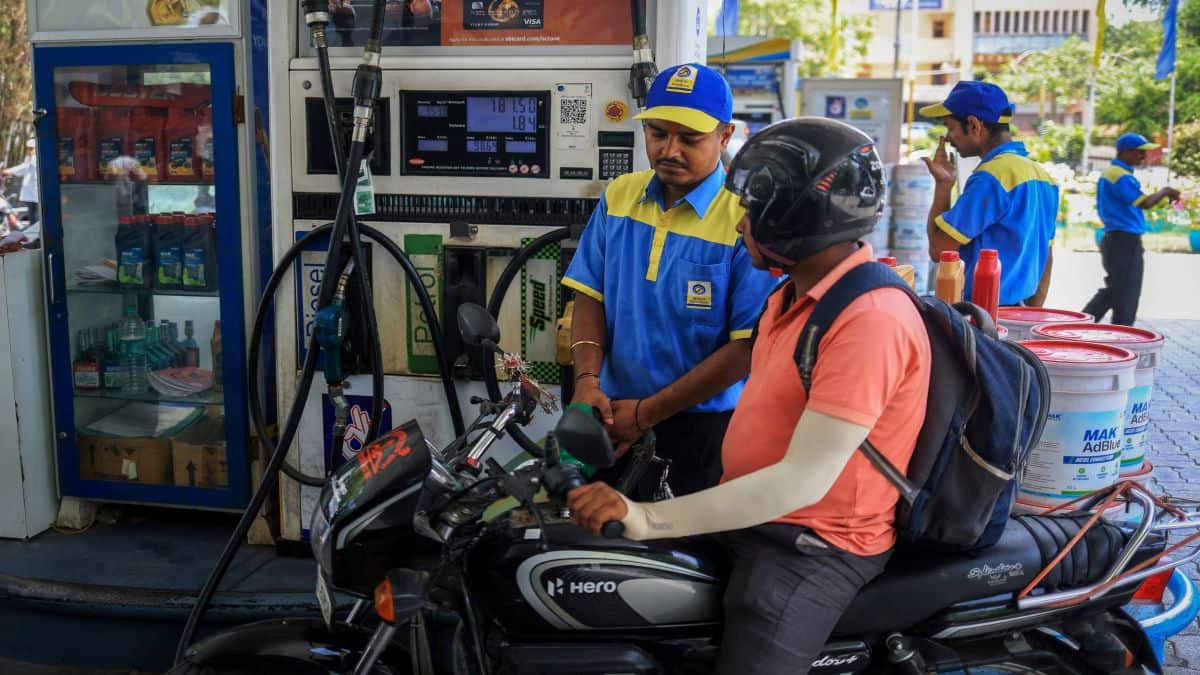
The handling of petrol and diesel prices exemplifies a clear policy choice to prioritise households over fiscal comfort. On March 27, the Centre cut central excise duty by Rs 10 per litre on both fuels, reducing the special additional excise on petrol from Rs 13 to Rs 3 and on diesel from Rs 10 to nil. The revenue forgone was approximately Rs 1.7 lakh crore.
The oil marketing companies then held retail prices unchanged for over two months, absorbing daily under-recoveries close to Rs 1,000 crore at the peak of the disruption. When a revision became unavoidable, it was a single increase of Rs 3 per litre on May 15 — the most restrained adjustment of any major economy. Subsequent calibrated revisions have totalled about Rs 7 per litre through the conflict, with under-recoveries now easing to around Rs 650 crore daily as crude softens toward pre-crisis levels.
The contrast with other major importers is instructive. In the United Kingdom, petrol rose by roughly a fifth and diesel by even higher levels, with the full cost passing directly to consumers. India chose a different path.
LPG, a sharper test
Cooking fuel represented India’s most acute exposure. More than half of the LPG reaching Indian households had been arriving through Gulf routes — supply that effectively vanished overnight.
The response was immediate. The LPG control order was issued within eight days, directing all refineries to maximise output by diverting propane, butane, propylene and butene streams. Within a week, domestic production rose from 35,000 to 54,000 tonnes per day — substantially exceeding the residual import requirement of approximately 30,000 tonnes. Refineries that had never produced LPG were reconfigured to do so.
On price, the protection was absolute. While the import-linked cost of a cylinder exceeded Rs 1,600, the regulated price to households was held at Rs 942. For the more than 10.58 crore Pradhan Mantri Ujjwala Yojana beneficiaries, the effective price after direct benefit transfers stood at Rs 642. The cumulative under-recovery on domestic LPG reached approximately Rs 60,000 crore, against which the Cabinet approved Rs 30,000 crore in compensation to the oil marketing companies (OMCs).
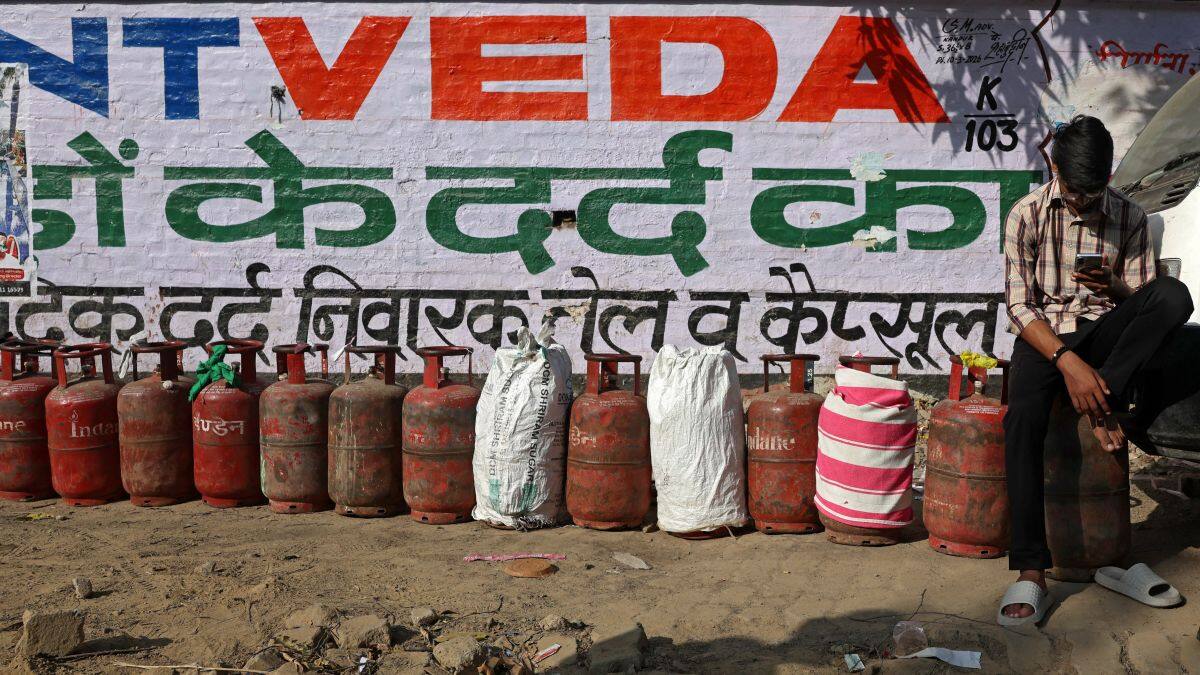
The defining decision of this crisis was to let the State and OMCs absorb the cost rather than transmit it to households. No comparable economy made this choice at this scale.
The broader economy has absorbed the shock with notable stability. Foreign exchange reserves reached an all-time high exceeding $728 billion in the week the conflict began, a considerable buffer against current account shocks. Real GDP growth continues near 7.6 per cent, and retail inflation stayed within the Reserve Bank’s tolerance band.
As the first Indian-flagged LNG carrier, the Disha, transited out of the conflict zone and tanker traffic through the Strait recovers, India finds itself among the first major importers to see normalisation. The crisis revealed the dividend of a decade of energy-security investment: diversified supply chains, expanded refining capacity, strategic reserves, and the infrastructure to pivot rapidly under pressure.
More fundamentally, it demonstrated a policy framework that prioritised consumer protection over short-term fiscal considerations. The choice to absorb costs at the level of the exchequer, rather than pass them to the kitchen and the pump, reflected both capability and intent.

Military drones & police check-ups: How Sri Lanka is fighting against worst dengue outbreak in a decade
How Facebook job ad lured 2 Karnataka men into Myanmar cyber scam camp
Why is India seeing 95% cloud cover despite a Super El Niño?
What is CJP’s fourth demand to the government as protests in Delhi intensify?
The new geography of war: Why the Houthis can no longer be ignored