


From erotic Ukrainian model to elite diver: Did ‘Freya’ help blow up Russia’s Nord Stream pipelines?
Investigative reports link a Ukrainian technical diver known as 'Freya' to the September 2022 Nord Stream sabotage. German investigators reportedly found forensic evidence connected to a yacht allegedly used in the operation, while the pipelines remain inactive amid ongoing disputes

The September 2022 destruction of the Nord Stream gas pipelines remains one of the most consequential acts of infrastructure sabotage in modern history.
The explosions tore through the underwater network beneath the Baltic Sea and crippled a major energy artery linking Russia and Europe.
Now, nearly four years after the blasts, new information is focusing on a Ukrainian woman known only by the pseudonym "Freya."
Once associated with Kyiv's modelling scene and later known in international diving circles for her expertise in extreme underwater environments, she has emerged as one of the most prominent figures in accounts linking a small group of civilian divers to the operation.
According to investigative reporting based on interviews with individuals allegedly connected to the mission, Freya's path from magazine covers to deep-sea diving and eventually to the centre of one of the world's biggest sabotage investigations is unlike any other story to emerge from the Nord Stream case.
 More from Explainers
Although Freya and other individuals linked to the allegations continue to deny participation, German investigators have spent years examining evidence that allegedly connects a small Ukrainian team to the attack.
Why Nord Stream was a big deal
Before the explosions, Nord Stream represented one of the most strategically significant pieces of energy infrastructure on the European continent.
The system consisted of two separate projects running across the Baltic Sea floor from Russia to Germany. Both were designed to transport natural gas directly to Europe while avoiding traditional transit routes through countries such as Ukraine and Poland.
Nord Stream 1 entered operation in 2011 and became a central component of Europe's energy supply chain. Stretching roughly 1,224 kilometres beneath the Baltic Sea, it could transport up to 55 billion cubic metres of gas annually.
Ownership of the project was divided between Russia's Gazprom and a consortium of Western European energy firms.
Its successor, Nord Stream 2, was completed a decade later. Measuring approximately 1,234 kilometres in length and capable of carrying another 55 billion cubic metres of gas each year, the project was wholly owned by Gazprom through Nord Stream 2 AG.
Yet Nord Stream 2 never transported commercial gas. In February 2022, only days before Russian forces crossed into Ukraine, Germany suspended certification of the project. As a result, the second pipeline system remained unused despite being physically complete.
For years, Nord Stream 1 had served as a major supplier of energy to Germany's industrial economy. Together, the two projects symbolised decades of economic interdependence between Russia and Europe.
They also became a source of political controversy, particularly among countries that argued the infrastructure increased European dependence on Russian energy exports.
The woman known as 'Freya'
According to accounts of her life, 'Freya' was born in Kyiv during the mid-1980s and spent her formative years in the Ukrainian capital. People who knew her reportedly described her as energetic, adventurous and unusually fearless from a young age, according to a report by UK's The Times.
During the 2000s, she became part of Kyiv's nightlife scene and occasionally worked as a model. Reports state that she once appeared on the cover of an adult men's publication wearing only a captain's coat, while another account describes her as having appeared on the front page of an erotic magazine.
Her future, however, would be shaped not by modelling but by a hobby she discovered in her early twenties.
After trying scuba diving near Ukraine's Black Sea coast, she became captivated by the underwater world. What started as recreation quickly evolved into a professional pursuit. She reportedly left her job, devoted herself entirely to diving and financed trips to diving locations around the world.
Her progress was unusually rapid. Within only a few years, she advanced from recreational diving to highly specialised technical diving.
This discipline requires operating in environments that present far greater risks than conventional diving, including extreme depths, complex cave systems and shipwreck exploration.
According to reports, Freya eventually became capable of descending beyond 100 metres. Such dives require specialised gas mixtures, advanced decompression procedures and extensive training. Her experience reportedly placed her among a relatively small group of divers capable of operating in conditions that many military divers rarely encounter.
Her life took another turn following Russia's seizure of Crimea in 2014 and the conflict that erupted in eastern Ukraine. Reports indicate that these events affected people close to her and gradually drew her into efforts supporting Ukraine.
When Russia launched its full-scale invasion in February 2022, Freya was reportedly outside the country on a diving trip. She later returned and became involved in humanitarian activities, helping establish charitable initiatives that delivered food, medical supplies and equipment to areas affected by the fighting.
At that stage, her diving expertise appeared largely unrelated to the war effort. According to reports, that assumption would prove incorrect.
Why civilian divers were allegedly recruited
Accounts of the operation suggest that Ukrainian planners seeking to strike Russian energy infrastructure faced a significant challenge. The target they allegedly selected was located at depths requiring extremely specialised underwater skills.
Although military diving units possess substantial capabilities, investigators claim the expertise needed for repeated dives at such depths was not widely available within the armed forces.
As a result, planners allegedly turned to civilian technical divers. According to reporting, two intelligence-linked figures referred to only as "the General" and "the Colonel" began developing plans to target infrastructure associated with Russian energy exports.
The objective, according to those accounts, was to strike assets that generated revenue for Moscow's war effort. Investigative reports state that the planners also examined the possibility of targeting TurkStream, another pipeline carrying Russian gas, this time beneath the Black Sea.
Potential recruits reportedly underwent extensive vetting before being selected.
The process allegedly included recorded interviews at a facility connected to Ukraine's security apparatus, monitoring of communications and staged scenarios designed to test psychological resilience.
One such exercise reportedly involved mock arrests by individuals posing as police officers.
Freya emerged as one of the successful candidates. According to reports, she was the only woman among the finalists.
One official involved in the selection reportedly questioned her lack of experience using rebreathers, specialised devices commonly employed in military diving.
Another officer reportedly argued that her composure, willingness to accept risk and ability to remain calm under pressure outweighed any technical shortcomings.
The team eventually assembled reportedly included Freya, two male divers identified by the nicknames "the Iceman" and "the Smiley," a skipper and military support personnel.
Training, preparation and the journey to the Baltic Sea
Training allegedly took place in a flooded quarry outside Kyiv, where divers rehearsed procedures required for attaching explosives underwater.
According to accounts of the planning process, an explosives specialist advised placing charges at the joints connecting individual sections of pipeline. These locations were considered particularly vulnerable because damage there could trigger larger structural failures once internal pressure acted upon the rupture.
Military-grade explosives were reportedly concealed inside diving cylinders adapted for the mission.
Before departure, members of the team allegedly spent months waiting in a safe house in Poland while forged documentation was prepared.
The operation finally moved forward in September 2022. According to reports, the group chartered a yacht called Andromeda and departed from the German island of Rügen on September 9, 2022.
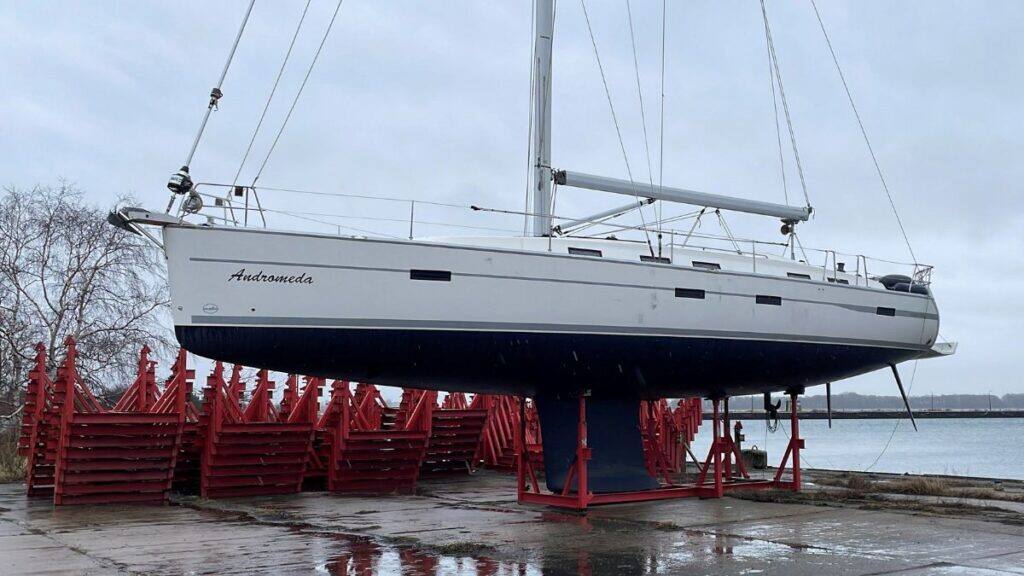
They allegedly adopted a cover story claiming to be filming an adult diving production in case authorities questioned their activities. Their destination was an area near the Danish island of Bornholm where the Nord Stream pipelines run close together along the seabed.
The conditions facing the divers were demanding.
The water was cold, visibility was poor and the target lay around 80 metres below the surface. To operate safely at such depths, divers reportedly used a specialised breathing mixture containing helium, oxygen and nitrogen.
Investigators allege that Freya played a central operational role throughout the mission. One account describes her repeatedly entering rough Baltic waters while carrying equipment weighing as much as 80 kilogrammes, including diving gear and explosive components intended for placement on the pipelines.
The alleged sabotage mission
According to reports, the first device was installed on September 11, 2022. Divers allegedly attached the charge to a joint connecting sections of Nord Stream 1. The device was reportedly programmed to detonate later that month.
The operation then encountered complications. Deteriorating weather conditions created concerns about completing subsequent dives. At one stage, rough seas reportedly forced the team to reconsider whether it was safe to continue.
According to one account, Freya responded by saying, "Let me go alone, I'll finish quickly." The quote has become one of the most widely cited details in reports about the operation.
Another account recalls her reaction during recruitment as, "Where do I sign?" Eventually, investigators allege the team completed placement of all required devices.
A separate mission targeting TurkStream reportedly failed after participants encountered patrol vessels in the Black Sea and were unable to proceed.
The Baltic operation, however, allegedly continued as planned.
The explosions that shocked Europe
On September 26, 2022, the charges detonated. The explosions occurred in two stages, with one wave taking place before sunrise and another later in the day.
The resulting damage was extensive. Both lines of Nord Stream 1 were ruptured. One line of Nord Stream 2 was also destroyed, while the second line remained physically intact but unusable.
Large sections of pipeline were torn apart. Craters formed on the seabed and enormous quantities of gas escaped into the Baltic Sea.
The environmental consequences were substantial. Reports estimate that roughly 500,000 tonnes of methane were released into the atmosphere, making it one of the largest single human-caused methane emissions events ever recorded.
Nato characterised the incident as sabotage. Russia called for a United Nations investigation. Germany, Sweden and Denmark launched separate inquiries aimed at identifying those responsible.
The investigation & evidence trail
The years following the explosions produced numerous theories about responsibility. Swedish and Danish authorities eventually closed their criminal investigations without publicly attributing blame to any state actor.
Germany, however, continued its inquiry. According to reports, investigators eventually focused significant attention on the yacht Andromeda.
After recovering and examining the vessel, forensic teams reportedly discovered fingerprints, traces of explosives, blood samples and other evidence.
Among the findings was a strand of hair that investigators allegedly linked to Freya.
German authorities also issued European arrest warrants for several Ukrainian nationals connected to the case. One alleged participant was detained in Italy and is expected to face proceedings in Germany related to sabotage allegations.
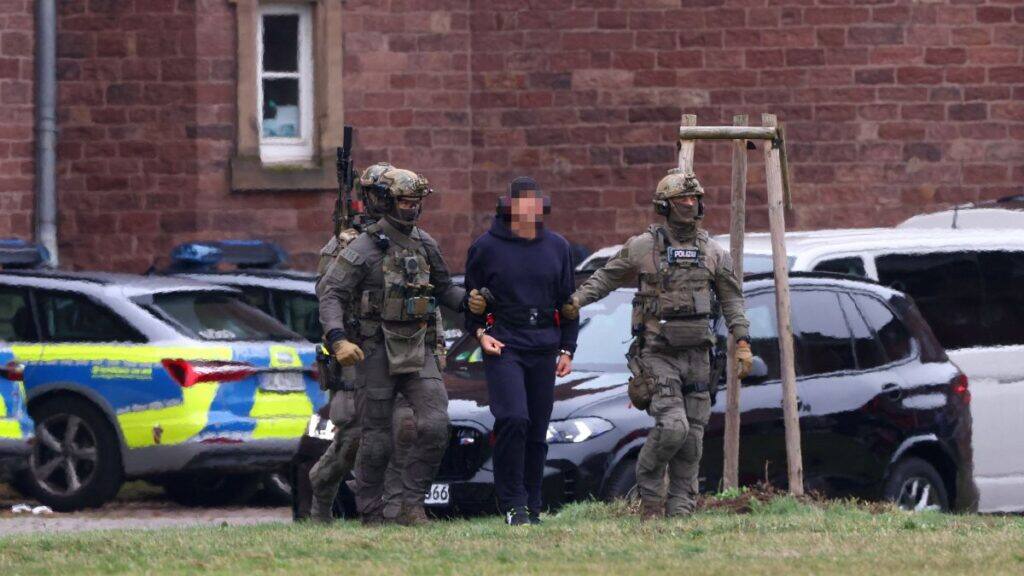
Despite these developments, prosecutions have been slowed by legal disputes, extradition issues and diplomatic complications. Freya and other individuals interviewed in connection with the allegations have consistently denied involvement.
Ukrainian President Volodymyr Zelenskyy has also denied having advance knowledge of the operation.
However, reporting cited associates of Valerii Zaluzhnyi, Ukraine's military chief at the time and now ambassador to Britain, as saying Zelenskyy had been briefed beforehand. Those claims remain part of the wider reporting surrounding the case.
What became of Nord Stream
Following the explosions, seawater flooded the damaged infrastructure. Corrosion and long-term deterioration have compounded the physical damage. Technical assessments cited in reporting suggest that restoring the network would require at least three years of intensive engineering work.
Yet engineering challenges are only part of the problem.
In July 2025, the European Union's 18th sanctions package formally prohibited the direct or indirect use of Nord Stream infrastructure. The measure effectively removed any immediate possibility of returning the pipelines to service.
As a result, neither Germany nor the broader European Union currently shows any political interest in repairing the network. Nevertheless, Nord Stream has continued to surface in diplomatic discussions.
According to reports, when the Trump administration in the US, initiated negotiations with Moscow regarding a potential peace settlement for Ukraine, Russia insisted that reopening Nord Stream should form part of any future agreement.
Reports also indicate that a group of American investors, including individuals connected to Trump administration circles, explored the possibility of purchasing Nord Stream 2. The idea was that transferring ownership away from Russia could potentially shield future gas exports from sanctions-related obstacles.
Russian President Vladimir Putin reportedly expressed support for such a concept, suggesting that American ownership could help protect future energy trade from additional restrictions.
For now, however, the pipelines remain dormant.
Meanwhile, Freya continues to occupy a unique place in the Nord Stream story. According to reports, she has since joined official Ukrainian military structures and now works as an instructor, training personnel in advanced technical and tactical diving techniques.
With inputs from agencies

Military drones & police check-ups: How Sri Lanka is fighting against worst dengue outbreak in a decade
How Facebook job ad lured 2 Karnataka men into Myanmar cyber scam camp
Why is India seeing 95% cloud cover despite a Super El Niño?
What is CJP’s fourth demand to the government as protests in Delhi intensify?
The new geography of war: Why the Houthis can no longer be ignored