
Advertisement


Sections
How far will Hezbollah go to protect Hamas in the Israel-Hamas conflict?
Hezbollah’s leader Hassan Nasrallah in his first public statement since the outbreak of the Israel-Hamas war said that they have already entered the battle on 8 October. But he stopped short of saying the group would fully join the fight

Much of the region has held its breath last week as Lebanese group Hezbollah announced that its leader, Hassan Nasrallah, would deliver his first public statement since the outbreak of the Israel-Hamas war.Will Iran-backed Hezbollah, the Arab world's most powerful paramilitary organisation, continue its limited exchanges of fire with Israel or plunge fully into the conflict? People sat glued to their screens in Lebanon, ready to interpret his remarks with decision-makers in Israel and across the Middle East.Hezbollah has traded fire with Israeli troops along the border since the day after Hamas' 7 October surprise attack in southern Israel sparked war in the Gaza Strip. Both sides have suffered casualties, but the fear is that the conflict will escalate and spiral into a regional fight.In his speech on Friday, Nasrallah nodded to these issues. "Some say I'm going to announce that we have entered the battle," he said. "We already entered the battle on 8 October."But he stopped short of saying Hezbollah would more fully join the fight.Here's a look at why Hezbollah and its leader are key players in the trajectory of the Israel-Hamas war.What is Hezbollah?Shiite Muslim Hezbollah is one of a collection of Iranian-backed groups and governments in the region known as the Axis of Resistance.Founded in 1982 during Lebanon's civil war, Hezbollah's initial objective was ending Israel's occupation of southern Lebanon, which it eventually achieved in 2000. It was the first group Iran invested in to export its brand of political Islamism.[caption id="attachment_13364232" align="alignnone" width="640"]![]() This video grab shows Hezbollah leader Sayyed Hassan Nasrallah speaking via a video link, during a rally in Beirut. AP[/caption]In its early days, the group also carried out attacks on US targets, causing Washington to designate it a terrorist organisation."Iran's support has helped Hezbollah consolidate its position as Lebanon's most powerful political actor as well as the most equipped military actor supported by Iran in the whole of the Middle East," Lina Khatib, the director of the SOAS Middle East Institute in London, told The Associated Press.After a Hezbollah fighters ambushed an Israeli patrol in 2006 and took two Israeli soldiers hostage, Hezbollah and Israel fought a monthlong war that ended in a draw — but not before Israeli bombardment wreaked widespread destruction in southern Lebanon.Also Read: ‘Hezbollah is not intimidated, ready for war,’ says chief Hassan Nasrallah in first speech since Israel-Hamas conflictAt the time, Israel's objective was similar to its current war with Hamas: eliminate Hezbollah. Instead, the group came out stronger — not only an armed force but also a key political party in Lebanon.However, domestic opponents criticised Hezbollah for maintaining its arsenal and dominating the government. Its reputation also suffered when it briefly seized a section of Beirut in May 2008 after the Lebanese government took measures against its private telecommunications network.Who is Hassan Nasrallah?Born in 1960 into a poor Shiite family in the Beirut suburb of Bourj Hammoud and later displaced to south Lebanon, Nasrallah studied theology and joined the Amal movement, a Shiite political and paramilitary organisation, before becoming one of Hezbollah's founders.He became Hezbollah's leader in 1992 after his predecessor was killed in an Israeli strike. Nasrallah now stands as one of the most powerful political figures in Lebanon.Idolised by many for presiding over Israel's withdrawal from the south and leading the 2006 war, his image appears on billboards and on gadgets in souvenir shops in Lebanon, Syria and other countries across the Arab world. But he also faces opposition among Lebanese who accuse him of tying their country's fate to Iran.Nasrallah is also considered to be pragmatic, able to make political compromises.He has lived in hiding for years, fearing Israeli assassination, and delivers his speeches from undisclosed locations.How does Hezbollah compare to other Iranian-backed groups?Hezbollah is the Arab world's most significant paramilitary force with a robust internal structure as well as a sizeable arsenal. Israel estimates it has an arsenal of 150,000 precision-guided missiles.[caption id="attachment_13364242" align="alignnone" width="640"]
This video grab shows Hezbollah leader Sayyed Hassan Nasrallah speaking via a video link, during a rally in Beirut. AP[/caption]In its early days, the group also carried out attacks on US targets, causing Washington to designate it a terrorist organisation."Iran's support has helped Hezbollah consolidate its position as Lebanon's most powerful political actor as well as the most equipped military actor supported by Iran in the whole of the Middle East," Lina Khatib, the director of the SOAS Middle East Institute in London, told The Associated Press.After a Hezbollah fighters ambushed an Israeli patrol in 2006 and took two Israeli soldiers hostage, Hezbollah and Israel fought a monthlong war that ended in a draw — but not before Israeli bombardment wreaked widespread destruction in southern Lebanon.Also Read: ‘Hezbollah is not intimidated, ready for war,’ says chief Hassan Nasrallah in first speech since Israel-Hamas conflictAt the time, Israel's objective was similar to its current war with Hamas: eliminate Hezbollah. Instead, the group came out stronger — not only an armed force but also a key political party in Lebanon.However, domestic opponents criticised Hezbollah for maintaining its arsenal and dominating the government. Its reputation also suffered when it briefly seized a section of Beirut in May 2008 after the Lebanese government took measures against its private telecommunications network.Who is Hassan Nasrallah?Born in 1960 into a poor Shiite family in the Beirut suburb of Bourj Hammoud and later displaced to south Lebanon, Nasrallah studied theology and joined the Amal movement, a Shiite political and paramilitary organisation, before becoming one of Hezbollah's founders.He became Hezbollah's leader in 1992 after his predecessor was killed in an Israeli strike. Nasrallah now stands as one of the most powerful political figures in Lebanon.Idolised by many for presiding over Israel's withdrawal from the south and leading the 2006 war, his image appears on billboards and on gadgets in souvenir shops in Lebanon, Syria and other countries across the Arab world. But he also faces opposition among Lebanese who accuse him of tying their country's fate to Iran.Nasrallah is also considered to be pragmatic, able to make political compromises.He has lived in hiding for years, fearing Israeli assassination, and delivers his speeches from undisclosed locations.How does Hezbollah compare to other Iranian-backed groups?Hezbollah is the Arab world's most significant paramilitary force with a robust internal structure as well as a sizeable arsenal. Israel estimates it has an arsenal of 150,000 precision-guided missiles.[caption id="attachment_13364242" align="alignnone" width="640"]![]() Hezbollah leader Sayyed Hassan Nasrallah, right, meets with Ziad al-Nakhleh, the head of Palestinian Islamic Jihad, centre, and Hamas deputy chief, Saleh al-Arouri, in Beirut. AP[/caption]In recent years, Hezbollah sent forces to Syria to help fellow Iranian ally President Bashar Assad against armed opposition groups. It also supported the growth of Iranian-backed militias in Iraq, Yemen and Syria.Khatib likened Hezbollah to a "big brother" of fledgling Iranian-backed groups that "do not enjoy the same level of infrastructure or discipline."What is the relationship between Hezbollah and Hamas?While Hezbollah is bound to Iran by doctrine, its relationship with Hamas is based on pragmatism.The Palestinian militant group was founded in 1987 as an offshoot of the Sunni Muslim Brotherhood movement. Its political and financial backing from Iran and Syria did not pick up until 2006.A schism erupted between Hamas and the Iranian-backed axis over the Syrian civil war, where Hamas for some time backed Syria's largely Sunni opposition fighters.Also Read: Israel-Hamas war: Why Hezbollah leader Hassan Nasrallah's speech was cause of concernDespite differences over Syria, "over the past five years, relations improved at a fast pace," said Qassim Qassir, a Lebanese analyst close to Hezbollah.Although many top Hamas officials lived in Qatar and Turkey, which backed the Syrian opposition, the group's return to the Iranian fold put them in a tricky situation.Some Hamas officials, including its second-in-command, Saleh al-Arouri, have since moved to Lebanon, where they have Hezbollah's protection and a presence across Lebanon's multiple Palestinian refugee camps.How far is Hezbollah willing to go to protect Hamas?For Hezbollah, fully entering the Israel-Hamas war would risk dragging Lebanon — beset by economic calamity and internal political tensions — into a conflict it can ill afford, fuelling domestic opposition to the group.But staying on the sidelines as Israeli troops take control of the Gaza Strip could compromise Hezbollah's credibility, and a Hamas defeat would be a blow to Iran.Hezbollah's steady pressure on Israel's northern border shows support for Hamas and keeps open the threat of a wider intervention.Qassir interpreted the message behind Nasrallah's speech as: "If you don't want the regional war to expand, then the war (in Gaza) has to stop."But it's unclear how long Hezbollah can maintain this delicate balancing act, with Israel seemingly determined to crush Hamas and the Palestinian death toll in Gaza passing 10,000."If there is a full collapse in Gaza and things reach a point where they have to be fully involved, then they're ready," Qassir said.With inputs from AP
Hezbollah leader Sayyed Hassan Nasrallah, right, meets with Ziad al-Nakhleh, the head of Palestinian Islamic Jihad, centre, and Hamas deputy chief, Saleh al-Arouri, in Beirut. AP[/caption]In recent years, Hezbollah sent forces to Syria to help fellow Iranian ally President Bashar Assad against armed opposition groups. It also supported the growth of Iranian-backed militias in Iraq, Yemen and Syria.Khatib likened Hezbollah to a "big brother" of fledgling Iranian-backed groups that "do not enjoy the same level of infrastructure or discipline."What is the relationship between Hezbollah and Hamas?While Hezbollah is bound to Iran by doctrine, its relationship with Hamas is based on pragmatism.The Palestinian militant group was founded in 1987 as an offshoot of the Sunni Muslim Brotherhood movement. Its political and financial backing from Iran and Syria did not pick up until 2006.A schism erupted between Hamas and the Iranian-backed axis over the Syrian civil war, where Hamas for some time backed Syria's largely Sunni opposition fighters.Also Read: Israel-Hamas war: Why Hezbollah leader Hassan Nasrallah's speech was cause of concernDespite differences over Syria, "over the past five years, relations improved at a fast pace," said Qassim Qassir, a Lebanese analyst close to Hezbollah.Although many top Hamas officials lived in Qatar and Turkey, which backed the Syrian opposition, the group's return to the Iranian fold put them in a tricky situation.Some Hamas officials, including its second-in-command, Saleh al-Arouri, have since moved to Lebanon, where they have Hezbollah's protection and a presence across Lebanon's multiple Palestinian refugee camps.How far is Hezbollah willing to go to protect Hamas?For Hezbollah, fully entering the Israel-Hamas war would risk dragging Lebanon — beset by economic calamity and internal political tensions — into a conflict it can ill afford, fuelling domestic opposition to the group.But staying on the sidelines as Israeli troops take control of the Gaza Strip could compromise Hezbollah's credibility, and a Hamas defeat would be a blow to Iran.Hezbollah's steady pressure on Israel's northern border shows support for Hamas and keeps open the threat of a wider intervention.Qassir interpreted the message behind Nasrallah's speech as: "If you don't want the regional war to expand, then the war (in Gaza) has to stop."But it's unclear how long Hezbollah can maintain this delicate balancing act, with Israel seemingly determined to crush Hamas and the Palestinian death toll in Gaza passing 10,000."If there is a full collapse in Gaza and things reach a point where they have to be fully involved, then they're ready," Qassir said.With inputs from AP
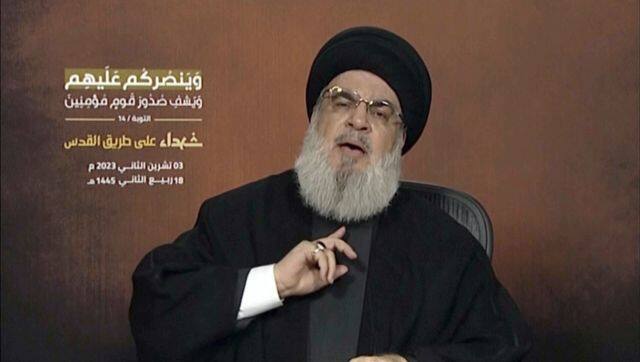 This video grab shows Hezbollah leader Sayyed Hassan Nasrallah speaking via a video link, during a rally in Beirut. AP[/caption]In its early days, the group also carried out attacks on US targets, causing Washington to designate it a terrorist organisation."Iran's support has helped Hezbollah consolidate its position as Lebanon's most powerful political actor as well as the most equipped military actor supported by Iran in the whole of the Middle East," Lina Khatib, the director of the SOAS Middle East Institute in London, told The Associated Press.After a Hezbollah fighters ambushed an Israeli patrol in 2006 and took two Israeli soldiers hostage, Hezbollah and Israel fought a monthlong war that ended in a draw — but not before Israeli bombardment wreaked widespread destruction in southern Lebanon.Also Read: ‘Hezbollah is not intimidated, ready for war,’ says chief Hassan Nasrallah in first speech since Israel-Hamas conflictAt the time, Israel's objective was similar to its current war with Hamas: eliminate Hezbollah. Instead, the group came out stronger — not only an armed force but also a key political party in Lebanon.However, domestic opponents criticised Hezbollah for maintaining its arsenal and dominating the government. Its reputation also suffered when it briefly seized a section of Beirut in May 2008 after the Lebanese government took measures against its private telecommunications network.Who is Hassan Nasrallah?Born in 1960 into a poor Shiite family in the Beirut suburb of Bourj Hammoud and later displaced to south Lebanon, Nasrallah studied theology and joined the Amal movement, a Shiite political and paramilitary organisation, before becoming one of Hezbollah's founders.He became Hezbollah's leader in 1992 after his predecessor was killed in an Israeli strike. Nasrallah now stands as one of the most powerful political figures in Lebanon.
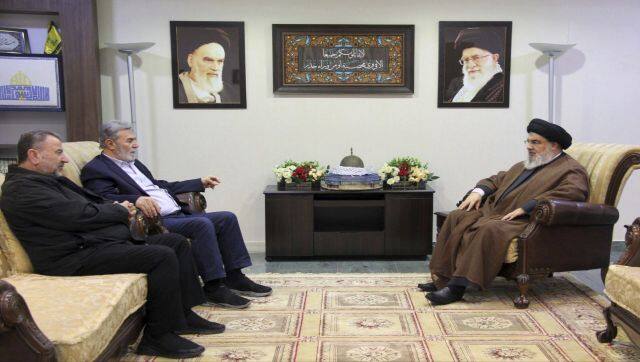 Hezbollah leader Sayyed Hassan Nasrallah, right, meets with Ziad al-Nakhleh, the head of Palestinian Islamic Jihad, centre, and Hamas deputy chief, Saleh al-Arouri, in Beirut. AP[/caption]In recent years, Hezbollah sent forces to Syria to help fellow Iranian ally President Bashar Assad against armed opposition groups. It also supported the growth of Iranian-backed militias in Iraq, Yemen and Syria.Khatib likened Hezbollah to a "big brother" of fledgling Iranian-backed groups that "do not enjoy the same level of infrastructure or discipline."What is the relationship between Hezbollah and Hamas?While Hezbollah is bound to Iran by doctrine, its relationship with Hamas is based on pragmatism.The Palestinian militant group was founded in 1987 as an offshoot of the Sunni Muslim Brotherhood movement. Its political and financial backing from Iran and Syria did not pick up until 2006.A schism erupted between Hamas and the Iranian-backed axis over the Syrian civil war, where Hamas for some time backed Syria's largely Sunni opposition fighters.Also Read: Israel-Hamas war: Why Hezbollah leader Hassan Nasrallah's speech was cause of concernDespite differences over Syria, "over the past five years, relations improved at a fast pace," said Qassim Qassir, a Lebanese analyst close to Hezbollah.Although many top Hamas officials lived in Qatar and Turkey, which backed the Syrian opposition, the group's return to the Iranian fold put them in a tricky situation.Some Hamas officials, including its second-in-command, Saleh al-Arouri, have since moved to Lebanon, where they have Hezbollah's protection and a presence across Lebanon's multiple Palestinian refugee camps.How far is Hezbollah willing to go to protect Hamas?For Hezbollah, fully entering the Israel-Hamas war would risk dragging Lebanon — beset by economic calamity and internal political tensions — into a conflict it can ill afford, fuelling domestic opposition to the group.But staying on the sidelines as Israeli troops take control of the Gaza Strip could compromise Hezbollah's credibility, and a Hamas defeat would be a blow to Iran.Hezbollah's steady pressure on Israel's northern border shows support for Hamas and keeps open the threat of a wider intervention.Qassir interpreted the message behind Nasrallah's speech as: "If you don't want the regional war to expand, then the war (in Gaza) has to stop."But it's unclear how long Hezbollah can maintain this delicate balancing act, with Israel seemingly determined to crush Hamas and the Palestinian death toll in Gaza passing 10,000."If there is a full collapse in Gaza and things reach a point where they have to be fully involved, then they're ready," Qassir said.With inputs from AP
First Published:Nov 09, 2023, 13:00:52 IST
Advertisement
Advertisement

Military drones & police check-ups: How Sri Lanka is fighting against worst dengue outbreak in a decade
Sri Lanka is fighting its most severe dengue outbreak in nearly a decade, with infections rising sharply across the nation. Military drones have been deployed to tackle the outbreak, which has claimed 56 lives. Health officials said the outbreak is being driven primarily by the DENV-2 variant of the virus
3 min read
How Facebook job ad lured 2 Karnataka men into Myanmar cyber scam camp
The Karnataka Cyber Command has rescued two youths from a scam compound in Myanmar operated by Chinese fraudsters. The duo from Karnataka were lured on the pretext of data-entry jobs. They were asked to work for 16 hours a day and were expected to sleep for six hours daily
4 min read
Why is India seeing 95% cloud cover despite a Super El Niño?
India is witnessing nearly 95 per cent cloud cover despite a Super El Niño, a climate event usually linked to weaker monsoons. Regional weather systems, cyclonic circulations, the monsoon trough and moisture from two seas are temporarily overpowering one of the world's strongest climate phenomena
5 min read
What is CJP’s fourth demand to the government as protests in Delhi intensify?
The protest by the Cockroach Janta Party at Delhi’s Jantar Mantar refuses to die down. The group have made a fourth demand to the Centre, asking that no FIRs are filed against the agitators and that no legal action be taken. The government has expressed willingness to speak to the protesters, but refused to accede on the resignation of Education Minister Dharmandra Pradhan
5 min read
The new geography of war: Why the Houthis can no longer be ignored
The rise of the Houthis marks the emergence of a new geography of war — one in which influence flows not only from capitals and conventional armies, but also from rugged mountains overlooking vital sea lanes
6 min read
Advertisement
Advertisement