


History Today: When Benazir Bhutto was assassinated in Pakistan
On December 27, 2007, Benazir Bhutto, a former Pakistani prime minister and the country’s first democratically elected woman leader, was assassinated at an election rally in Rawalpindi. Her death plunged Pakistan into grief and chaos. Also, on this day, the International Monetary Fund (IMF) was formally established in 1945

On December 27, 2007, Benazir Bhutto was assassinated.
The former Pakistan prime minister and the country’s first democratically elected woman leader was killed while campaigning in Rawalpindi’s Liaquat Bagh.
Bhutto was waving to the crowd through the vehicle’s sunroof when chaos erupted. A gunman opened fire on her bulletproof vehicle, and then a bomb exploded near the car, killing more than 20 people, including Bhutto, and wounding over 100 others.
Also, on this day in 1945, the International Monetary Fund (IMF) was formally established with more than two dozen members.
If you are a history geek who loves to learn about important events from the past, Firstpost Explainers’ ongoing series, History Today, will be your one-stop destination to explore key events.
 More from Explainers
The assassination of Benazir Bhutto
Hailing from one of the most famous political dynasties in South Asia, Benazir was the daughter of Zulfikar Ali Bhutto, who was the founder of Pakistan’s People’s Party (PPP). While she was studying abroad, her father was executed by Pakistan’s military regime.
After her father’s death, she returned home to lead his party, and she was repeatedly imprisoned and placed under house arrest. According to several media reports, she was even denied the right to speak, to move, or even to mourn.
In 1988, at the age of 35, Bhutto did the unthinkable. She became the first woman in the modern Muslim world to lead a nation. She served as the prime minister of Pakistan twice. Her government was dismissed twice, each time due to corruption charges and political rivalries.
Bhutto left the country to escape corruption charges. However, she decided to return in 2007 to contest the 2008 general election. The day she landed back in Pakistan, Bhutto narrowly escaped a suicide bomb attack on her convoy. The bomb attack killed 136 people and wounded more than 450. However, Bhutto remained undeterred. On December 27, 2007, Bhutto was killed at a PPP rally in Rawalpindi.
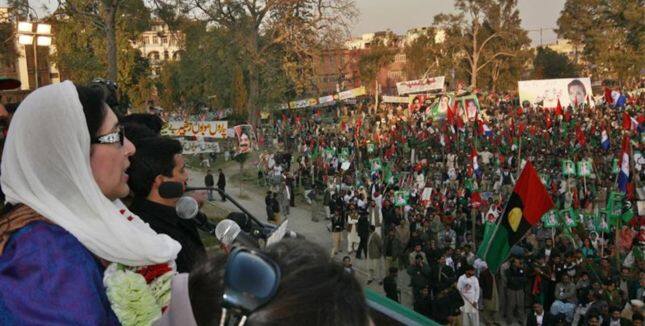
She was rushed to the hospital but was pronounced dead later that night. According to a BBC report, Bhutto was murdered by a 15-year-old suicide bomber called Bilal. Her death caused civil unrest across Pakistan, with riots and demonstrations leading to violent police crackdowns.
The nation plunged into grief and chaos, marking yet another tragic turning point in Pakistan’s history. The United Nations launched an investigation and found that Pakistani police reportedly made deliberate mistakes and showed carelessness. After Bhutto’s assassination, her husband, Asif Ali Zardari, was elected president of Pakistan in September 2008.
When the IMF was formally established
On this day, the International Monetary Fund (IMF) was legally established in 1945. The bloc, which began with 29 members, witnessed more nations joining over time. This was because the Soviet Union and many of its allies and clients refused to do so due to the Cold War.
In the 1970s, the International Monetary Fund began assisting poor nations with concessional financing. It offered financing terms more favourable than those available on the private market. The IMF achieved nearly universal membership in the 1990s.
The IMF is an intergovernmental organisation that aims to create stability during the ongoing globalisation process, with a focus on maintaining international economic stability. Today, the IMF consists of nearly all sovereign states in the world and is headquartered in Washington, DC.
This Day, That Year
1932: Radio City Music Hall, a magnificent Art Deco theatre in New York City, opens during the Great Depression.
1831: British naturalist Charles Darwin sets out from Plymouth, England, aboard the HMS Beagle. His five-year surveying expedition of the southern Atlantic and Pacific oceans would play a vital role in his theory of evolution.
With inputs from agencies

Military drones & police check-ups: How Sri Lanka is fighting against worst dengue outbreak in a decade
How Facebook job ad lured 2 Karnataka men into Myanmar cyber scam camp
Why is India seeing 95% cloud cover despite a Super El Niño?
What is CJP’s fourth demand to the government as protests in Delhi intensify?
The new geography of war: Why the Houthis can no longer be ignored