


History Today: When Parliament, India's seat of power, came under attack
One of the most shocking terror incidents in the history of India took place on December 13, 2001, when five armed terrorists opened fire inside the Parliament premises. Nine security personnel and one Parliament staff member lost their lives neutralising the five terrorists. On this day in 2003, former Iraqi President Saddam Hussein was captured by the American soldiers

Even after 24 years of the gruesome Parliament attack on December 13, 2001, the day continues to shape India's national security. Five armed terrorists stormed the Parliament House in New Delhi and opened fire inside the complex.
If you are a history geek who loves to learn about important events from the past, Firstpost Explainers’ ongoing series, History Today will be your one-stop destination to explore key events.
In a dramatic turn of events, Iraqi dictator Saddam Hussein was captured by the US forces on this day in 2003. This brought an end to the nine-month manhunt after the US invaded Iraq.
Here is all that took place on this day across the world.
Attack on the Indian Parliament
The attack on the premises of the Indian Parliament building on December 13, 2001, remains one of the most shocking incidents in Indian history.
 More from Explainers
Around noon, when both houses of Parliament had adjourned for lunch, a white Ambassador car bearing counterfeit Home Ministry stickers drove up to one of the gates. As it was lunch hour, many ministers and Members of Parliament were still inside the complex. Chaos erupted, and the attackers carrying AK-47s, grenades, and explosives opened fire at the security personnel when their car was stopped by security personnel.
What followed was nearly half an hour of chaos, gunfire, and confusion. The attackers rushed toward the building, clearly intending to cause mass casualties or take hostages. Had Parliament still been in full session, the toll might have been catastrophic. But the security forces reacted with remarkable speed, and members of the CRPF, Delhi Police, and Parliament Security Service engaged the terrorists, preventing them from entering the main structure.
Nine security personnel and one Parliament staff member lost their lives neutralising the five terrorists. The bravery of the guards prevented a national tragedy from becoming even worse.
The attack brought India and Pakistan to the brink of war, triggering massive troop mobilisation along the border. Investigations later linked the attackers to Pakistan-based groups Jaish-e-Mohammed and Lashkar-e-Taiba, prompting years of diplomatic strain.
Afzal Guru of the Jaish-e-Muhammad (JeM), who was convicted for plotting the attack, was hanged in Tihar jail on 9 February 2013.
US forces captured Saddam Hussein
The world watched a dramatic turning point in the Iraq War unfold when Saddam Hussein was captured on December 13, 2003. The capture was a major symbolic victory for the coalition forces and brought an end to the nine-month manhunt following the US-led invasion of Iraq.
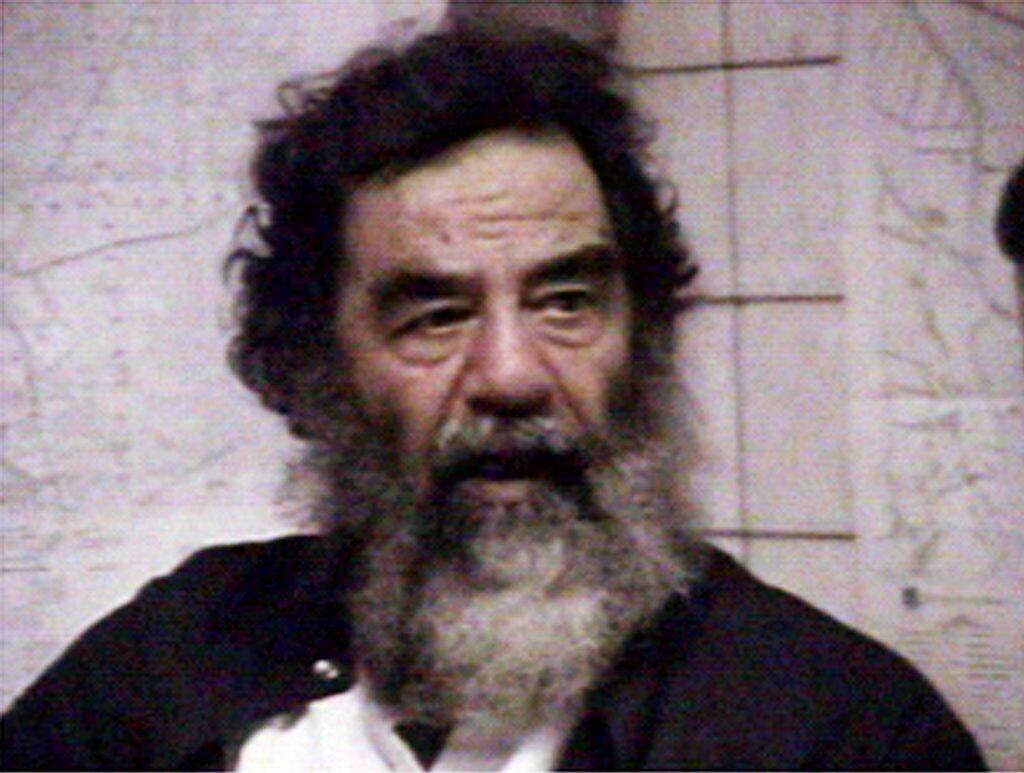
After months of intelligence gathering, raids, and false leads, US forces finally closed in on a small farm near ad-Dawr, just outside Saddam’s hometown of Tikrit. Operation Red Dawn involved hundreds of troops sweeping through the area and found a narrow, concealed spider hole beneath a modest hut. When they lifted the lid, they found Saddam himself in a dishevelled state. He reportedly offered little resistance, uttering, “I am Saddam Hussein. I am the president of Iraq. I want to negotiate.”
The images released afterwards showing a subdued demeanour became instantly iconic. For Iraqis who had lived under his regime, reactions ranged from relief to scepticism about what would come next. For the international community, the capture shifted the conversation from the hunt for Saddam to the enormous challenge of rebuilding Iraq. He was later put on trial by an Iraqi tribunal, convicted of crimes against humanity, and executed in 2006.
This Day, That Year
- The Japanese Imperial Army seized China's Nanjing and carried out the Nanjing Massacre, killing 300,000 on this day in 1937.
- The Four-Power Pact was signed between the United States, Great Britain, Japan, and France in 1921.

Military drones & police check-ups: How Sri Lanka is fighting against worst dengue outbreak in a decade
How Facebook job ad lured 2 Karnataka men into Myanmar cyber scam camp
Why is India seeing 95% cloud cover despite a Super El Niño?
What is CJP’s fourth demand to the government as protests in Delhi intensify?
The new geography of war: Why the Houthis can no longer be ignored