


History Today: How the Indian National Congress was founded
On December 28, 1885, the Indian National Congress (INC) was founded in then British India. Also, in 1065, the original Westminster Abbey was consecrated by King Edward I. The first commercial movie screening took place in Paris on this day in 1895 at the Grand Café

On December 28, 1885, the Indian National Congress (INC) was founded in then British India. The party would play a massive role in India’s independence movement and in the decades after the country won its freedom from the British.
On this day in 1065, the original Westminster Abbey, located in London, was opened by Edward the Confessor. The church, which was dedicated to St Peter, has been the site of British coronations since 1066, with King Charles becoming the 40th monarch crowned at the site in 2023.
Also, the first commercial movie screening took place in Paris on this day in 1895. Two brothers, Louis and Auguste Lumière, held the momentous event at the Grand Café.
If you are a history geek who loves to learn about important events from the past, Firstpost Explainers’ ongoing series, History Today will be your one-stop destination to explore key events.
 More from Explainers
INC is founded
The Indian National Congress, a party that has been inseparable from the history of India, was founded in Bombay by Allan Octavian Hume, a retired English civil servant.
Its first session was held in Bombay from December 28 to December 31, 1885, under the stewardship of WC Bonnerjee. The party originally offered a platform to the urban and educated Indian elite to express their points of view.
Though it was originally set to be held in Pune, it was shifted to Bombay after a cholera outbreak. Its original objectives were to promote friendship, eradicate prejudices, consolidate the sentiment of national unity, and find out what the educated thought about the problems of the day and how to solve them.
The outfit, which is one of India’s oldest political parties, would play a vital role in the independence movement, with leaders such as Mahatma Gandhi, Jawaharlal Nehru, Subhash Chandra Bose, and Lala Lajpat Rai coming to the fore.
The party held the reins of power in India for decades after Independence. It was not until 1977 that India got its first non-Congress Prime Minister in Morarji Desai. Though the party has been out of power at the Centre since 2014, many continue to hope for a revival.
Westminster Abbey is consecrated
The Collegiate Church of St Peter at Westminster was consecrated on this day in 1065. Its patron, King Edward I, popularly known as Edward the Confessor, had established his royal palace on the banks of the River Thames in the 1040s.
The spot has been host to a church since the eighth century after a group of monks established a monastery there. However, around 1040, Edward decided to build a church to honour St Peter. The church became known as the “west minster” to separate it from Saint Paul’s Cathedral, which was known as the “east minster”.
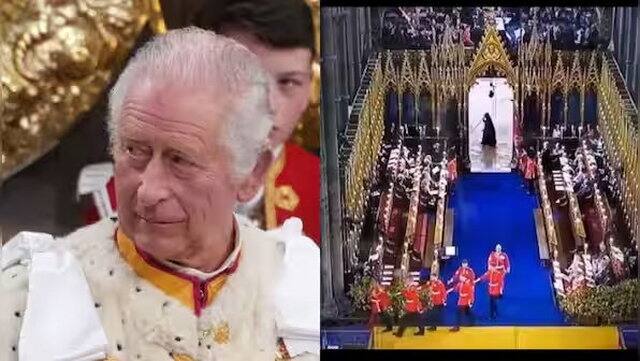
Unfortunately, Edward would die soon after the consecration of the church. Much of the original structure was also lost when King Henry III decided to redo it in the Gothic style in the 13th century.
As mentioned before, a succession of monarchs have been crowned at Westminster Abbey, beginning with William the Conqueror on December 25, 1066. Interestingly, the building hasn’t been an abbey or a cathedral since 1560. Rather, Elizabeth I gave it the status of “Royal Peculiar” — directly under the command of the sovereign. The iconic structure has borne witness to all but two coronations and well over a dozen royal weddings.
First commercial movie screening in France
Where else but Paris could the first commercial movie screening have taken place?
Louis and Auguste Lumière, two French brothers and inventors who developed a camera-projector called the Cinématographe, were at the centre of it all.
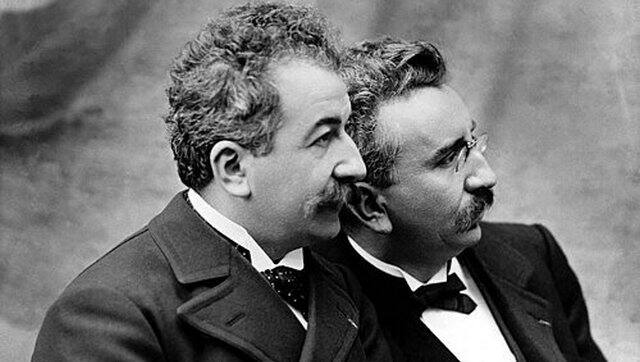
The Lumière brothers had unveiled their wondrous invention to the public earlier that year with their first film, La Sortie des usines Lumière à Lyon (Workers Leaving the Lumière Factory). Then, in December 1895, the Frenchmen created history by showcasing their original 46-second work as well as nine other short films depicting scenes from everyday life.
A year later, the brothers would open their own movie theatres, known as cinemas, where they would show off their own work as well as screen pictures taken by their cameramen all over the world. Today, cinemas remain one of the last remaining communal experiences.
This Day, That Year
1832: John C Calhoun is the first US vice president to resign.
1612: Italian astronomer Galileo Galilei observes Neptune for the first time.
1923: Gustave Eiffel, the famed designer of the Eiffel Tower, passes away.
1982: Elizabeth Jordan Carr, the world’s first IVF baby, is born.

Military drones & police check-ups: How Sri Lanka is fighting against worst dengue outbreak in a decade
How Facebook job ad lured 2 Karnataka men into Myanmar cyber scam camp
Why is India seeing 95% cloud cover despite a Super El Niño?
What is CJP’s fourth demand to the government as protests in Delhi intensify?
The new geography of war: Why the Houthis can no longer be ignored