


History Today: How Mahatma Gandhi's Dandi March influenced India's freedom struggle
March 12, 1930, was the day when Mahatma Gandhi embarked on a journey on foot from the Sabarmati Ashram in Ahmedabad to Dandi, a coastal village, to protest against the Salt Act imposed by the British government. The march is one of the earliest examples of nonviolence in India's freedom struggle. On this day in 1894, Coca-Cola was sold in glass bottles for the first time marking a global phenomenon

Wearing his signature khadi dhoti and shawl, Mohandas Karamchand Gandhi began walking towards the coastal city of Dandi on March 12, 1930. This led to the beginning of one of the most important events in history - the Dandi march. It is one of the most famous early acts of civil disobedience in India's freedom struggle from the British.
If you are a history geek who loves to learn about important events from the past, Firstpost Explainers’ ongoing series, History Today will be your one-stop destination to explore key events.
On this day in 1894, Coca-Cola was sold in glass bottles for the first time marking a pivotal shift in the non-alcoholic beverage industry.
 More from Explainers
Here is all that happened on this day across the world.
Mahatma Gandhi began the non-violent Dandi march
The British were burdening Indians and draining the wealth of the nation since they took over in 1757. From zamindari to income tax, all kinds of taxes were imposed on the people of the country that were so burdensome that they forced people to leave their land.
One of the worst taxes was the India Salt Act of 1882, forbidding the collection and sale of salt by Indians. The act gave the British a monopoly on the production and sale of salt, one of the most common food ingredients, in the country and forced poor Indians to buy it at an exorbitant amount from the British.
On March 12, 1930, Mohandas Karamchand Gandhi, clad in his signature white dhoti and shawl, set out for the coastal village of Dandi from Sabarmati Ashram in Ahmedabad with 78 followers. This march is considered to play a pivotal role in India's struggle for independence from British rule due to being one of the earliest acts of nonviolence in history. He met thousands of people during the course of the march and interacted with them to understand their issues.
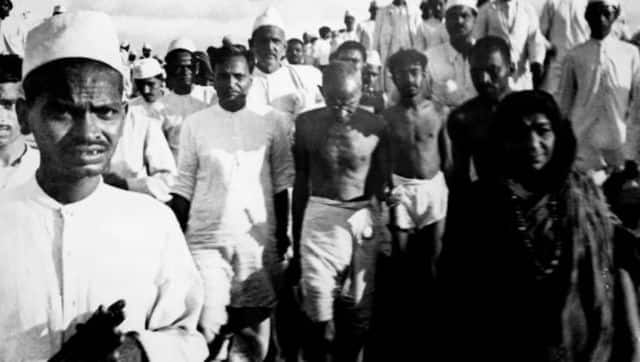
As Gandhi and his followers marched, thousands of Indians joined along the way, turning it into a mass civil disobedience movement. Upon his arrival on April 6 in Dandi, Gandhi discovered that the police had rendered the salt flats unusable by crushing the deposits into the mud. Undeterred, he reached down and retrieved a small lump of natural salt from the mud, a powerful act of defiance against the British.
This symbolic gesture ignited a wave of civil disobedience, with thousands in other coastal cities following Gandhi's lead by producing their own salt, effectively disrupting the British order. The defiant action led to his arrest in but the Satyagraha carried on with people inspired to take their destiny into their own hands.
Coca-Cola begins selling in glass bottles
Today, 'cold drink' is synonymous with the distinctive hourglass bottle of Coca-Cola, but that was not always the case. Coca-Cola, popularly known as Coke, was developed as a soda fountain drink in 1886 in Atlanta. Within a few years its popularity grew and by 1900 Coke was being sold in every state. But the issue was it could only be sold in soda fountain shops.
On March 12, 1894, the first Coca-Cola bottles were introduced by Joseph A Biedenharn, a businessman from Vicksburg, Mississippi. Biedenharn owned a candy store and soda fountain and recognised the drink’s growing popularity. He decided to bottle it using Hutchinson-style glass bottles which allowed Coca-Cola to reach rural areas and small towns where soda fountains were not available.
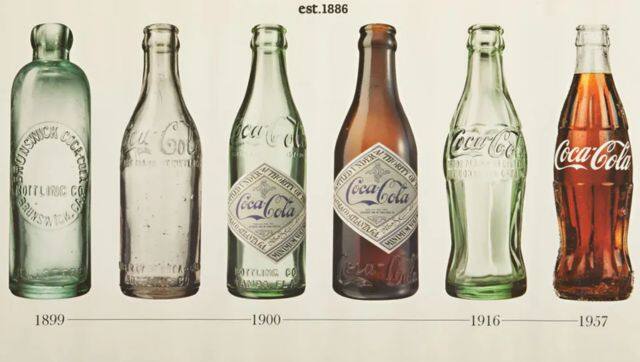
In 1899, two Chattanooga lawyers, Joseph Whitehead and Benjamin Thomas, travelled to Atlanta to negotiate the rights to bottle Coca-Cola. The contract the two signed led to the birth of The Coca‑Cola Bottling Company and began franchising the rights to bottle Coca-Cola in cities across the US. This led to the establishment of the first official Coca-Cola bottling plants, fuelling the brand’s rapid growth and turning it into a global phenomenon.
The introduction of glass bottles laid the foundation for Coca-Cola’s mass production, branding, and worldwide recognition. Over the years, the company evolved its bottle design, eventually creating the iconic contour bottle in 1915, which remains one of the most recognizable packaging designs in the world.
This Day, That Year
- In 1999, Poland, Hungary and the Czech Republic became Nato members on this day.
- American lawyer Janet Reno was sworn in as the first female US attorney general in 1993.
- On this day in 1804, Samuel Chase became the first and only US Supreme Court justice to be impeached.

Military drones & police check-ups: How Sri Lanka is fighting against worst dengue outbreak in a decade
How Facebook job ad lured 2 Karnataka men into Myanmar cyber scam camp
Why is India seeing 95% cloud cover despite a Super El Niño?
What is CJP’s fourth demand to the government as protests in Delhi intensify?
The new geography of war: Why the Houthis can no longer be ignored