


History Today: How Mahatma Gandhi launched his first civil disobedience act in South Africa
One of the most important events of Mahatma Gandhi's life took place on June 7, 1893 in South Africa. He was forced out of a moving train in Pietermaritzburg, on his way from Durban to Pretoria, due to racial segregation. This led him to launch the his first civil disobedience movement. On this day in 1975, the first Cricket World Cup Test match was started

Mohandas Karamchand Gandhi was the force behind the Indian freedom struggle, leading the country through his non-violent civil disobedience movement. Gandhi was often asked about the turning point in his life, which he often considered was his forcible removal from a train in South Africa due to racial segregation on June 7, 1893.
If you are a history geek who loves to learn about important events from the past, Firstpost Explainers’ ongoing series, History Today will be your one-stop destination to explore key events.
On this day in 1975, the first Cricket World Cup officially began in England which marked the birth of one-day international (ODI) cricket.
 More from Explainers
Here is all that happened on this day.
Gandhi’s first civil disobedience act
It was on June 7, 1893, that changed the course of Mohandas Karamchand Gandhi's life. Gandhi was a young lawyer who was working in South Africa when he undertook the first civil disobedience act of his life.
Despite possessing a valid first-class ticket, Gandhi was confronted by a white passenger upon boarding a train at Pietermaritzburg, who insisted he move to the third-class compartment. Gandhi's refusal, based on his legal right, led to his forceful removal from the train at Pietermaritzburg station, where he was abandoned for the cold night in the waiting room. This blatant act of humiliation and injustice proved to be a pivotal moment, fundamentally altering Gandhi's life and thinking.
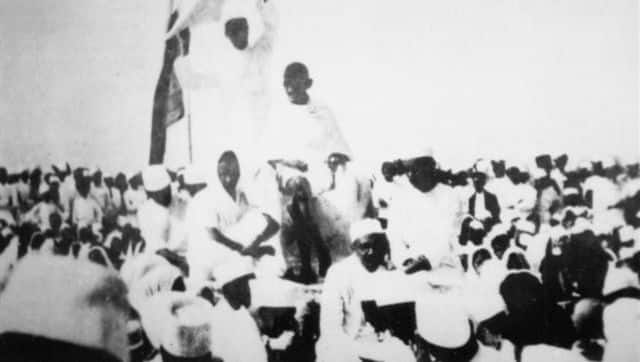
Rather than returning to India, Gandhi chose to stay in South Africa to fight racial discrimination and inequality against Indians and other non-white communities. This incident is widely regarded as the genesis of satyagraha, his philosophy of nonviolent resistance or “truth-force.”
This modest yet powerful act of civil disobedience became a cornerstone of Gandhi’s lifelong mission for justice. It not only laid the foundation for his later campaigns in South Africa but also inspired India’s freedom struggle decades later. The event also marked the beginning of organized resistance against institutionalised racism in South Africa.
First Cricket World Cup began
India has a huge cricket fanbase so much so that it is celebrated like a festival in the country. Introduced to India by the Britishers, the very first Cricket World Cup began in England on June 7, 1975. This landmark event marked a new era for international cricket, bringing the recently popularised One Day International (ODI) format to a global stage. While Test cricket had a long and storied history, the concept of a multi-nation limited-overs tournament was relatively new.
Eight teams participated in the inaugural tournament which included the hosts England, along with Australia, India, New Zealand, Pakistan, Sri Lanka, West Indies and East Africa. The matches were played in a 60-overs-per-side format, a format that would later be reduced to 50 overs. The tournament featured traditional white kits and a red ball, a stark contrast to the colored clothing and white balls seen in modern ODIs.
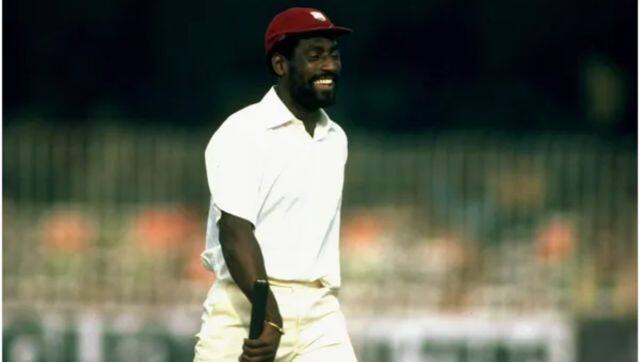
The West Indies, a formidable side led by the legendary Clive Lloyd and boasting an array of powerful batsmen like Vivian Richards and a fearsome pace attack, emerged as the dominant force. They navigated the tournament without losing a single match, showcasing the dynamic and exciting potential of the ODI format.
The West Indies, a formidable side led by the legendary Clive Lloyd and boasting an array of powerful batsmen like Vivian Richards and a fearsome pace attack, emerged as the dominant force. They navigated the tournament without losing a single match, showcasing the dynamic and exciting potential of the ODI format.
This Day, That Year
- Jordanian-born Iraqi militant Abu Musab al-Zarqawi was killed in a US military air strike on this day in 2006.
- On this day in 1965, the US Supreme Court ruled in favour of the constitutional right of married persons to use birth control.

Military drones & police check-ups: How Sri Lanka is fighting against worst dengue outbreak in a decade
How Facebook job ad lured 2 Karnataka men into Myanmar cyber scam camp
Why is India seeing 95% cloud cover despite a Super El Niño?
What is CJP’s fourth demand to the government as protests in Delhi intensify?
The new geography of war: Why the Houthis can no longer be ignored