


History Today: How America formally banned slavery 160 years ago
On December 18, 1865, America abolished slavery, as it adopted the 13th Amendment into the constitution. The decision came 246 years after the first shipload of captive Africans was brought to Virginia. On this day in 1941, Japanese forces invaded Hong Kong Island during World War II

America's history is marred by the horrors of slavery. These slaves, mostly brought from Africa, helped in the establishment of the colonies in America. On December 18, 1865, slavery was formally abolished in the United States, marking the legal end of an institution that had shaped American society, politics, and economics for more than two centuries. 2025 marks the 160th year of the abolition of slavery in the United States.
On this day in 1941, Japanese forces invaded Hong Kong by landing on he island during World War II. In 2019, Donald Trump became the third president in US history to be impeached on this day.
Here is all that took place on across the world.
Slavery was abolished in America
For nearly 200 years, slaves were an integral part of America. They helped in setting up the colonies in America by working on the cotton fields as well as house helpers. But they were not given a lot of privileges. This changed on December 18, 1865, when slavery was abolished in the United States when the 13th Amendment to the US Constitution was officially ratified.
 More from Explainers
While President Abraham Lincoln’s Emancipation Proclamation in 1863 had freed enslaved people in Confederate-held territories, it did not abolish slavery nationwide. The 13th Amendment was passed by Congress on January 31, 1865, after intense debate and resistance, particularly from lawmakers in slave holding states.
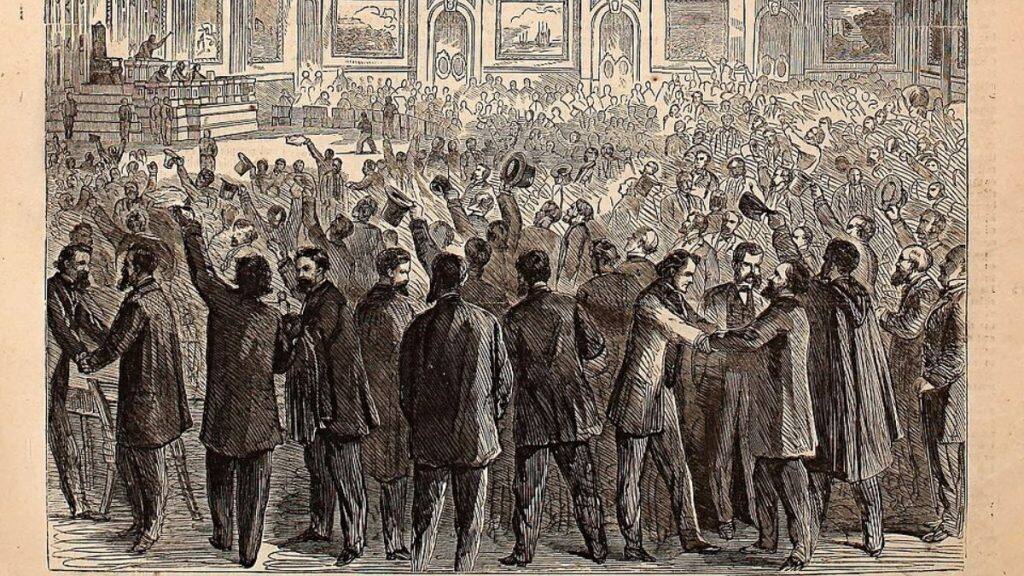
It declared that “neither slavery nor involuntary servitude, except as a punishment for crime,” would exist in the US. After Congress approved it, the amendment was sent to the states for ratification. By December 18, the required three-fourths of states had ratified and certified it as part of the Constitution.
For millions of formerly enslaved people, the amendment represented long-denied legal freedom. Families who had been torn apart by slavery sought to reunite, and many began pursuing education, paid work, and political participation. However, Southern states soon passed “Black Codes” that restricted the rights of Black Americans, and violence and intimidation were used to maintain racial hierarchies.
Japan invaded Hong Kong
On this day in 1941, Japan invaded Hong Kong Island during the World War II. The broader invasion had begun on December 8, just hours after the attack on Pearl Harbour. Japanese troops crossed from mainland China into the British colony’s New Territories.
While British, Canadian, Indian, and local Hong Kong forces attempted to defend the territory, they were badly outmatched. Japanese troops captured the New Territories and the Kowloon Peninsula after days of fighting. Facing heavy losses and unable to stop the advance, withdrew across Victoria Harbour to Hong Kong Island on December 13, destroying key infrastructure behind them.
On the night of December 18, Japanese forces launched an amphibious assault across the harbour. They landed at multiple points on the island’s Northeastern shore, catching the defenders off guard. Despite fierce resistance, the Japanese quickly established beachheads and pushed inland. Their advance split Allied forces and made coordinated defence increasingly difficult.
Civilians were caught in the crossfire when Japanese troops captured strategic high ground. Reports later documented widespread atrocities, including executions of prisoners and violence against civilians. Supplies ran low, hospitals were overwhelmed, and hopes of relief faded as it became clear that no reinforcements were coming.
By December 25, known as “Black Christmas” in Hong Kong, Governor Sir Mark Young formally surrendered. The occupation that followed lasted nearly four years and brought severe hardship, including food shortages, forced labour, and repression. Hong Kong’s population fell sharply as many residents fled or died during the occupation.
Trump impeached for the first time
Donald Trump was impeached for the first time on this day in 2019. With this, he was only the third US president in history to face impeachment. The decision followed weeks of intense investigation and debate in Congress over his dealings with Ukraine. At the centre of the case was an allegation that Trump pressured Ukrainian President Volodymyr Zelensky to investigate political rival Joe Biden and his son while withholding military aid approved by Congress.
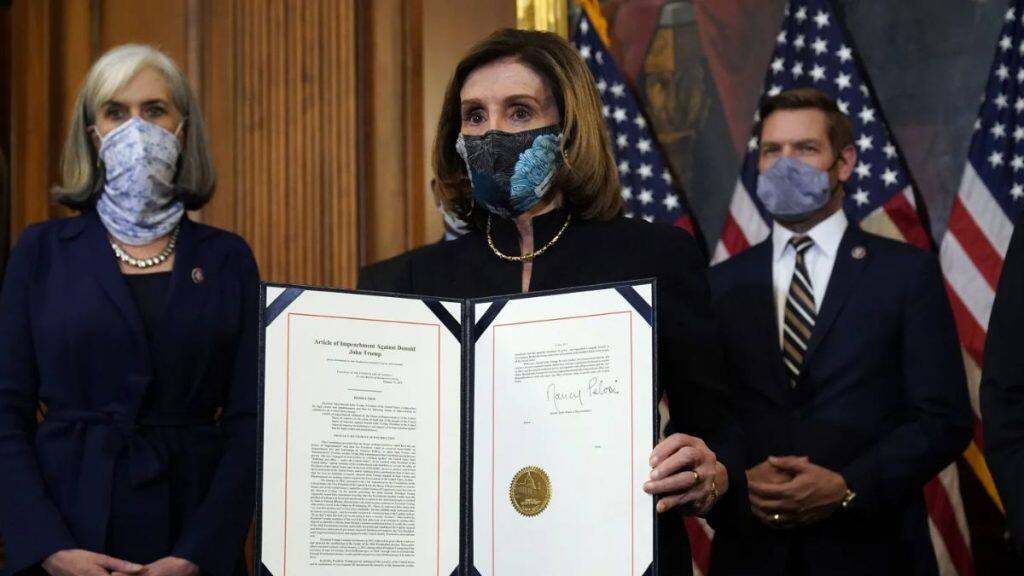
House Speaker Nancy
Pelosi of California displays the signed article of impeachment against President Donald Trump in an engrossment ceremony before transmission on the Senate for trial on Capitol Hill in Washington. File image/AP
The impeachment stemmed from a whistleblower complaint that led to the release of a July 2019 phone call between Trump and Zelenskyy. House Democrats argued that Trump abused the power of his office for personal political gain and obstructed Congress by refusing to cooperate with the investigation. Two articles of impeachment were introduced - abuse of power and obstruction of Congress.
The US House of Representatives voted largely along party lines. The abuse of power article passed 230–197, while the obstruction of Congress passed 229–198. Republican lawmakers overwhelmingly opposed impeachment, calling the process partisan and unfair. Meanwhile, Trump denied all allegations, insisting the call was 'perfect' and that he had done nothing wrong.
The impeachment did not remove Trump from office, and the process then moved to the Republican-controlled Senate, which held a trial in January and February 2020. The Senate voted to acquit Trump on both charges, allowing him to remain president. Only one Republican senator, Mitt Romney, voted to convict Trump on the abuse of power charge.
Despite the acquittal, the impeachment left a lasting mark on Trump’s presidency and the nation’s political climate. It deepened partisan divisions and set a precedent for how Congress might respond to presidential conduct in the modern era.
This Day, That Year
- The TV special How the Grinch Stole Christmas! was aired for the first time on this day in 1966.
- Hollywood actor Brad Pitt was born on this day in 1963.
- New Jersey became the third state admitted to the United States when it ratified the US Constitution on this day in 1787.

Military drones & police check-ups: How Sri Lanka is fighting against worst dengue outbreak in a decade
How Facebook job ad lured 2 Karnataka men into Myanmar cyber scam camp
Why is India seeing 95% cloud cover despite a Super El Niño?
What is CJP’s fourth demand to the government as protests in Delhi intensify?
The new geography of war: Why the Houthis can no longer be ignored