


Why flights were grounded in Greece, leaving holiday passengers stranded
A communication failure forced Greece to close its airspace on Sunday (January 4). The main airport at Athens was the worst hit, while Thessaloniki airport shut entirely. Thousands of flyers returning home from holidays for the start of the work week were stranded across Europe

The first weekend of 2026 started on a chaotic note for flyers in Europe. Hundreds of flights to, from, and within Greece were delayed or cancelled on Sunday (January 4), leaving thousands of passengers stranded at the airports across the continent.
The main airport in Athens was among the worst hit, while Thessaloniki airport has closed entirely. More than 90 flights were affected in and out of Athens airport alone, reports the BBC.
Long queues formed at Athens’ Eleftherios Venizelos airport after multiple domestic and international flights were delayed or grounded, reported AFP. The country's civil aviation authority (HCAA) described the outage as 'unprecedented'.
"No plane landed or took off for at least two hours," said the press office at Athens airport on Sunday morning, where 31.6 million passengers transited in the first 11 months of 2025.
 More from Explainers
Why did flight cancellations occur in Greece?
Greek airports were brought to a standstill on Sunday as disruption began at 8:59 am local time following a technical issue that knocked out the airspace radio frequencies, crippling air traffic communications. The disruption comes during one of Athens’ busiest travel periods, when more than 600 flights typically operate each day as travellers return from winter holidays.
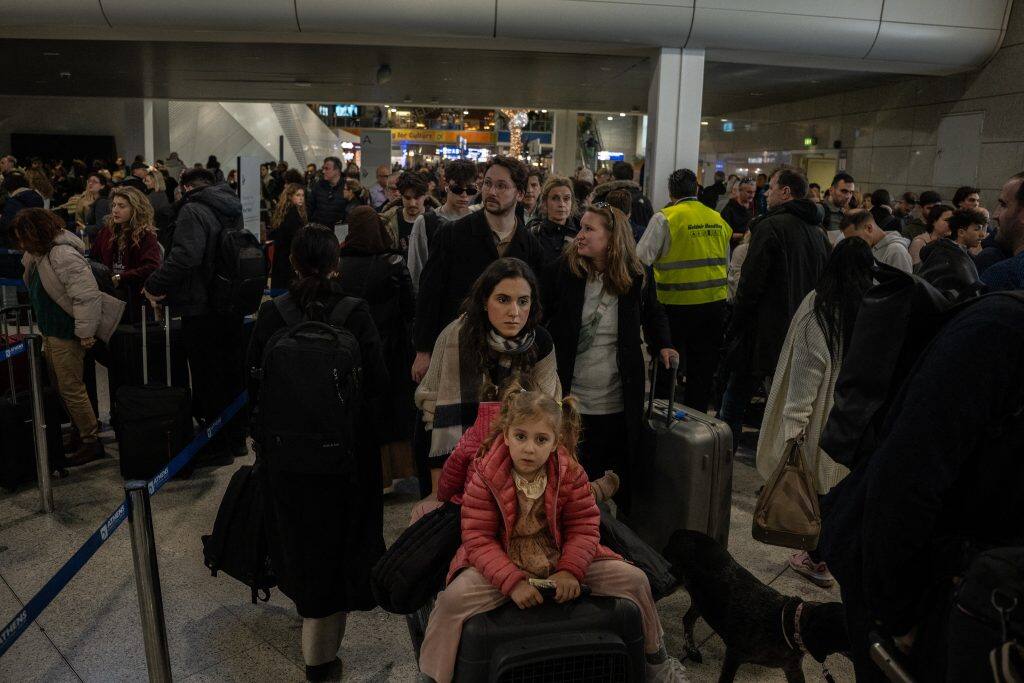
The civil aviation authority said radio channels were affected by an unexplained noise, with no clear cause so far. "The 'noise' observed in the frequencies was in the form of continuous, involuntary emission," it said in a statement.
"For some reason, all frequencies were suddenly lost... We could not communicate with aircraft in the sky," Panagiotis Psarros, chair of the Association of Greek Air Traffic Controllers, told state broadcaster ERT.
He later told Reuters that the outage highlighted the vulnerability of an ageing system, which he said should have been replaced many years ago. "We work with the most antiquated systems...in Europe," he said.
ERT reported that an initial probe by the Greek security services suggested the problem may be due to the failure of an antenna in the Gerania Mountains near Athens.
However, Christos Dimas, Greece’s infrastructure and transport minister, said the incident did not compromise flight safety.
What happened during the flight disruptions?
Disruptions forced multiple flight diversions, with some Athens-bound flights sent to Rome and Dubrovnik. An SAS flight to Thessaloniki ended up in Budapest, a Transavia flight from Amsterdam landed in Tirana, and a Vilnius-to-Heraklion flight was diverted to Larnaca.
Flights from Dublin, Barcelona and Paris were ordered to return to their airports of origin earlier, while services from Copenhagen and Malta were cancelled completely, the BBC reported.
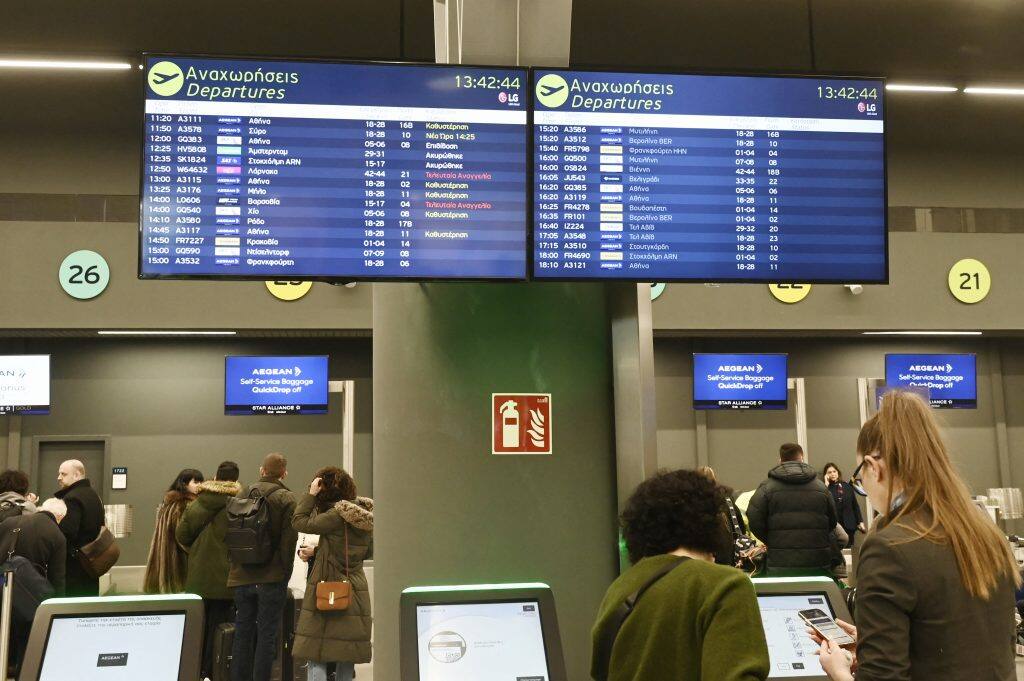
British Airways scrapped a morning Heathrow–Athens flight, while Aegean cancelled its evening service from Athens to Heathrow and the overnight inbound flight back to the Greek capital, reported news outlet The Independent.
Most aircraft headed for Greek airports were redirected to Turkey, reported AFP, quoting Greek public television ERT.
Passengers were kept in the dark over the developments, leading to a stressful situation among travellers. One of the passengers, who had been on a flight to Rhodes when it turned around for Athens, told Reuters that there had been no communication. "From that moment until now, we have no information whatsoever," they complained.
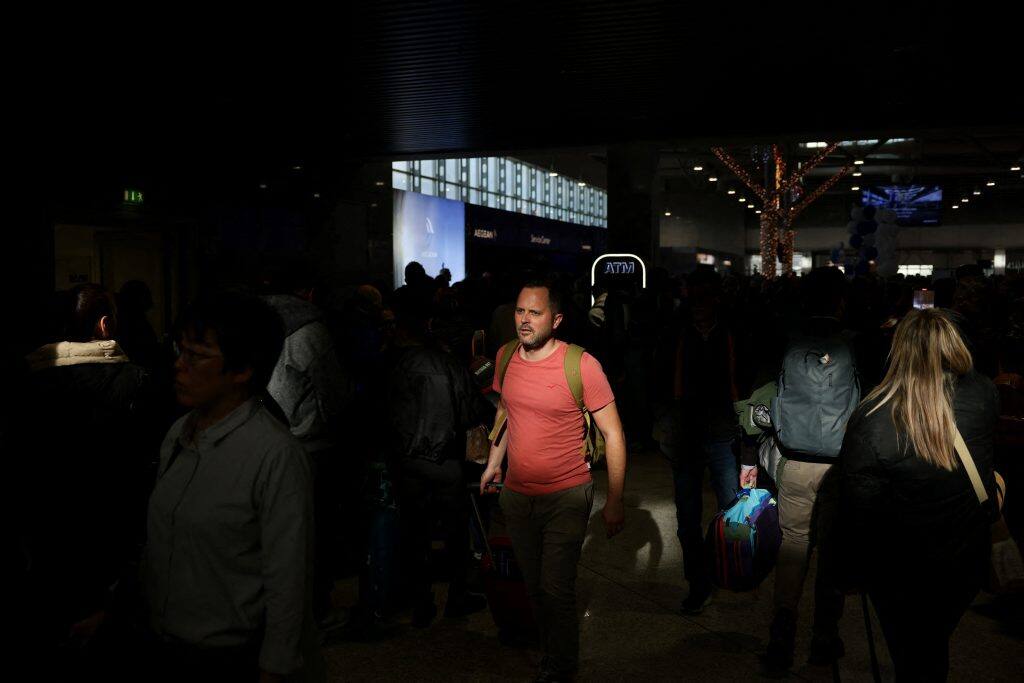
The disruptions on Sunday meant that many would not be able to return home for the start of the working week.
"I was supposed to fly to London, via Stockholm, with SAS," a passenger at Athens International Airport was quoted as saying by Greek broadcaster Mega TV. "I'm working at Newport Hospital tomorrow [Monday] morning. I'm not going to be there on time... I don't know what else to say."
Aviation regulations state that passengers, whose flights have been cancelled, must be offered prompt rebooking and support, such as meals and hotel stays, until they reach their destination. However, it is unclear if the affected flyers on Sunday were compensated.
Have operations resumed?
By Sunday afternoon, limited services had been restored after pilots switched to backup frequencies to maintain contact with controllers on the ground. Around 45 flights were leaving Greek airports every hour by late afternoon, an official said.
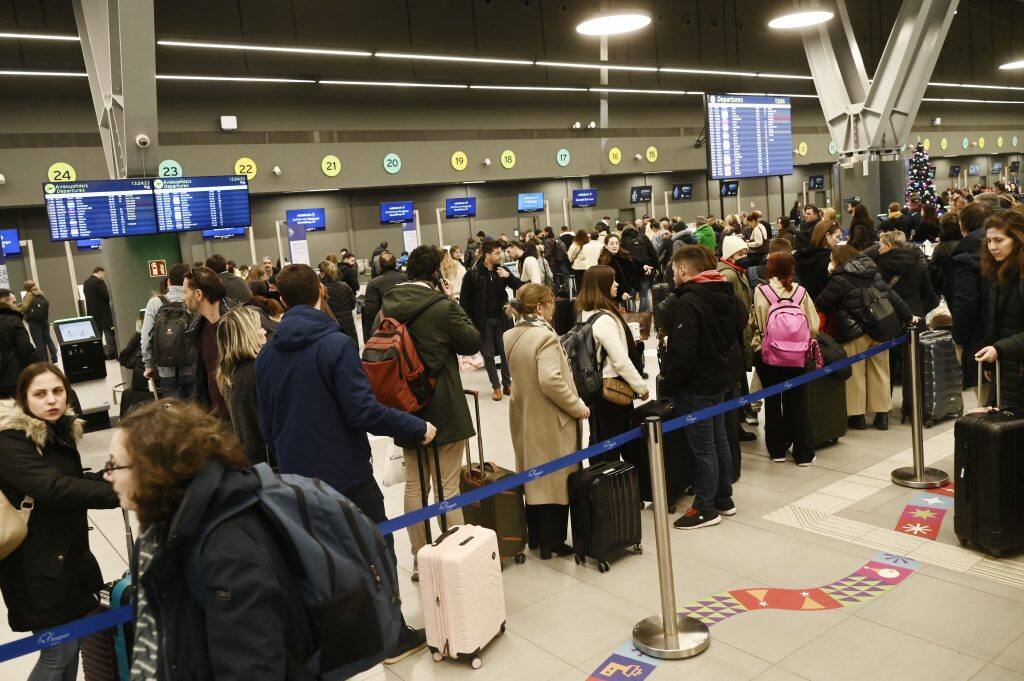
Panagiotis Psarros, head of Greece's air traffic controller union, called the incident "very serious" and blamed what he said was "obsolete" airport equipment.
With inputs from agencies
Tags

Military drones & police check-ups: How Sri Lanka is fighting against worst dengue outbreak in a decade
How Facebook job ad lured 2 Karnataka men into Myanmar cyber scam camp
Why is India seeing 95% cloud cover despite a Super El Niño?
What is CJP’s fourth demand to the government as protests in Delhi intensify?
The new geography of war: Why the Houthis can no longer be ignored