
Advertisement


Sections
Get Moving: How running helps cope with stress at work
Running can help us manage the expectations, frustrations, and pressures of modern work more effectively. Aside from the obvious physical health benefits, it can help people find an identity that matches who they want to be and feel a sense of belonging to a community of like-minded runners

If grabbing your trainers and heading out for a run is your way of coping with a stressful week at work, you’re not alone. According to England Athletics, more than six million adults in England ran at least once a week in 2021, and around two-thirds cite reducing stress as a reason for running.Running is a valuable way to help us deal with stress, including from our jobs. Our research investigated how taking part in “parkrun” — a weekly organised mass five-kilometre run held globally — affected employees from a range of organisation sizes and types.It shows that running can help us to manage the expectations, frustrations and pressures of contemporary work more effectively.Research suggests that one in seven of us experience mental health problems associated with their work. And research also shows that our work lives are becoming more intense — we face the expectation to get more done at work and to do it more quickly.This may make us feel as though we are never quite good enough, and it sets us up for failure. Repeated failure can translate into us feeling that we ourselves are a failure.All this erodes our sense of purpose in life. This means that work can not only be physically and mentally exhausting but also damaging to our sense of self.There’s no doubt that workplace culture needs to change. In the meantime, though, our research has shown that running can help address these feelings. Running can offer us a community and an identity beyond our work selves — a valued sense of self over which we have control.A different selfThe people we spoke to in our research emphasised that having the identity of a runner, and the associated feeling that they belonged to a running community, gave them a sense of self and of value.[caption id="attachment_12165432" align="alignnone" width="640"]![]() Runners can be easily beguiled by a sense of achievement, duped into a need to run further, faster or more often than others in their community — whether that’s friends and colleagues or a person’s online community. Pixabay[/caption]This contrasted strongly with their feeling that work was either leaving them feeling insignificant or was corrupting who they really wanted to be.Second, our research on how running can help managers deal with workplace issues suggests that running builds resilience. In particular, it can help us with our ability to cope with failure.
Runners can be easily beguiled by a sense of achievement, duped into a need to run further, faster or more often than others in their community — whether that’s friends and colleagues or a person’s online community. Pixabay[/caption]This contrasted strongly with their feeling that work was either leaving them feeling insignificant or was corrupting who they really wanted to be.Second, our research on how running can help managers deal with workplace issues suggests that running builds resilience. In particular, it can help us with our ability to cope with failure.![]() Research also warn that too much running, especially when accompanied by social media and the use of performance tracking apps, can fuel our desire for constant achievement and competition. Image used for representational purposes/Pixabay[/caption]An over-reliance upon running — whether for escape or for relaxation, especially when — as is inevitable — injury occurs, risks accelerating the corrosive sense of never being quite good enough that characterises contemporary work and life.So, running can result in significant rewards. Besides the more obvious physical health benefits, it can enable people to find an identity that fits with who they want to be, and to feel a sense of belonging to a community of like-minded runners. But take care — don’t let it consume you.
Research also warn that too much running, especially when accompanied by social media and the use of performance tracking apps, can fuel our desire for constant achievement and competition. Image used for representational purposes/Pixabay[/caption]An over-reliance upon running — whether for escape or for relaxation, especially when — as is inevitable — injury occurs, risks accelerating the corrosive sense of never being quite good enough that characterises contemporary work and life.So, running can result in significant rewards. Besides the more obvious physical health benefits, it can enable people to find an identity that fits with who they want to be, and to feel a sense of belonging to a community of like-minded runners. But take care — don’t let it consume you.![The Conversation]() This article is republished from The Conversation under a Creative Commons license. Read the original article.Read all the Latest News, Trending News, Cricket News, Bollywood News,India News and Entertainment News here. Follow us on Facebook, Twitter and Instagram.
This article is republished from The Conversation under a Creative Commons license. Read the original article.Read all the Latest News, Trending News, Cricket News, Bollywood News,India News and Entertainment News here. Follow us on Facebook, Twitter and Instagram.
 Runners can be easily beguiled by a sense of achievement, duped into a need to run further, faster or more often than others in their community — whether that’s friends and colleagues or a person’s online community. Pixabay[/caption]This contrasted strongly with their feeling that work was either leaving them feeling insignificant or was corrupting who they really wanted to be.Second, our research on how running can help managers deal with workplace issues suggests that running builds resilience. In particular, it can help us with our ability to cope with failure.
Running comes with its own risks of failure.For example, there’s a good chance we might at some stage injure ourselves — but we know that this is a possibility and learn how to manage it, perhaps by running a shorter distance or accepting slower times as we recover.What’s more, if runners exercise as members of a group, failure is encountered collectively. Injuries happen, targets are missed. Failures are common and normal.This may neutralise, or at least reduce, the negative feelings that come with failure. Exposure to failure can help us examine our emotions about it, and cultivate a tolerance of failure which can arguably then be transferred back to our work.Don’t go too farBut our research has also warned that too much running — especially when accompanied by social media and the use of performance tracking apps — can fuel our desire for constant achievement and competition.Runners can be easily beguiled by a sense of achievement, duped into a need to run further, faster or more often than others in their community — whether that’s friends and colleagues or a person’s online community. In this context, running can reinforce the disciplining tendencies of contemporary work.[caption id="attachment_12165472" align="alignnone" width="640"]
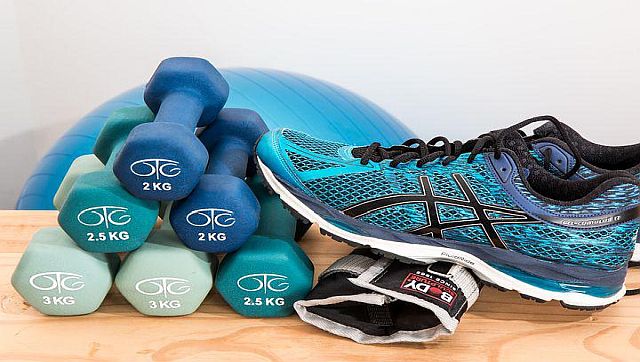 Research also warn that too much running, especially when accompanied by social media and the use of performance tracking apps, can fuel our desire for constant achievement and competition. Image used for representational purposes/Pixabay[/caption]An over-reliance upon running — whether for escape or for relaxation, especially when — as is inevitable — injury occurs, risks accelerating the corrosive sense of never being quite good enough that characterises contemporary work and life.So, running can result in significant rewards. Besides the more obvious physical health benefits, it can enable people to find an identity that fits with who they want to be, and to feel a sense of belonging to a community of like-minded runners. But take care — don’t let it consume you.
 This article is republished from The Conversation under a Creative Commons license. Read the original article.Read all the Latest News, Trending News, Cricket News, Bollywood News,India News and Entertainment News here. Follow us on Facebook, Twitter and Instagram.
First Published:Feb 18, 2023, 09:00:34 IST
Advertisement
Advertisement

Military drones & police check-ups: How Sri Lanka is fighting against worst dengue outbreak in a decade
Sri Lanka is fighting its most severe dengue outbreak in nearly a decade, with infections rising sharply across the nation. Military drones have been deployed to tackle the outbreak, which has claimed 56 lives. Health officials said the outbreak is being driven primarily by the DENV-2 variant of the virus
3 min read
How Facebook job ad lured 2 Karnataka men into Myanmar cyber scam camp
The Karnataka Cyber Command has rescued two youths from a scam compound in Myanmar operated by Chinese fraudsters. The duo from Karnataka were lured on the pretext of data-entry jobs. They were asked to work for 16 hours a day and were expected to sleep for six hours daily
4 min read
Why is India seeing 95% cloud cover despite a Super El Niño?
India is witnessing nearly 95 per cent cloud cover despite a Super El Niño, a climate event usually linked to weaker monsoons. Regional weather systems, cyclonic circulations, the monsoon trough and moisture from two seas are temporarily overpowering one of the world's strongest climate phenomena
5 min read
What is CJP’s fourth demand to the government as protests in Delhi intensify?
The protest by the Cockroach Janta Party at Delhi’s Jantar Mantar refuses to die down. The group have made a fourth demand to the Centre, asking that no FIRs are filed against the agitators and that no legal action be taken. The government has expressed willingness to speak to the protesters, but refused to accede on the resignation of Education Minister Dharmandra Pradhan
5 min read
The new geography of war: Why the Houthis can no longer be ignored
The rise of the Houthis marks the emergence of a new geography of war — one in which influence flows not only from capitals and conventional armies, but also from rugged mountains overlooking vital sea lanes
6 min read
Advertisement
Advertisement