


'World Cup' is the Word of the Week: Why this Beautiful Game continues to unite billions worldwide
The 2026 FIFA World Cup is underway across the United States, Canada, and Mexico. Firstpost explores the origins of the phrase 'World Cup', its linguistic evolution, India's paradoxical football relationship, and why the Beautiful Game continues to unite billions worldwide

Welcome to Firstpost’s weekly Word of the Week segment, where we strip away the casual usage of a trending phrase to dissect its history, politics, etymology, and cultural weight.
There was only ever one candidate for this week's edition.
As you read this, the planet is completely locked in the grip of a singular obsession. We are three days into the completely reimagined 2026 FIFA World Cup.
The grand experiment of a multi-nation, 48-team footballing marathon across North America has officially transitioned from boardroom design to pitch-side reality.
The opening whistles have blown in Mexico City, Toronto, and Los Angeles.
Traditional powerhouses are adjusting to new tactical pressures, underdogs are hunting for historic giant-killings, and billions of people are adjusting their sleep schedules to line up with Western Hemisphere time zones.
 More from Explainers
But what does it actually mean when we combine these two simple words — "World" and "Cup"? How did a basic drinking vessel become the definitive shorthand for global supremacy?
The making of a linguistic heavyweight
The word "Cup" traces its lineage back to the Late Latin cuppa, which described a simple, hollowed-out drinking vessel or chalice. For centuries, the ultimate act of hospitality or victory celebration involved pouring wine or spirits into a communal vessel, which was then passed among comrades.
By the 17th and 18th centuries in Great Britain, this tradition formalised within early sporting cultures, notably horse racing, archery, and rowing. Winners were presented with physical silver or gold chalices. The act of winning a "cup" meant you had earned the right to toast your health above all rivals.
The word "World" comes from the Old English weorold, a compound translating literally to the "age of man." It signifies the totality of human existence, cross-cultural spaces, and geographic finality.
When the International Federation of Association Football (Fifa) convened in the late 1920s under the visionary presidency of French administrator Jules Rimet, international football was merely a secondary feature of the Olympic Games.
Rimet and his colleagues recognised that the sport required a standalone showcase independent of the International Olympic Committee's rigid amateurism rules. They needed a title that felt definitive, clean, and total.
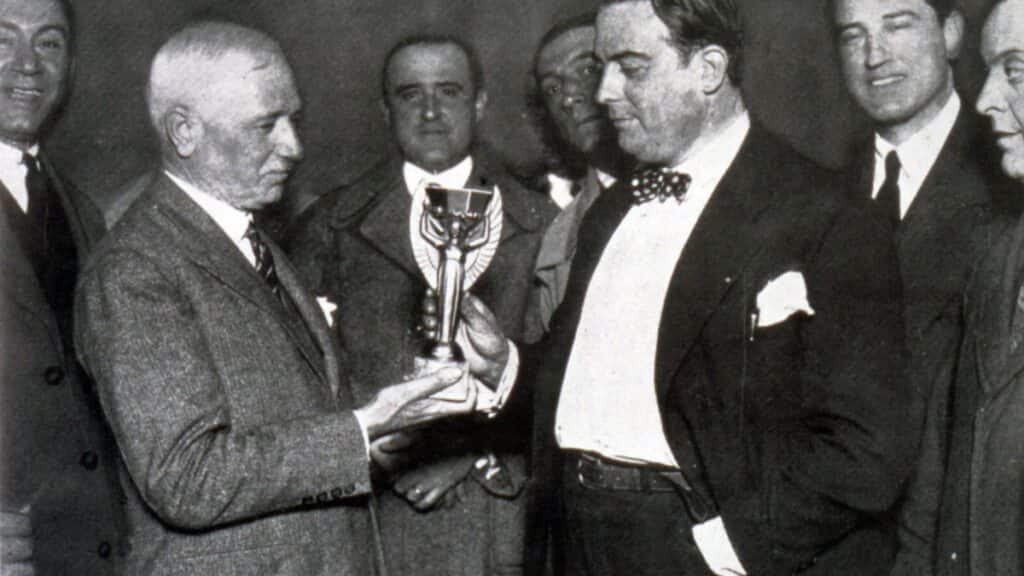
The inaugural tournament in 1930 was officially designated in French as the Coupe du Monde. When translated into English, World Cup instantly became a foundational piece of the global sporting lexicon.
Linguistically, a "Cup" tournament implies a distinct structural architecture that separates it from a standard domestic league. In a league, longevity, depth, and consistency over nine months determine the champion.
A "Cup" format introduces the element of mortality. It combines a brief group stage with the brutal, unforgiving nature of single-elimination knockout rounds.
Today, capitalised as a proper noun, The World Cup has long outgrown its physical description. It no longer merely refers to the 6.175-kilogramme trophy of 18-karat gold designed by Silvio Gazzaniga.
Instead, it serves as a global shorthand for a multi-billion-dollar cultural phenomenon, a masterclass in modern sports marketing, and a cyclical milestone by which humans measure the passing of time.
We do not just look back at years, we look back at editions — the winter magic of Qatar 2022, the summer heat of Russia 2018, the rhythmic energy of South Africa 2010, or the tectonic shift of USA 1994.
The anatomy of an expansion
The 2026 edition is the largest logistical undertaking in the history of international sports. By abandoning the classic 32-team format that had been in place since 1998, Fifa has opened the doors to 48 nations, resulting in a staggering 104 total matches played out over a gruelling 39 days.
Take a look at the changes:
| Strategic Metric | The classic blueprint (1998-2022) | The 2026 expansion |
| Host Nations | Typically 1 (Exclusive single-nation hosting) | 3 (United States, Canada, Mexico) |
| Total Competitors | 32 Teams | 48 Teams |
| Total Matches Played | 64 Matches | 104 Matches |
| Group Stage Configuration | 8 Groups of 4 Teams | 12 Groups of 4 Teams |
| Knockout Stage Pathway | Top 2 from each group advance straight to Round of 16 | Top 2 from each group + 8 best 3rd-place teams advance |
| New Elimination Tier | None (Direct progression to Round of 16) | Round of 32 (An entire extra knockout layer) |
| Max Matches for Finalists | 7 Matches | 8 Matches |
| Tournament Duration | 28 to 32 Days | 39 Days |
This new design changes the entire tactical mindset of the group stages. With the eight best third-place teams now earning a ticket to the brand-new Round of 32, teams can no longer afford to shut down after a single loss or a conservative draw.
Goal difference across all 12 groups will be heavily analysed down to the final minute of play.
For the teams that make it all the way to the final showpiece at the New York/New Jersey Stadium on Sunday, July 19, 2026, this tournament is no longer a sprint — it is a marathon of physical endurance, squad depth, and mental resilience.
The Indian paradox
India is a country of 1.4 billion people, possessing an unyielding, passionate love for international football, yet the Blue Tigers have never taken the pitch in a modern World Cup finals match.
Firstpost takes a look past the surface-level internet trivia and into the truth, realities, and the incredible cultural landscapes.
Dismantling the 1950 "barefoot myth"
For decades, a persistent myth has circulated in schoolyards and internet forums across India that the Indian national football team qualified for the 1950 FIFA World Cup in Brazil but withdrew because FIFA refused to let them play barefoot.
As sports historians have comprehensively documented, this story is fundamentally inaccurate. The true reasons behind India's non-participation in 1950 were rooted in politics, financial limitations, and a major miscalculation of priorities by the All India Football Federation (AIFF).
Following the chaos of World War II and the withdrawal of several European and Asian nations from the qualification rounds, India was indeed handed a direct, historic invitation to compete in Brazil.
However, the AIFF ultimately declined the opportunity due to several compounding logistical factors:
- A journey from New Delhi to Rio de Janeiro in 1950 was an incredibly expensive, multi-day maritime and aerial logistical nightmare. The AIFF lacked the foreign exchange reserves to fund a long-term stay across the Atlantic Ocean, and while Fifa and the Brazilian organising committee offered to subsidise a large portion of the travel costs, the administrative machinery in India remained deeply hesitant.
- In the mid-20th century, the amateur ideals of the Olympic Games held infinitely more prestige in Asia than a nascent, professional tournament run by Fifa. The AIFF viewed the Olympics as the true summit of international athletic achievement. Having competed valiantly at the 1948 London Olympics (where they narrowly lost 2-1 to France while playing largely barefoot), the Indian federation chose to preserve their meager financial resources and focus their training entirely on the upcoming 1952 Helsinki Olympics and the inaugural 1951 Asian Games in New Delhi.
Put simply, the AIFF did not grasp what the World Cup would eventually become. To the Indian administrators of 1950, traveling halfway across the world for an independent tournament seemed secondary to regional pride and Olympic glory.
By skipping the 1950 tournament, Indian football missed a critical evolutionary step.
The Syed Abdul Rahim "golden era"
It is vital to note that India's decision to bypass Brazil did not mean the country lacked elite footballing quality.
Throughout the 1950s and early 1960s, under the legendary stewardship of visionary coach Syed Abdul Rahim, India established itself as an absolute powerhouse of Asian football.
Known as the "Golden Era," this period saw India win the gold medal at the 1951 Asian Games, secure a historic fourth-place finish at the 1956 Melbourne Olympics (becoming the first Asian nation to reach an Olympic football semi-final), and claim another spectacular Asian Games gold medal in Jakarta in 1962.
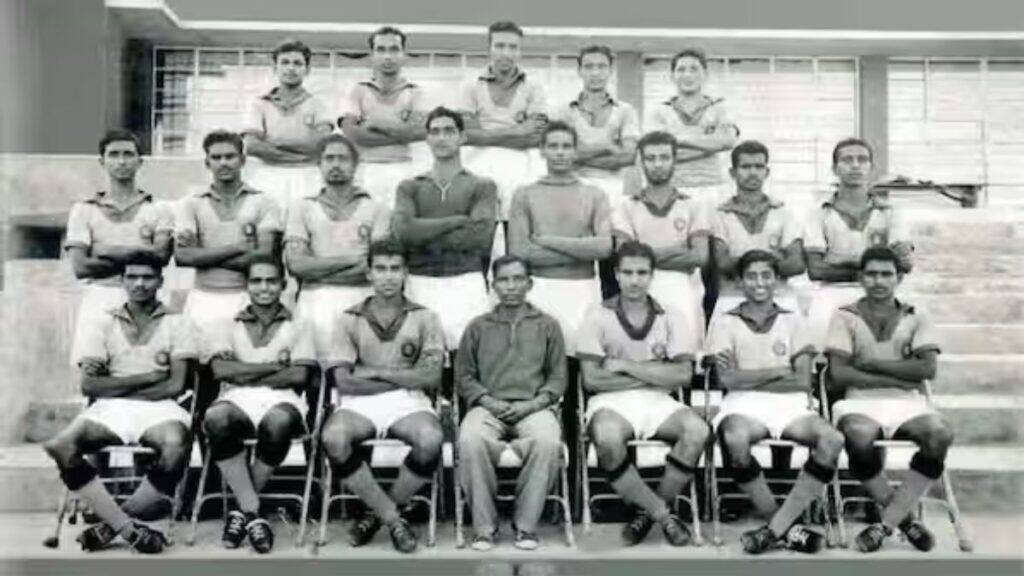
Rahim introduced pioneering tactical formations, including an early variation of the overlaying 4-2-4 system that focused on high technical proficiency, short passing, and supreme physical fitness.
Players like PK Banerjee, Chuni Goswami, Tulsidas Balaram, Neville D’Souza (who scored a legendary hat-trick against Australia in 1956), and Jarnail Singh were genuinely world-class athletes who could hold their own against elite international opposition.
However, because this golden generation was never tested on a World Cup pitch, their legacy remains a localised secret.
The consumer superpower
While India continues its long-term quest to return to the elite echelons of Asian football through the ongoing execution of the AIFF's "Vision 2047" roadmap, the country has paradoxically transformed into one of the most critical commercial engines for the World Cup.
Every four years, the broadcast numbers out of the Indian subcontinent catch international analysts completely off guard.
For the 2026 edition, millions of fans across India are braving late-night and early-morning kickoff schedules to watch their favorite players. India represents a massive, highly digital consumer demographic that brands, sponsors, and FIFA itself view as the ultimate frontier for the sport's economic expansion.
Moreover, the passion for the World Cup within India is deeply localised, regional, and fiercely intense.
In the football-mad northern districts of Kerala, the build-up to the World Cup is characterised by a unique cultural phenomenon: the battle of the giant cutouts.
Months before kickoff, local fan clubs erect massive, 50-to-100-foot tall structural cutouts of Lionel Messi, Neymar, and Cristiano Ronaldo in the middle of local rivers, paddy fields, and highway intersections.
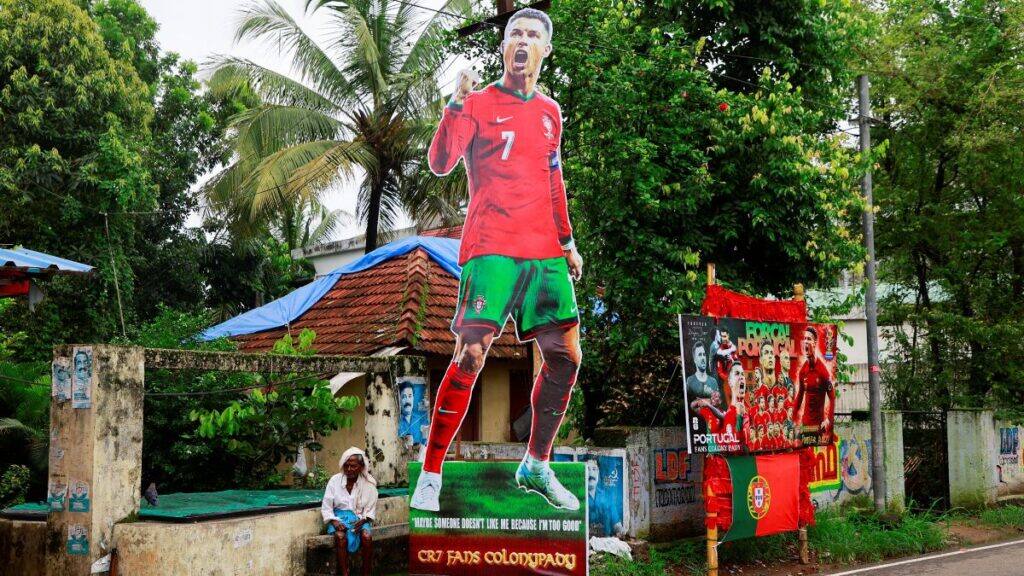
Entire villages drape themselves in the white-and-sky-blue of Argentina or the yellow-and-green of Brazil. Local economists note that retail productivity significantly shifts during the tournament as communities gather in open-air screenings, turning rural villages into mini-stadiums.
In Kolkata, the historical home of Indian football, the World Cup reawakens a classic, decades-old tribalism. The city splits cleanly down the middle between Amra Argentina (We are Argentina) and Amra Brazil (We are Brazil).
Neighbourhood tea stalls (chaer dokan) become debate clubs where elderly tacticians and tech-savvy teenagers analyse South American qualification campaigns with the intensity of tenured professors.
From the coastal villages of Goa to the mountain towns of Mizoram, Manipur, and Meghalaya, the World Cup is treated as a foundational cultural festival. In the Northeast, where football is deeply woven into the social fabric, local tournaments are paused, and musicians write tribute tracks for international teams.
This is the great Indian paradox: a nation that lives and breathes the narrative arcs of foreign countries, finding immense community, joy, and shared humanity within a tournament where their own flag is not yet flying.
Decoding the "Beautiful Game"
The phrase "The Beautiful Game" was immortalised by the late Brazilian maestro Pelé in his 1977 autobiography, My Life and the Beautiful Game, though its linguistic origins trace back to British sports writer Stuart Hall and literary figures in the mid-20th century.
In Portuguese, it is lovingly referred to as O Jogo Bonito.
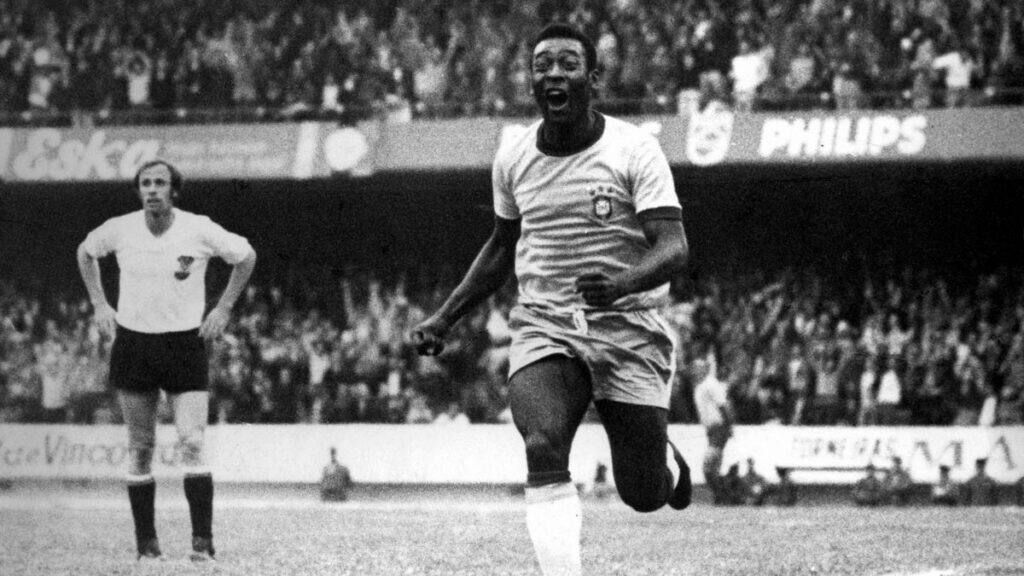
But what makes football inherently beautiful? Why does it possess a cross-cultural adaptability that cricket, American football, or baseball have spent decades trying to replicate?
The democratic design
The primary beauty of football lies in its radical, uncompromising accessibility. It is a sport completely devoid of elitist barriers to entry.
To play cricket at a competent level, a community requires specialised equipment — padded gear, manufactured bats, a carefully curated pitch, and leather balls. To play tennis, you need a court, rackets, and nets. To play American football, you require an array of protective armour and distinct spatial markings.
To play football, you need nothing but an object that rolls and the human body.
Across the favelas of Rio de Janeiro, the crowded alleys of North Kolkata, the sun-baked plains of sub-Saharan Africa, and the industrial estates of Western Europe, the game thrives on improvisation.
A ball can be made of rolled-up socks, crushed plastic bottles, or rags tied tightly with twine. Goalposts are marked by two discarded bricks, pairs of schoolbags, or plastic slippers placed carefully on the ground.
Furthermore, football is a sport that completely rejects physical discrimination. In basketball, structural height is a mandatory prerequisite for elite performance. In rugby or American football, sheer physical mass is an absolute necessity.
Football, however, embraces all body types. The history of the sport is written by diminutive geniuses who used a low centre of gravity to outmanoeuvre physical giants.
Diego Maradona and Lionel Messi — both standing well under 5 feet 7 inches — conquered the footballing cosmos not by overpowering their opponents, but through spatial awareness, balance, and breathtaking technical skill.
Conversely, tall, lanky forwards or stocky, muscular defenders all find an optimised tactical role within the 11-match framework. It is a sport where physical limitations are regularly overcome by intellectual brilliance.
The sociology of the 90 minutes
A match lasts exactly 90 minutes, split into two continuous 45-minute halves with a single fifteen-minute intermission.
Unlike cricket, which can span an entire day or five successive days, or American sports that are constantly interrupted by television timeouts, commercial breaks, and complex reviews, football flows like a live theatrical performance.
Once the referee blows the whistle, the players control the narrative. The coach cannot call a timeout to draw up a play on a clipboard; they cannot halt the opponent's momentum with an administrative intervention.
A football match is fundamentally an exercise in scarcity. Scores are low; a single goal can completely change the geopolitical destiny of a nation for the next four years. This scarcity makes every missed chance a tragedy and every successful strike an ecstatic release.
Wild tales of the World Cup
You cannot run a global tournament for nearly a century without accumulating an archive of absolutely bizarre stories. The history of the World Cup is littered with moments where reality completely outpaced fiction.
The dog who outsmarted Scotland Yard (1966)
In March 1966, months before England was set to host the eighth edition of the tournament, the original solid-gold Jules Rimet trophy was placed on public display at an exhibition in Westminster Central Hall.
Despite round-the-clock security, thieves managed to slip past guards, break into the display case from the rear, and vanish with the sport's greatest prize.
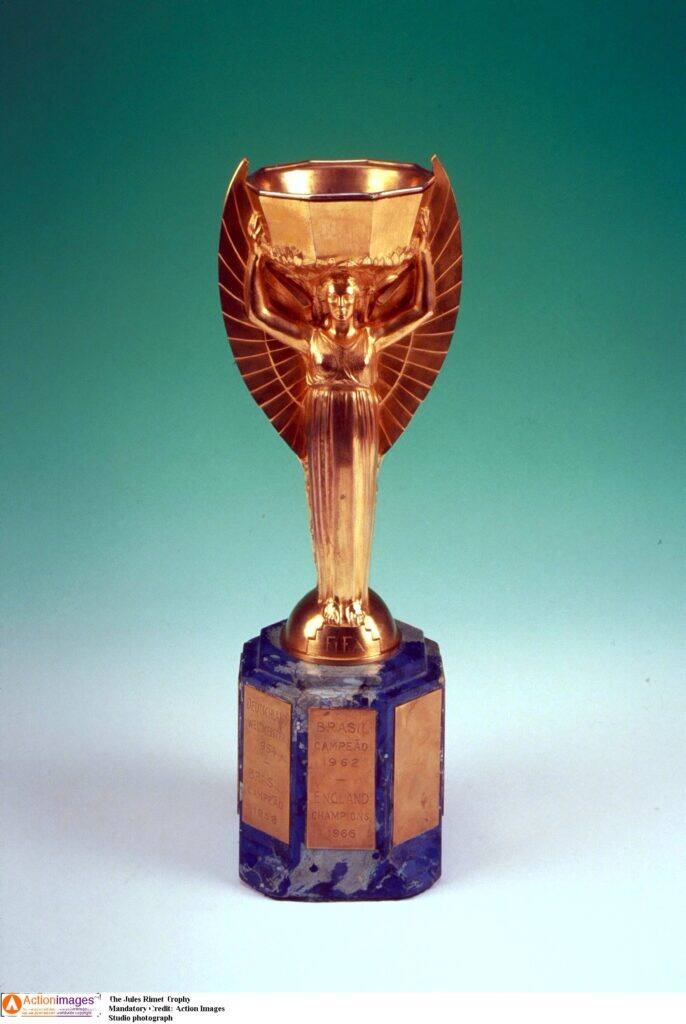
Scotland Yard launched a massive, desperate nationwide dragnet, receiving ransom notes and dead-end leads. The footballing world braced for the tournament to start without an actual trophy to present.
Enter Pickles, a ordinary black-and-white mongrel dog. Seven days after the theft, Pickles was out for a routine evening walk with his owner, David Corbett, in South London. Pickles began sniffing intensely around the front wheel of a neighbour's car, drawing his owner toward a tightly wrapped package bound in old newspapers and string.
Corbett ripped away the paper, recognising the iconic figure of Nike, the winged Greek goddess of victory. He rushed to the local police station, where officers initially viewed him with suspicion before confirming it was indeed the missing Jules Rimet trophy.

Pickles became an overnight global media sensation. He was awarded a silver medal by the National Canine Defence League, featured on television programmes, and invited to the official England victory banquet after the tournament, where he was allowed to lick the plates clean.
Héctor Castro: The one-armed legend of 1930
The inaugural 1930 FIFA World Cup in Uruguay is often remembered for its raw, frontier-like atmosphere, with teams travelling across the Atlantic on steamships and referees wearing suits.
But the ultimate hero of that first tournament was a Uruguayan forward named Héctor Castro.
When Castro was just 13 years old, he accidentally amputated his entire right forearm while operating an electric saw. Most people assumed his dreams of an athletic career were permanently over.
However, Castro developed an extraordinary sense of balance, physical shielding, and explosive movement that allowed him to rise through the ranks of Uruguayan club football.
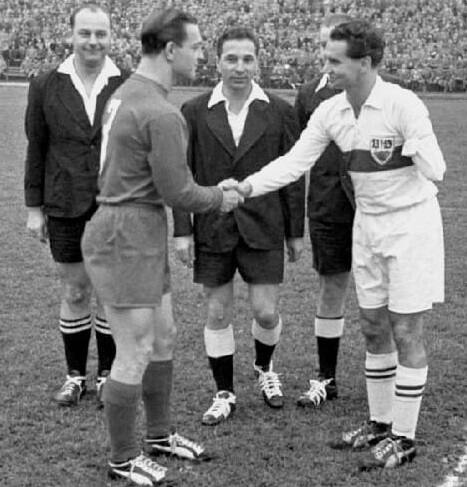
During the 1930 World Cup, Castro became a crucial weapon for the national team. In the historic, high-stakes final against fierce rivals Argentina, with the match hanging in the balance at 3-2 in the dying minutes, Castro leaped through the air to head home a definitive fourth goal.
The midnight threat & the liquidated gold (1983)
The Jules Rimet trophy seemed destined for a life of crime. Because Brazil won their third World Cup title in Mexico in 1970, FIFA rules dictated that they were allowed to keep the physical trophy permanently, while a new trophy would be designed for future editions.
The original prize was placed on display at the Brazilian Football Confederation (CBF) headquarters in Rio de Janeiro, protected by a front-facing pane of bulletproof glass.
However, the thieves of Rio noticed a critical design flaw: the back of the wooden display frame was held against the wall by a simple strip of plaster. On the night of December 19, 1983, a group of thieves broke into the building, bound the night watchman, and easily pried the trophy from the wall.
The trophy was never seen again. Despite a massive federal investigation, the authorities eventually concluded that the historic trophy — crafted from solid gold and precious lapis lazuli stones — had been systematically melted down in a local goldsmith’s workshop into generic gold bars for the black market.
It was a tragic, unceremonious end for a trophy that had survived World War II hidden in a shoebox under a bed in Italy to avoid Nazi confiscation.
The Prince on the pitch (1982)
During the 1982 World Cup in Spain, a group-stage match between a star-studded French team and Kuwait produced one of the most surreal administrative breakdowns in sports history.
France was leading the match 3-1 and playing with fluid ease when midfielder Alain Giresse burst through the Kuwaiti defence and smashed the ball into the back of the net for a fourth goal.
The French players began celebrating, but the Kuwaiti defenders completely stopped moving, claiming they had heard a distinct whistle from the stands that they mistook for the referee’s official signal.
As chaos descended on the pitch and the referee insisted the goal stood, a figure descended from the grandstands. It was Sheikh Fahad Al-Ahmed Al-Jaber Al-Sabah, the president of the Kuwaiti Football Association and a literal prince of the royal family.
Escorted by armed Spanish security guards, the Prince walked straight onto the pitch in his traditional robes to confront the referee.
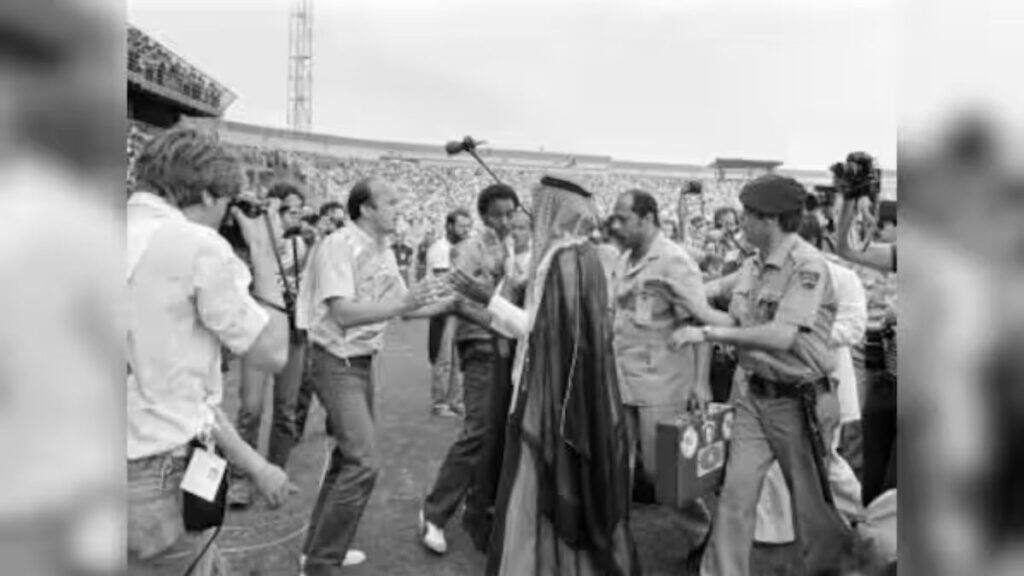
He ordered his players to leave the pitch and walk out of the stadium if the goal was not overturned. Faced with a massive diplomatic and administrative crisis on live television, the referee remarkably capitulated.
He disallowed the French goal, restarted play with a dropped ball, and allowed the match to continue. Though France eventually went on to win 4-1 anyway, the image of a royal prince rewriting the rules of a World Cup match on the pitch remains a mind-boggling testament to the tournament’s volatile human drama.
Football: The ultimate geopolitical mirror
Ultimately, the phrase World Cup matters because it functions as the ultimate mirror of our shifting global architecture.
The tournament has never been insulated from the forces of history. Think of the historic milestones:
- 1938: Italy’s team playing under the dark shadow of Benito Mussolini’s fascist regime, taking the pitch in distinct black shirts to project political power.
- 1974: The highly charged, emotional group-stage clash between East Germany and West Germany at the height of the Cold War, a match that transcended sports to become a profound cultural statement on a fractured nation.
- 1998: The iconic "Black, Blanc, Beur" (Black, White, North African) French team led by Zinedine Zidane, which won the title and temporarily influenced the entire national conversation surrounding immigration and integration.
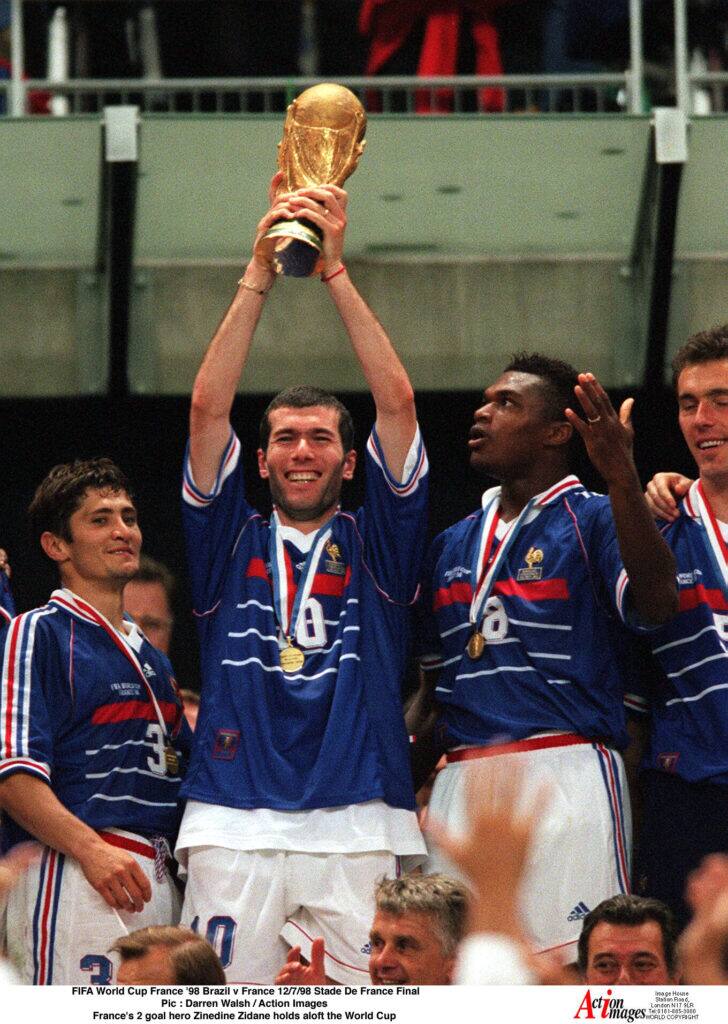
For the next five weeks, domestic political debates and regional disputes will not vanish, but they will be viewed through the prism of what happens on the pitch.
That is why World Cup is our undisputed Word of the Week.
It is far more than an athletic tournament, it is a universal language, an emotional milestone, and a brilliant testament to the shared human experience. Turn on your screens, embrace the early mornings, and let the madness unfold.
Inhaling global affairs daily, Anmol covers foreign policy & defence with the occasional piece in lifestyle and the thrilling sport of polo, to keep things light when they get too tense. He has far too many disparate interests with a constant itch for travel. You can follow him on X (AnmolSingla001); and please feel free to reach out to him at anmol.singla@nw18.com for interviews, tips, feedback or travel recommendations.

Military drones & police check-ups: How Sri Lanka is fighting against worst dengue outbreak in a decade
How Facebook job ad lured 2 Karnataka men into Myanmar cyber scam camp
Why is India seeing 95% cloud cover despite a Super El Niño?
What is CJP’s fourth demand to the government as protests in Delhi intensify?
The new geography of war: Why the Houthis can no longer be ignored