


US pub are adding 20% tips to their bills. The FIFA World Cup 2026 is why
Restaurants and pubs across the 11 US cities hosting FIFA World Cup matches, including New York, are adding 18-20 per cent gratuities to their bills. The reason: fans from other countries are undercompensating staff, as they are unaware of America’s tipping culture

The FIFA World Cup 2026 is giving tourists a chance to indulge in the American culture. The football tournament is also giving fans a chance to indulge in American cuisine for the first time, and there’s one menu item that’s completely foreign: tipping.
For the hospitality industry in the US, the World Cup was expected to bring windfalls as millions of people were flying in to cheer their country. But that hasn’t been the case. Why? Because these out-of-towners aren’t familiar with the US tipping culture.
As a result, several US restaurant owners are adding a mandatory tip to bills.
What’s going on exactly?
The FIFA World Cup 2026 has brought in millions of football fans from around the world, cheering for their favourite teams in the United States of America. Bars and restaurants across the US are seeing unprecedented crowds.
 More from Explainers
Cash registers across restaurants are ringing nonstop, but the staff at some of these establishments are not happy.
Why?
Because the tourists aren’t leaving tips as the Americans do. For instance, Louise Daggett, a server at McCarthy’s Pub in New York, told the New York Post: “There have been some tables who have come in and run a tab of $700. And they don’t leave a tip.”
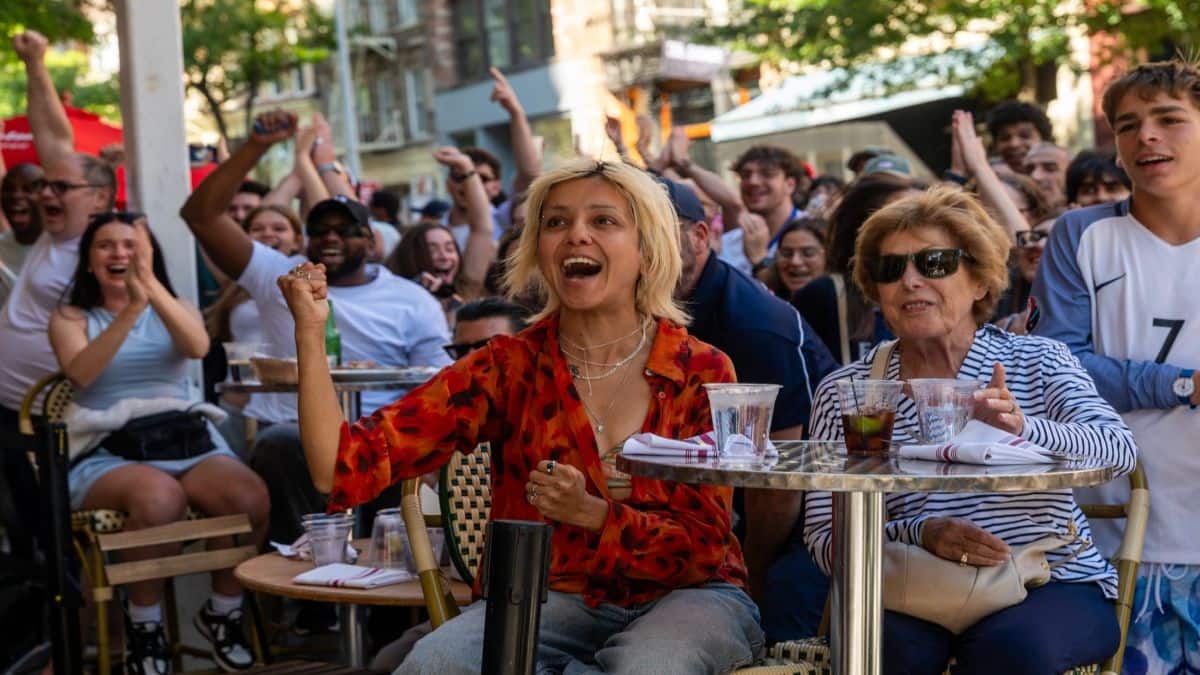
Anne Calimano, a co-owner of an eatery in New York, added, “It’s busy morning, noon, and night. I mean, obviously, they don’t tip like normal.”
Echoing similar sentiments, Jessica Ordeñana, a bartender from New York City, told Axios that a large group of tourists came in to watch Argentina’s match with Algeria and racked up a tab of about $300. “They left like a $4 tip, and that was really, really disgusting. We depend on (tips), but unfortunately, we cannot depend on them, because of how low they are,” Ordeñana said.
Even outside of New York, many restaurant staff note the poor tipping by the football fans.
What’s America’s tipping culture?
Many hospitality staff note that poor tipping isn’t because of stinginess but largely owing to a lack of knowledge about America’s tipping culture.
In many European nations, there is minimal to no tipping because restaurants pay staff like any other profession, and workers don’t rely on tips, so customers assume they’ve already paid for service.
However, the story is very different in the US. Tipping has been woven into the US cultural fabric for more than a century. Historically, it was a token gesture by the wealthy upper classes to show appreciation for good service. It came with the added benefit of supplementing income.
Then in 1938, employers were allowed to pay staff less than the minimum wage if they could make up the rest in tips. As a result, today, while the federal minimum wage is $7.25 per hour, for employees who receive gratuities, this drops to just $2.13 per hour.
However, in recent times, tipping in the US has reached a tipping point. During the Covid-19 pandemic, as hospitality businesses shuttered, customers were encouraged to tip more generously. Hence, if 15 to 20 per cent was the norm earlier, it pushed up to 30 per cent.
And these expectations remained even post-pandemic. The use of digital point-of-sale machines has worsened the situation. These systems ask customers to pick a set tip before allowing payment, and while you can decline or change the amount at the touch of a button, it can be awkward to do so under the eye of the person serving you.
In the US, tipping has also spread to sectors where service is minimal or even non-existent. For instance, tourists might be looked at poorly if they don’t tip at a coffee shop.
In fact, a lot of people are viewing tipping in the US negatively. According to a 2025 survey by Bankrate, a financial publisher and comparison service, at least 63 per cent of US residents have a negative view of tipping, with 41 per cent saying it’s gotten out of control.
How are US restaurants tackling this problem?
Wanting to protect their staff, many restaurant owners are adding automatic gratuities to customers’ bills. Restaurants in American World Cup host cities, from Kansas City to Boston, have begun to levy an 18-20 per cent charge.
As Michele Bermuvez, co-owner of Brewhouse Cafe, an Atlanta football bar, told Food and Wine of the 20 per cent gratuity added to the bill, “It’s really important for us to take care of our staff. They’re working really hard. They’re coming in for early games, they’re staying late, and they’re doing everything they can to make sure that our customers are taken care of.”
Teneshia Murray Butler, owner of the Atlanta-based chain T’s Brunch Bar, told Axios she too has raised the restaurant’s automatic gratuity from 18 per cent to 20 per cent for the World Cup. “My servers are everything. They’re like the quarterback to the rest of the team,” she said, adding, “Doing this makes the server see that I’m putting them first ... and I care about them and their money.”
But not everyone seems to be on board for adding tips to the bill. George Pantos, owner of a pub, told NBC 10 that he prefers to post signs reminding visitors to tip and to trust that they will tip on their own. “If we’re as busy as we speculate, it won’t be a problem,” he told the outlet.
David Henkes, the senior principal at food research firm Technomic, also argued in a Fox News Digital report that making tipping mandatory could upset the already cash-strapped locals living in host cities.
There’s also a fear among local diners that restaurant owners won’t remove the gratuity after the World Cup.
With inputs from agencies

Military drones & police check-ups: How Sri Lanka is fighting against worst dengue outbreak in a decade
How Facebook job ad lured 2 Karnataka men into Myanmar cyber scam camp
Why is India seeing 95% cloud cover despite a Super El Niño?
What is CJP’s fourth demand to the government as protests in Delhi intensify?
The new geography of war: Why the Houthis can no longer be ignored