
Advertisement


Sections
Will UPI payments now be charged? Here’s what the Centre has said
The Centre had mandated a zero-charge framework for UPI transactions from 1 January, which means that charges are currently nil for users and merchants alike. It is one of the key reasons for its widespread adoption across the country

The finance ministry has stated that United Payments Interface (UPI) is a digital public good and there is no consideration to levy any charges on it.This clarification comes after reports that the central bank may be considering levying such a charge after it earlier this month in a discussion paper stated that that UPI payments might be subject to a tiered charge based on various amount brackets.Currently, there are no charges levied on transactions done through UPI.Let’s take a closer look at what happened and why the government made the statement:What did the government say?In a late night tweet on Sunday, the finance ministry said, “UPI is a digital public good with immense convenience for the public & productivity gains for the economy. There is no consideration in Govt to levy any charges for UPI services. The concerns of the service providers for cost recovery have to be met through other means."It further tweeted:“The Govt had provided financial support for #DigitalPayment ecosystem last year and has announced the same this year as well to encourage further adoption of #DigitalPayments and promotion of payment platforms that are economical and user-friendly.”What led the government make this statement?The Centre made this statement after the RBI discussion paper issued earlier this month said, UPI as a fund transfer system is like IMPS and therefore, it could be argued that the charges in UPI need to be similar to charges in IMPS for fund transfer transactions.As per News18, the RBI added, “At this stage, it is reiterated that the RBI has neither taken any view nor has any specific opinion on the issues raised in this discussion paper.”“If charges are introduced, should they be administered (say, by RBI) or be market determined," the RBI said, posing the question to stakeholders.What’s the current system?The government mandated a zero-charge framework for UPI transactions with effect from 1 January, 2020.This means that charges in UPI are nil for users and merchants alike and it is one of the key reasons for the widespread adoption of UPI by merchants across the country,As per Mint, the RTGS and NEFT payment systems are owned and operated by RBI, while systems such as IMPS, RuPay, UPI, etc, are owned and operated by the National Payments Corporation of India (NPCI).In June, the Reserve Bank announced that it will allow credit cards to be linked with the unified payments interface (UPI), a move experts are bullish on.What has PM Modi said about UPIPrime Minister Narendra Modi earlier in August praised the Unified Payments Interface (UPI) which recorded six billion transactions in July.He said that the feat indicates the collective resolve of the people to embrace new technologies and make the economy cleaner.Modi said that digital payments were very much helpful during the COVID-19 pandemic.[caption id="attachment_11058031" align="alignnone" width="640"]![Prime Minister Narendra Modi. Twitter/@ani_digital]() Prime Minister Narendra Modi. Twitter/@ani_digital[/caption]Modi's remarks came in response to a tweet by Union Finance Minister Nirmala Sitharaman, stating that UPI recorded 6 billion transactions in July, highest ever since 2016.According to a data by the National Payments Corporation of India, or NPCI, in July, UPI reported 6.28 billion transactions amounting to Rs 10.62 trillion.The volume of UPI transactions month-on-month was up 7.16 per cent, while value increased 4.76 per cent. Year-on-year (YoY), the volume of transactions almost doubled and value of transactions was up 75 per cent.In October 2019, UPI for the first time crossed 1 billion transactions. The feat was achieved almost after three years of its launch.UPI processed more than 2 billion transactions in October 2020.
Prime Minister Narendra Modi. Twitter/@ani_digital[/caption]Modi's remarks came in response to a tweet by Union Finance Minister Nirmala Sitharaman, stating that UPI recorded 6 billion transactions in July, highest ever since 2016.According to a data by the National Payments Corporation of India, or NPCI, in July, UPI reported 6.28 billion transactions amounting to Rs 10.62 trillion.The volume of UPI transactions month-on-month was up 7.16 per cent, while value increased 4.76 per cent. Year-on-year (YoY), the volume of transactions almost doubled and value of transactions was up 75 per cent.In October 2019, UPI for the first time crossed 1 billion transactions. The feat was achieved almost after three years of its launch.UPI processed more than 2 billion transactions in October 2020.
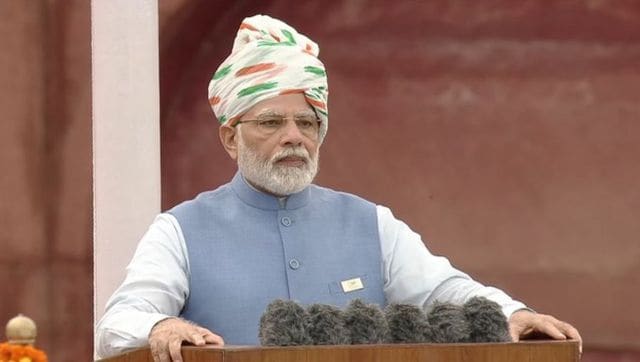 Prime Minister Narendra Modi. Twitter/@ani_digital[/caption]Modi's remarks came in response to a tweet by Union Finance Minister Nirmala Sitharaman, stating that UPI recorded 6 billion transactions in July, highest ever since 2016.According to a data by the National Payments Corporation of India, or NPCI, in July, UPI reported 6.28 billion transactions amounting to Rs 10.62 trillion.The volume of UPI transactions month-on-month was up 7.16 per cent, while value increased 4.76 per cent. Year-on-year (YoY), the volume of transactions almost doubled and value of transactions was up 75 per cent.In October 2019, UPI for the first time crossed 1 billion transactions. The feat was achieved almost after three years of its launch.UPI processed more than 2 billion transactions in October 2020.
In the next ten months, UPI processed 3 billion transactions.The COVID-19 pandemic saw a massive increase in use of digital payments in the country. A report by Business Standard said that in the Financial Year 22, UPI processed more than 46 billion transactions amounting to over Rs 84.17 trillion, thus breaching the $1 trillion mark.In FY21, it had processed 22.28 billion transactions, amounting to Rs 41.03 trillion.With inputs from agenciesRead all the Latest News, Trending News, Cricket News, Bollywood News, India News and Entertainment News here. Follow us on Facebook, Twitter and Instagram.
First Published:Aug 22, 2022, 14:07:36 IST
Advertisement
Advertisement

Military drones & police check-ups: How Sri Lanka is fighting against worst dengue outbreak in a decade
Sri Lanka is fighting its most severe dengue outbreak in nearly a decade, with infections rising sharply across the nation. Military drones have been deployed to tackle the outbreak, which has claimed 56 lives. Health officials said the outbreak is being driven primarily by the DENV-2 variant of the virus
3 min read
How Facebook job ad lured 2 Karnataka men into Myanmar cyber scam camp
The Karnataka Cyber Command has rescued two youths from a scam compound in Myanmar operated by Chinese fraudsters. The duo from Karnataka were lured on the pretext of data-entry jobs. They were asked to work for 16 hours a day and were expected to sleep for six hours daily
4 min read
Why is India seeing 95% cloud cover despite a Super El Niño?
India is witnessing nearly 95 per cent cloud cover despite a Super El Niño, a climate event usually linked to weaker monsoons. Regional weather systems, cyclonic circulations, the monsoon trough and moisture from two seas are temporarily overpowering one of the world's strongest climate phenomena
5 min read
What is CJP’s fourth demand to the government as protests in Delhi intensify?
The protest by the Cockroach Janta Party at Delhi’s Jantar Mantar refuses to die down. The group have made a fourth demand to the Centre, asking that no FIRs are filed against the agitators and that no legal action be taken. The government has expressed willingness to speak to the protesters, but refused to accede on the resignation of Education Minister Dharmandra Pradhan
5 min read
The new geography of war: Why the Houthis can no longer be ignored
The rise of the Houthis marks the emergence of a new geography of war — one in which influence flows not only from capitals and conventional armies, but also from rugged mountains overlooking vital sea lanes
6 min read
Advertisement
Advertisement