
Advertisement


Sections
Will the Kohinoor go to Camilla? Examining the murky history and fate of world’s most famous diamond
The 105-carat Kohinoor is one of 2,800 precious jewels set in the priceless platinum and diamond crown originally belonging to the Queen Mother, wife of George VI and mother of Elizabeth II. Usually on display in the Tower of London, it made its last public appearance at the Queen Mother’s funeral

The death of Queen Elizabeth II on Thursday has led to much grief and outpouring on Twitter, but has also spurred some calls for the return of the famed Kohinoor diamond to India.The 105-carat Kohinoor is one of 2,800 precious jewels set in the priceless platinum and diamond crown that originally belonged to the Queen Mother, wife of George VI and mother of Elizabeth II.Let’s examine the history of the world’s most famous diamond and take a look at its fate after the death of UK’s longest-serving monarch.A long, winding historyThe Kohinoor, (Mountain of Light) , also spelled Kūh-e Nūr, has a storied and murky history.![]() The Kohinoor's origins are shrouded by the mists of history. News18[/caption]In 1850, the East India company sent the diamond from Bombay to Buckingham Palace.As per Business Today, the royals in 1851 held an exhibition at Hyde Park to showcase the Kohinoor, which drew a large crowd.
The Kohinoor's origins are shrouded by the mists of history. News18[/caption]In 1850, the East India company sent the diamond from Bombay to Buckingham Palace.As per Business Today, the royals in 1851 held an exhibition at Hyde Park to showcase the Kohinoor, which drew a large crowd.![]() Britain's Queen Elizabeth II with Camilla, Duchess of Cornwall. AP[/caption]Which should come as no surprise.After all in February, the Queen had, on the eve of the 70th anniversary of her accession, declared that Charles’ wife Camilla, the Duchess of Cornwall, would be Queen Consort when he ascends to the throne.The Daily Mail previously wrote that the crown that has the Kohinoor "has only been worn by female royals... because it is said to be unlucky for men to do so."To return or not to return?The calls to return aren’t just coming from Twitter.For years, politicians and civil society members, both in India and the UK, have stated that the diamond was seized after Punjab was annexed to British India and demanded its return.Shashi Tharoor in his book An Era of Darkness said the British must return the ‘loot’ as reparations for colonialism.“The diamond was formally handed over to Queen Victoria by the child Sikh heir Maharaja Duleep Singh, who simply had no choice in the matter. As I have pointed out in the Indian political debate on the issue, if you hold a gun to my head, I might ‘gift’ you my wallet — but that doesn’t mean I don’t want it back when your gun has been put away,” he was quoted as saying by Business Today.However, the Indian government previously told the Supreme Court India should not try to reclaim it as ‘it was neither stolen nor forcibly taken’.The British government has also previously ruled out any such possibility.In 2013, then UK prime minister David Cameron told NDTV, "I think I am afraid to say, to disappoint all your viewers, it is going to have to stay put."With inputs from agenciesRead all the Latest News, Trending News, Cricket News, Bollywood News,India News and Entertainment News here. Follow us on Facebook, Twitter and Instagram.
Britain's Queen Elizabeth II with Camilla, Duchess of Cornwall. AP[/caption]Which should come as no surprise.After all in February, the Queen had, on the eve of the 70th anniversary of her accession, declared that Charles’ wife Camilla, the Duchess of Cornwall, would be Queen Consort when he ascends to the throne.The Daily Mail previously wrote that the crown that has the Kohinoor "has only been worn by female royals... because it is said to be unlucky for men to do so."To return or not to return?The calls to return aren’t just coming from Twitter.For years, politicians and civil society members, both in India and the UK, have stated that the diamond was seized after Punjab was annexed to British India and demanded its return.Shashi Tharoor in his book An Era of Darkness said the British must return the ‘loot’ as reparations for colonialism.“The diamond was formally handed over to Queen Victoria by the child Sikh heir Maharaja Duleep Singh, who simply had no choice in the matter. As I have pointed out in the Indian political debate on the issue, if you hold a gun to my head, I might ‘gift’ you my wallet — but that doesn’t mean I don’t want it back when your gun has been put away,” he was quoted as saying by Business Today.However, the Indian government previously told the Supreme Court India should not try to reclaim it as ‘it was neither stolen nor forcibly taken’.The British government has also previously ruled out any such possibility.In 2013, then UK prime minister David Cameron told NDTV, "I think I am afraid to say, to disappoint all your viewers, it is going to have to stay put."With inputs from agenciesRead all the Latest News, Trending News, Cricket News, Bollywood News,India News and Entertainment News here. Follow us on Facebook, Twitter and Instagram.
It is thought to have been mined in India during the 14th Century.Britannica describes it as originally a ‘lumpy Mughal-cut stone that lacked fire and weighed 191 carats’.As per Britannica, some sources have claimed that the first references to the diamond appeared in Sanskrit and possibly even Mesopotamian texts as early as 3200 BCE, but this claim remains controversial.As per BBC, “It has been the subject of conquest and intrigue for centuries, passing through the hands of Mughal princes, Iranian warriors, Afghan rulers and Punjabi Maharajas.”As per Business Today, the diamond is believed to have been mined near Andhra Pradesh’s Guntur by the Kakatiya dynasty in the 1100-1300.In 1310, Delhi Sultan Alauddin Khilji is believed to have acquired the diamond from the Kakatiya dynasty after the siege of Warangal. In 1526, Mughal Emperor Babur held the Kohinoor after the conquest of Delhi and Battle of Panipat. The Kohinoor finds mention in Baburnama.Then, in 17th Century, Shah Jahan placed the Kohinoor into his famed Peacock Throne at the Diwan-i-Khas in Red Fort. Nadir Shah, who invaded the Mughal Empire in 1732, took the Kohinoor and the Peacock Throne to Iran.The diamond was then taken by Ahmad Shah Durrani, who had served Nadir Shah.Under the Durrani Empire in Afghanistan, the Kohinoor was moved to Kandahar. But another version claims that Nadir Shah’s grandson gave the Kohinoor to Durrani in 1751 in return for his support. Durrani lost his throne and was exiled in Punjab eventually.It was then acquired by Maharaja Ranjit Singh, the 19th Century ruler of Punjab also known as ‘Sher-e-Punjab’.
He is said to have set the diamond on his turban.He willed it to a temple in Odisha, but Dilip Singh, his successor, handed it over in 1849 to the East India company when he was just five years old.This came after East India Company annexed the Kingdom of Punjab and the handover was agreed to in the Last Treaty of Lahore.[caption id="attachment_11217991" align="alignnone" width="640"]
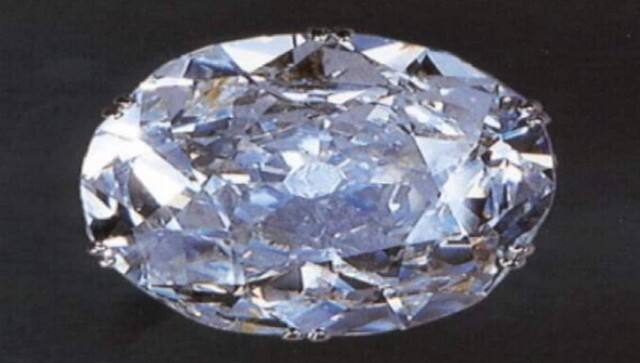 The Kohinoor's origins are shrouded by the mists of history. News18[/caption]In 1850, the East India company sent the diamond from Bombay to Buckingham Palace.As per Business Today, the royals in 1851 held an exhibition at Hyde Park to showcase the Kohinoor, which drew a large crowd.
However, some found the display disappointing.“Many people find a difficulty in bringing themselves to believe, from its external appearance, that it is anything but a piece of common glass,” The Times in June 1851 wrote.Prince Albert, the husband of Queen Victoria, then had the stone recut and polished—a process that reduced its size by half but made the light refract more brilliantly from its surface, as per Smithsonian Magazine.It was recut to enhance its fire and brilliance in 1852 at Garrard of London, the royal jeweller, as per Britannica.The process reduced the weight of the Kohinoor to 106.5 carats, allowing the Queen to wear it as a brooch.The Kohinoor then became part of the Crown Jewels, first in the crown of Queen Alexandra (the wife of Edward VII, Victoria’s oldest son) and then in the crown of Queen Mary (the wife of George V, grandson of Victoria).The diamond finally came to rest at the front of the crown worn by Queen Elizabeth, wife of George VI and mother of Elizabeth II.
Queen Elizabeth wore the crown during coronation of her husband George VI in 1937.As per Smithsonian Magazine, the crown that holds the Kohinoor made its last public appearance in 2002, resting atop of the coffin of the Queen Mother at her funeral.The crown is on display in the Tower of London.Will Kohinoor go to Camilla?Yes.The Daily Mail has reported that Camilla Parker Bowles will have Elizabeth II’s priceless platinum and diamond crown placed on her head on King Charles’s coronation.[caption id="attachment_10352081" align="alignnone" width="640"]
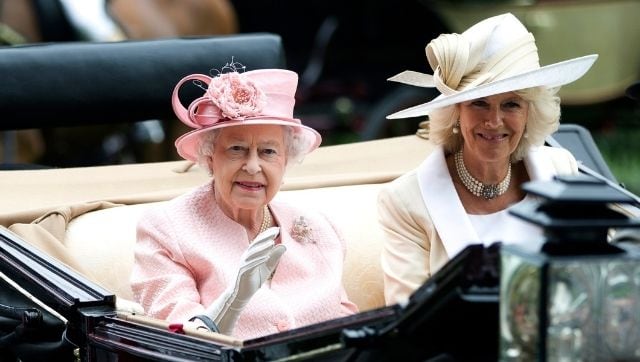 Britain's Queen Elizabeth II with Camilla, Duchess of Cornwall. AP[/caption]Which should come as no surprise.After all in February, the Queen had, on the eve of the 70th anniversary of her accession, declared that Charles’ wife Camilla, the Duchess of Cornwall, would be Queen Consort when he ascends to the throne.The Daily Mail previously wrote that the crown that has the Kohinoor "has only been worn by female royals... because it is said to be unlucky for men to do so."To return or not to return?The calls to return aren’t just coming from Twitter.For years, politicians and civil society members, both in India and the UK, have stated that the diamond was seized after Punjab was annexed to British India and demanded its return.Shashi Tharoor in his book An Era of Darkness said the British must return the ‘loot’ as reparations for colonialism.“The diamond was formally handed over to Queen Victoria by the child Sikh heir Maharaja Duleep Singh, who simply had no choice in the matter. As I have pointed out in the Indian political debate on the issue, if you hold a gun to my head, I might ‘gift’ you my wallet — but that doesn’t mean I don’t want it back when your gun has been put away,” he was quoted as saying by Business Today.However, the Indian government previously told the Supreme Court India should not try to reclaim it as ‘it was neither stolen nor forcibly taken’.The British government has also previously ruled out any such possibility.In 2013, then UK prime minister David Cameron told NDTV, "I think I am afraid to say, to disappoint all your viewers, it is going to have to stay put."With inputs from agenciesRead all the Latest News, Trending News, Cricket News, Bollywood News,India News and Entertainment News here. Follow us on Facebook, Twitter and Instagram.
First Published:Sep 09, 2022, 15:08:50 IST
Advertisement
Advertisement

Military drones & police check-ups: How Sri Lanka is fighting against worst dengue outbreak in a decade
Sri Lanka is fighting its most severe dengue outbreak in nearly a decade, with infections rising sharply across the nation. Military drones have been deployed to tackle the outbreak, which has claimed 56 lives. Health officials said the outbreak is being driven primarily by the DENV-2 variant of the virus
3 min read
How Facebook job ad lured 2 Karnataka men into Myanmar cyber scam camp
The Karnataka Cyber Command has rescued two youths from a scam compound in Myanmar operated by Chinese fraudsters. The duo from Karnataka were lured on the pretext of data-entry jobs. They were asked to work for 16 hours a day and were expected to sleep for six hours daily
4 min read
Why is India seeing 95% cloud cover despite a Super El Niño?
India is witnessing nearly 95 per cent cloud cover despite a Super El Niño, a climate event usually linked to weaker monsoons. Regional weather systems, cyclonic circulations, the monsoon trough and moisture from two seas are temporarily overpowering one of the world's strongest climate phenomena
5 min read
What is CJP’s fourth demand to the government as protests in Delhi intensify?
The protest by the Cockroach Janta Party at Delhi’s Jantar Mantar refuses to die down. The group have made a fourth demand to the Centre, asking that no FIRs are filed against the agitators and that no legal action be taken. The government has expressed willingness to speak to the protesters, but refused to accede on the resignation of Education Minister Dharmandra Pradhan
5 min read
The new geography of war: Why the Houthis can no longer be ignored
The rise of the Houthis marks the emergence of a new geography of war — one in which influence flows not only from capitals and conventional armies, but also from rugged mountains overlooking vital sea lanes
6 min read
Advertisement
Advertisement