


Explained: Why did Russia attack Ukraine with a hypersonic missile?
Russia has used the Kinzhal to strike targets in Ukraine starting from the early days of the invasion, but it has used the expensive missile sparingly and against priority targets, apparently reflecting the small number of Kinzhals available

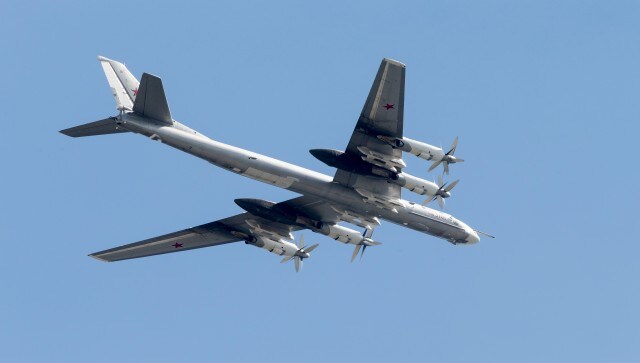
Russia has used the Tu-95 to launch Kh-101 cruise missiles at targets in Ukraine. AP[/caption]The British Defense Ministry noted Friday that the intervals between Russian missile strikes have grown bigger, probably “because Russia now needs to stockpile a critical mass of newly produced missiles directly from the industry before it can resource a strike big enough to credibly overwhelm Ukrainian air defences.”The Kinzhal is carried by MiG-31 fighter jets, some of which are based in Belarus. Russia has used the territory of its ally as a staging ground for the invasion and maintained its troops and weapons there.What other weapons did Russia use?The Ukrainian military said that Thursday’s barrage also included six older Kh-22 missiles, which are launched by Tu-22M heavy bombers and fly at more than three times the speed of sound.The massive weapon, which has a range of 600 kilometres (370 miles) and dates back to the 1970s, was designed by the Soviet Union to strike US aircraft carriers and other warships. It packs a big punch thanks to its supersonic speed and a heavy load of 630 kilograms (nearly 1,400 pounds) of explosives, but its outdated guidance system could make it highly inaccurate against ground targets, raising the probability of collateral damage.Like in previous strikes, Russia also fired the modern Kh-101 cruise missiles carried by strategic bombers and the Kalibr cruise missiles that are launched by warships. The long-range, high-precision missiles are subsonic and the Ukrainian military has said it has successfully engaged them.Another fixture in the Russian strikes was the S-300 air defence missiles that Russia uses against ground targets at a comparatively smaller distance from the front line. While its relatively small warhead lacks the punch of bigger weapons designed to hit ground targets, Russia appears to have a big stock of such missiles and Ukraine can't intercept them.Russia has also used some shorter-range air-launched missiles carried by fighter jets and the Iranian exploding drones. Ukrainian officials have said that the military has become increasingly successful in tackling them, downing the bulk of drones launched in each strike.Ukrainian officials and experts say that by using numerous types of missiles as well as drones in one massive attack Russia tries to overwhelm Ukrainian air defences.“It’s much more difficult for the Ukrainian air defences to deal with an attack when they launch a motley collection of ballistic and ordinary missiles along with drones,” Zhdanov said. “Russia has been searching for weak spots in Ukrainian air defences and it has partially succeeded."Read all the Latest News, Trending News, Cricket News, Bollywood News, India News and Entertainment News here. Follow us on Facebook, Twitter and Instagram.

Military drones & police check-ups: How Sri Lanka is fighting against worst dengue outbreak in a decade
How Facebook job ad lured 2 Karnataka men into Myanmar cyber scam camp
Why is India seeing 95% cloud cover despite a Super El Niño?
What is CJP’s fourth demand to the government as protests in Delhi intensify?
The new geography of war: Why the Houthis can no longer be ignored