


Explained: Why countries just can't bring themselves to give up nuclear weapons
To understand leaders’ motives – and therefore effectively negotiate the elimination of nuclear weapons – we must acknowledge that policymakers express underlying moral concerns as strategic concerns

As a nuclear ethicist, though, I see these explanations as incomplete.
To understand leaders’ motives – and therefore effectively negotiate the elimination of nuclear weapons – other scholars and I argue we must acknowledge that policymakers express underlying moral concerns as strategic concerns. History shows that such moral concerns often form the foundations of nuclear strategy, even if they’re deeply buried.
National values
It is easier for many people to see how the nuclear abolitionist argument is fundamentally based in morality. The fear of nuclear winter – or even a less severe “nuclear autumn” – is rooted in the immorality of killing millions of innocent people and devastating the environment in long-lasting ways.
Early motives
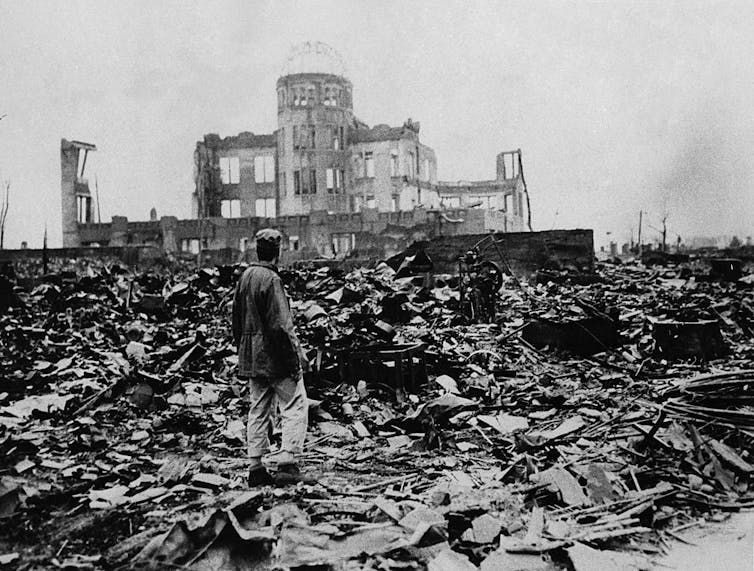
So how are these moral concerns applied to the questions of nuclear weapons and their role in security strategy?It is worth remembering what motivated President Franklin D Roosevelt to authorise the development of the atomic bomb: the genocidal evil of Nazi German aggression in World War II and the knowledge that Adolf Hitler had begun an atomic bomb program.And when Nazi Germany had been defeated, the US justifications for using atomic bombs on the Japanese cities of Hiroshima and Nagasaki centered on two kinds of moral concerns. The most frequently invoked was utilitarian: preventing a greater number of deaths in a land invasion of Japan. The second, not expressed as explicitly, viewed the atomic bombing as a kind of moral punishment for the Japanese invasion of Pearl Harbor and the brutal treatment of Allied prisoners of war.In short, the motivations for the original atomic bomb program and its uses could not be described in solely “hard-nosed” strategic terms. As political philosopher Michael Walzer has argued, both morality and strategy are about justification: Both tell us what we should do or should not do, based on some set of values. And strategy is often used for decision-makers’ moral aims, such as their goal to defeat a genocidal regime.
 More from Explainers
Morally excusable?
Walzer did not claim that using nuclear weapons, or even threatening their use, was morally justified.However, he suggested they might be necessary for national security, and therefore become morally excusable in supreme emergency situations. His argument has been very influential in government and academic circles.Many critics claim that it is always immoral to use nuclear weapons, since they cannot discriminate between soldiers and innocent civilians, including children, the elderly and the infirm. Moreover, the use of nuclear weapons cannot but bring social and environmental catastrophe, the kind that our darkest dystopian novels and films depict. And if it is immoral to use nuclear weapons, it is immoral to threaten to use them.But it is unsurprising that the leaders of the nuclear-weapon states are ultimately committed to the survival of their countries and peoples, even if others must pay an ultimate price. To fully appreciate nuclear motivations, we must understand the role of this kind of moral concern in their decision-making.This article is republished from The Conversation under a Creative Commons license. Read the original article.Read all the Latest News, Trending News, Cricket News, Bollywood News,India News and Entertainment News here. Follow us on Facebook, Twitter and Instagram.

Military drones & police check-ups: How Sri Lanka is fighting against worst dengue outbreak in a decade
How Facebook job ad lured 2 Karnataka men into Myanmar cyber scam camp
Why is India seeing 95% cloud cover despite a Super El Niño?
What is CJP’s fourth demand to the government as protests in Delhi intensify?
The new geography of war: Why the Houthis can no longer be ignored