
Advertisement


Sections
Explained: What is GM mustard and what is the controversy surrounding it?
India’s regulatory body for genetically modified organisms has approved DMH (Dhara Mustard Hybrid)-11, paving the way for its commercial release. This herbicide-tolerant mustard variety has been developed by crossing an Indian mustard variety ‘Varuna’ with an East European ‘Early Heera-2’ mutant

The Genetic Engineering Appraisal Committee (GEAC) recommended the “environmental release” of indigenously developed genetically modified (GM) mustard seeds on 18 October.GEAC-- India's regulator for genetically modified organisms under the Ministry of Environment, Forest and Climate Change-- approved the "environmental release of mustard hybrid DMH-11 for its seed production and testing as per existing ICAR guidelines and other extant rules/regulations before commercial release".With this, the regulatory body has cleared the way for commercialisation of the country’s first GM food crop, reports Business Standard.However, this decision has caused much furore among anti-GM activists as well as agriculture outfits like Rashtriya Swayamsevak Sangh (RSS) affiliate Swadeshi Jagran Manch (SJM).What is hybrid mustard? What does GEAC’s ‘environmental release’ mean for GM mustard seeds? Why is there fierce opposition to the move by some activists? We explain.What is hybrid mustard?A hybrid crop is produced by the cross-breeding of two genetically different varieties that can be even from the same species. The first-generation (F1) offspring produced with this technique usually have higher yields than existing varieties.This hybridisation is difficult in mustard as its flowers have both female (pistil) and male (stamen) reproductive organs, which makes the plant self-pollinating, according to Indian Express.Thus developing hybrids for mustard has its limits.[caption id="attachment_11530571" align="alignnone" width="640"]![mustard]() GM mustard was developed by scientists at Delhi University’s Centre for Genetic Manipulation of Crop Plants (CGMCP). PTI (Representational Image)[/caption]But it was achieved by scientists at Delhi University’s Centre for Genetic Manipulation of Crop Plants (CGMCP), led by Deepak Pental, through genetic modification.
GM mustard was developed by scientists at Delhi University’s Centre for Genetic Manipulation of Crop Plants (CGMCP). PTI (Representational Image)[/caption]But it was achieved by scientists at Delhi University’s Centre for Genetic Manipulation of Crop Plants (CGMCP), led by Deepak Pental, through genetic modification.![GM Mustard]() Those supporting commercial cultivation of GM crops say it will lead to 'greater food security due to increased yields'. PTI (Representational Image)[/caption]Pointing out the benefits of the commercial cultivation of GM crops, the supporters say it will lead to “greater food security due to increased yields, reduced costs for food production, reduced need for pesticides and resistance to pests and disease”, reports PTI.But not everyone is on board.Why the opposition?Certain green groups and Swadeshi Jagran Manch have protested against the GEAC’s approval.The Coalition for a GM-Free India, a network of anti-GM crop activists and sections of farmers’ groups, has urged Environment Minister Bhupendra Yadav to withdraw GEAC’s nod.“The process of review of GM mustard is not rigorous enough and GEAC doesn’t seem to be really serious about either assessing its safety or efficacy,” the Coalition alleged in a letter to the environment ministry on 20 October, as per The Telegraph.In 2017, the GEAC had recommended the commercial release of GM mustard, but the environment ministry had rebuffed the decision.SJM has also shot off a letter to the environment minister accusing the regulatory panel of functioning in an "irresponsible fashion" and dubbing the claims backing GM mustard as "completely untrue, unsubstantiated and wrongly projected"."Swadeshi Jagran Manch has all along been opposing this dangerous and unneeded GM mustard being brought in through the backdoor as a public sector (genetically modified organism (GMO)," SJM co-convenor Ashwani Mahajan wrote.Objecting to GEAC’s recommendation, the co-convenor alleged that the claim that GM mustard was 'swadeshi' and had been developed in India is “completely untrue".Mahajan also claimed that GM mustard has "no yield advantage compared to indigenous hybrids"."The data from (Directorate of) Rapeseed Mustard Research (DRMR), Bharatpur clearly shows that the claim of Professor Deepak Pantel that his GM mustard would increase yield by 26 per cent is deceptive and misleading as there are several existing hybrid varieties that outperform the transgenic variety DMH-11," the Swadeshi Jagran Manch co-convenor claimed.Some experts have also expressed concerns over the DMH-11 mustard variety being herbicide tolerant, which allows the farmers to kill the surrounding weeds without harming the crop. They fear excess use of the herbicide on GM crops would increase toxic chemicals in food and soil.With inputs from agenciesRead all the Latest News, Trending News, Cricket News, Bollywood News,India News and Entertainment News here. Follow us on Facebook, Twitter and Instagram.
Those supporting commercial cultivation of GM crops say it will lead to 'greater food security due to increased yields'. PTI (Representational Image)[/caption]Pointing out the benefits of the commercial cultivation of GM crops, the supporters say it will lead to “greater food security due to increased yields, reduced costs for food production, reduced need for pesticides and resistance to pests and disease”, reports PTI.But not everyone is on board.Why the opposition?Certain green groups and Swadeshi Jagran Manch have protested against the GEAC’s approval.The Coalition for a GM-Free India, a network of anti-GM crop activists and sections of farmers’ groups, has urged Environment Minister Bhupendra Yadav to withdraw GEAC’s nod.“The process of review of GM mustard is not rigorous enough and GEAC doesn’t seem to be really serious about either assessing its safety or efficacy,” the Coalition alleged in a letter to the environment ministry on 20 October, as per The Telegraph.In 2017, the GEAC had recommended the commercial release of GM mustard, but the environment ministry had rebuffed the decision.SJM has also shot off a letter to the environment minister accusing the regulatory panel of functioning in an "irresponsible fashion" and dubbing the claims backing GM mustard as "completely untrue, unsubstantiated and wrongly projected"."Swadeshi Jagran Manch has all along been opposing this dangerous and unneeded GM mustard being brought in through the backdoor as a public sector (genetically modified organism (GMO)," SJM co-convenor Ashwani Mahajan wrote.Objecting to GEAC’s recommendation, the co-convenor alleged that the claim that GM mustard was 'swadeshi' and had been developed in India is “completely untrue".Mahajan also claimed that GM mustard has "no yield advantage compared to indigenous hybrids"."The data from (Directorate of) Rapeseed Mustard Research (DRMR), Bharatpur clearly shows that the claim of Professor Deepak Pantel that his GM mustard would increase yield by 26 per cent is deceptive and misleading as there are several existing hybrid varieties that outperform the transgenic variety DMH-11," the Swadeshi Jagran Manch co-convenor claimed.Some experts have also expressed concerns over the DMH-11 mustard variety being herbicide tolerant, which allows the farmers to kill the surrounding weeds without harming the crop. They fear excess use of the herbicide on GM crops would increase toxic chemicals in food and soil.With inputs from agenciesRead all the Latest News, Trending News, Cricket News, Bollywood News,India News and Entertainment News here. Follow us on Facebook, Twitter and Instagram.
 GM mustard was developed by scientists at Delhi University’s Centre for Genetic Manipulation of Crop Plants (CGMCP). PTI (Representational Image)[/caption]But it was achieved by scientists at Delhi University’s Centre for Genetic Manipulation of Crop Plants (CGMCP), led by Deepak Pental, through genetic modification.
They developed the DMH (Dhara Mustard Hybrid)-11 comprising two alien genes derived from a soil bacterium called Bacillus amyloliquefaciens.The CGMCP scientists crossed a popular Indian mustard variety ‘Varuna’ (the barnase line) with an East European ‘Early Heera-2’ mutant (barstar) to develop DMH-11, as per Indian Express.According to the trials conducted by the Indian Council of Agricultural Research (ICAR), DMH-11 is claimed to have an average 28 per cent yield increase over Varun, Indian Express reported.GEAC’s nod to hybrid mustardGEAC has approved the supervised environmental release of GM mustard and to conduct field demonstration studies on its effects, if any, on honey bees and other pollinators."Further, to generate scientific evidence in Indian agro-climatic situation and also as a precautionary mechanism, the field demonstration studies with respect to the effect of GE mustard on honey bees and other pollinators, as recommended in the 136th GEAC meeting, shall also be conducted post-environmental release, simultaneously by the applicant, within two years under the supervision of ICAR," the regulator’s minutes of the meeting held on 18 October said, as per PTI.India has only approved one GM crop, Bt cotton, for commercial cultivation so far.Welcoming the move, Pental, a geneticist and former vice-chancellor of Delhi University, told The Telegraph, “The GM mustard represents a step towards the goal of developing robust, high-yielding hybrids while at the same time trying to reduce the environmental footprint of agriculture.”[caption id="attachment_11530651" align="alignnone" width="640"]
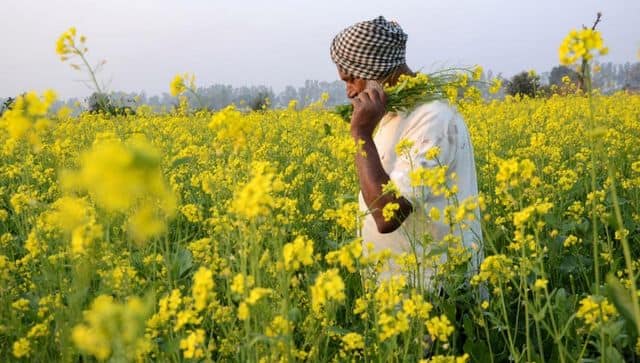 Those supporting commercial cultivation of GM crops say it will lead to 'greater food security due to increased yields'. PTI (Representational Image)[/caption]Pointing out the benefits of the commercial cultivation of GM crops, the supporters say it will lead to “greater food security due to increased yields, reduced costs for food production, reduced need for pesticides and resistance to pests and disease”, reports PTI.But not everyone is on board.Why the opposition?Certain green groups and Swadeshi Jagran Manch have protested against the GEAC’s approval.The Coalition for a GM-Free India, a network of anti-GM crop activists and sections of farmers’ groups, has urged Environment Minister Bhupendra Yadav to withdraw GEAC’s nod.“The process of review of GM mustard is not rigorous enough and GEAC doesn’t seem to be really serious about either assessing its safety or efficacy,” the Coalition alleged in a letter to the environment ministry on 20 October, as per The Telegraph.In 2017, the GEAC had recommended the commercial release of GM mustard, but the environment ministry had rebuffed the decision.SJM has also shot off a letter to the environment minister accusing the regulatory panel of functioning in an "irresponsible fashion" and dubbing the claims backing GM mustard as "completely untrue, unsubstantiated and wrongly projected"."Swadeshi Jagran Manch has all along been opposing this dangerous and unneeded GM mustard being brought in through the backdoor as a public sector (genetically modified organism (GMO)," SJM co-convenor Ashwani Mahajan wrote.Objecting to GEAC’s recommendation, the co-convenor alleged that the claim that GM mustard was 'swadeshi' and had been developed in India is “completely untrue".Mahajan also claimed that GM mustard has "no yield advantage compared to indigenous hybrids"."The data from (Directorate of) Rapeseed Mustard Research (DRMR), Bharatpur clearly shows that the claim of Professor Deepak Pantel that his GM mustard would increase yield by 26 per cent is deceptive and misleading as there are several existing hybrid varieties that outperform the transgenic variety DMH-11," the Swadeshi Jagran Manch co-convenor claimed.Some experts have also expressed concerns over the DMH-11 mustard variety being herbicide tolerant, which allows the farmers to kill the surrounding weeds without harming the crop. They fear excess use of the herbicide on GM crops would increase toxic chemicals in food and soil.With inputs from agenciesRead all the Latest News, Trending News, Cricket News, Bollywood News,India News and Entertainment News here. Follow us on Facebook, Twitter and Instagram.
First Published:Oct 28, 2022, 17:35:01 IST
Advertisement
Advertisement

Military drones & police check-ups: How Sri Lanka is fighting against worst dengue outbreak in a decade
Sri Lanka is fighting its most severe dengue outbreak in nearly a decade, with infections rising sharply across the nation. Military drones have been deployed to tackle the outbreak, which has claimed 56 lives. Health officials said the outbreak is being driven primarily by the DENV-2 variant of the virus
3 min read
How Facebook job ad lured 2 Karnataka men into Myanmar cyber scam camp
The Karnataka Cyber Command has rescued two youths from a scam compound in Myanmar operated by Chinese fraudsters. The duo from Karnataka were lured on the pretext of data-entry jobs. They were asked to work for 16 hours a day and were expected to sleep for six hours daily
4 min read
Why is India seeing 95% cloud cover despite a Super El Niño?
India is witnessing nearly 95 per cent cloud cover despite a Super El Niño, a climate event usually linked to weaker monsoons. Regional weather systems, cyclonic circulations, the monsoon trough and moisture from two seas are temporarily overpowering one of the world's strongest climate phenomena
5 min read
What is CJP’s fourth demand to the government as protests in Delhi intensify?
The protest by the Cockroach Janta Party at Delhi’s Jantar Mantar refuses to die down. The group have made a fourth demand to the Centre, asking that no FIRs are filed against the agitators and that no legal action be taken. The government has expressed willingness to speak to the protesters, but refused to accede on the resignation of Education Minister Dharmandra Pradhan
5 min read
The new geography of war: Why the Houthis can no longer be ignored
The rise of the Houthis marks the emergence of a new geography of war — one in which influence flows not only from capitals and conventional armies, but also from rugged mountains overlooking vital sea lanes
6 min read
Advertisement
Advertisement