
Advertisement


Sections
Explained: Why OPEC+ is reducing oil output and what it means for the world
Saudi Arabia, the group's biggest producer, will make a deep cut to its output in July on top of a broader OPEC+ deal to limit supply into 2024 as the group faces flagging oil prices

The Organisation of the Petroleum Exporting Countries and allies including Russia will continue oil output cuts as prices remain unchanged. On Sunday, the group of oil-producing countries, known as OPEC+, reached a unanimous decision to extend the ongoing oil production curbs.The OPEC+ pumps around 40 per cent of the world's crude.Saudi Arabia, the group's biggest producer, will make a deep cut to its output in July on top of a broader OPEC+ deal to limit supply into 2024 as the group faces flagging oil prices.In April, Saudi Arabia, Russia, and other OPEC+ oil producers declared their intention to reduce production by 1.16 million barrels per day. Oil-producing countries had earlier agreed to cut output by two million barrels per day through the end of the year. The National Security Council condemned the move at the time, indicating that the administration did not believe cuts "advisable at this time given market uncertainty."A surprise announcement by OPEC+ in April to deepen production cuts helped to raise prices by about $9 (Rs 742) a barrel to above $87 (Rs 7,178) per barrel in the days followed.Yet benchmark crude prices have shed those gains since, with Brent futures on Monday trading at just under $78 (Rs 6,435) a barrel.OPEC described the move as aiming to "achieve and sustain a stable oil market, and to provide long-term guidance for the market, and in line with the successful approach of being precautious, proactive and preemptive", The Hill reported.On Sunday, in addition to extending the existing OPEC+ cuts of 3.66 million barrels per day (bpd), the group agreed to reduce overall production targets from January 2024 by a further 1.4 million bpd to a combined output of 40.46 million bpd.The changes, however, included lowered targets for Russia, Nigeria and Angola simply to bring them into line with current production levels.Here are the main reasons why OPEC+ cut output:Concerns about weak global demand Data from China has aroused fears that the economic recovery after coronavirus lockdowns by world's second-largest oil consumer is losing steam.[caption id="attachment_12696352" align="alignnone" width="640"]![]() Austrian police officers stand in front of the OPEC headquarters in Vienna, Austria. Reuters[/caption]Russian deputy prime minister Alexander Novak has also pointed to "interference with market dynamics", a Russian expression to describe a Western price cap on Russian oil.Fears of another banking crisis in recent months have led investors to sell out of riskier assets such as commodities with oil prices falling to near $70 (Rs 5,775) per barrel from a peak of $139 (Rs 11, 469) in March 2022.A global recession could lead to lower oil prices.Oil prices also recently came under pressure from concerns about US debt ceiling negotiations, though fears of a debt default by the world's biggest oil consumer have abated since a bipartisan deal was sealed last week.Pushing speculatorsThe planned cuts will also punish oil short sellers betting on oil price declines.In 2020, Saudi energy minister Prince Abdulaziz bin Salman warned traders against betting heavily in the oil market, saying that those who gamble on the oil price would be "ouching like hell".He repeated his warning ahead of Sunday's meeting, telling speculators to "watch out" which many market watchers and investors interpreted as a signal that OPEC+ could consider further output cuts.US output rising US crude oil production is set to rise by 5.1 per cent to 12.53 million barrels per day (bpd) in 2023 and by 1.3 per cent to 12.69 million bpd in 2024, according to government forecasts.This compares with around 10 million bpd as recently as 2018.[caption id="attachment_12696362" align="alignnone" width="640"]
Austrian police officers stand in front of the OPEC headquarters in Vienna, Austria. Reuters[/caption]Russian deputy prime minister Alexander Novak has also pointed to "interference with market dynamics", a Russian expression to describe a Western price cap on Russian oil.Fears of another banking crisis in recent months have led investors to sell out of riskier assets such as commodities with oil prices falling to near $70 (Rs 5,775) per barrel from a peak of $139 (Rs 11, 469) in March 2022.A global recession could lead to lower oil prices.Oil prices also recently came under pressure from concerns about US debt ceiling negotiations, though fears of a debt default by the world's biggest oil consumer have abated since a bipartisan deal was sealed last week.Pushing speculatorsThe planned cuts will also punish oil short sellers betting on oil price declines.In 2020, Saudi energy minister Prince Abdulaziz bin Salman warned traders against betting heavily in the oil market, saying that those who gamble on the oil price would be "ouching like hell".He repeated his warning ahead of Sunday's meeting, telling speculators to "watch out" which many market watchers and investors interpreted as a signal that OPEC+ could consider further output cuts.US output rising US crude oil production is set to rise by 5.1 per cent to 12.53 million barrels per day (bpd) in 2023 and by 1.3 per cent to 12.69 million bpd in 2024, according to government forecasts.This compares with around 10 million bpd as recently as 2018.[caption id="attachment_12696362" align="alignnone" width="640"]![]() A surprise announcement by OPEC+ in April to deepen production cuts helped to raise prices by about $9 (Rs 742) a barrel to above $87 (Rs 7,178) per barrel in the days followed. AFP[/caption]Meanwhile, Saudi's energy ministry said the country's output, the biggest chunk of OPEC+ production, would drop to nine million barrels per day (bpd) in July from around 10 million bpd in May, in its biggest reduction in years.Saudi output is set to rebound to around 10 million bpd from August, unless market conditions prompt the kingdom to extend cuts.Russia, the world's third-biggest oil producer, is targeting production of around 9.5 million bpd until the end of the year and 9.3 million bpd next year.Tensions with Washington Additional cuts from OPEC+ could drive tensions with leading consuming nations that are trying to fight inflation.Washington called OPEC+'s action in April inadvisable.The West has repeatedly criticised OPEC for manipulating prices and siding with Russia despite the war in Ukraine.The United States is considering passing legislation known as NOPEC, which would allow the seizure of OPEC's assets on US territory if market collusion is proven.OPEC+ has criticised the International Energy Agency, the West's energy watchdog for which the United States is the biggest financial donor, for advocating oil stocks releases last year. The IEA had argued these were necessary to bring down prices given concerns that sanctions would disrupt Russian supply.The IEA's predictions of price strength never materialised, prompting OPEC+ sources to say it was politically driven and designed to help boost US president Joe Biden's ratings.The United States, which released most stocks, said it would buy back some oil in 2023, but later ruled that out.OPEC observers also say the group needs nominal oil prices to be higher because money printing by the West in recent years has lowered the value of the US dollar, the currency in which oil is traded.With inputs from Reuters Read all the Latest News, Trending News, Cricket News, Bollywood News,India News and Entertainment News here. Follow us on Facebook, Twitter and Instagram.
A surprise announcement by OPEC+ in April to deepen production cuts helped to raise prices by about $9 (Rs 742) a barrel to above $87 (Rs 7,178) per barrel in the days followed. AFP[/caption]Meanwhile, Saudi's energy ministry said the country's output, the biggest chunk of OPEC+ production, would drop to nine million barrels per day (bpd) in July from around 10 million bpd in May, in its biggest reduction in years.Saudi output is set to rebound to around 10 million bpd from August, unless market conditions prompt the kingdom to extend cuts.Russia, the world's third-biggest oil producer, is targeting production of around 9.5 million bpd until the end of the year and 9.3 million bpd next year.Tensions with Washington Additional cuts from OPEC+ could drive tensions with leading consuming nations that are trying to fight inflation.Washington called OPEC+'s action in April inadvisable.The West has repeatedly criticised OPEC for manipulating prices and siding with Russia despite the war in Ukraine.The United States is considering passing legislation known as NOPEC, which would allow the seizure of OPEC's assets on US territory if market collusion is proven.OPEC+ has criticised the International Energy Agency, the West's energy watchdog for which the United States is the biggest financial donor, for advocating oil stocks releases last year. The IEA had argued these were necessary to bring down prices given concerns that sanctions would disrupt Russian supply.The IEA's predictions of price strength never materialised, prompting OPEC+ sources to say it was politically driven and designed to help boost US president Joe Biden's ratings.The United States, which released most stocks, said it would buy back some oil in 2023, but later ruled that out.OPEC observers also say the group needs nominal oil prices to be higher because money printing by the West in recent years has lowered the value of the US dollar, the currency in which oil is traded.With inputs from Reuters Read all the Latest News, Trending News, Cricket News, Bollywood News,India News and Entertainment News here. Follow us on Facebook, Twitter and Instagram.
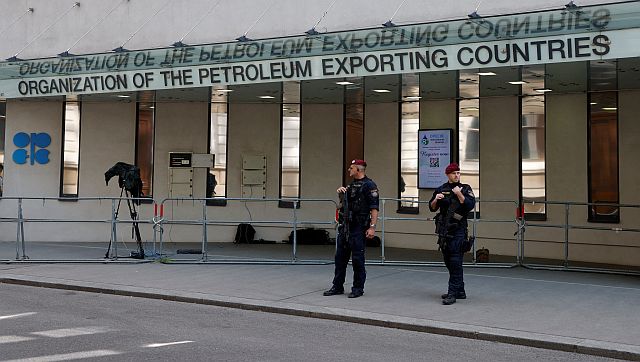 Austrian police officers stand in front of the OPEC headquarters in Vienna, Austria. Reuters[/caption]Russian deputy prime minister Alexander Novak has also pointed to "interference with market dynamics", a Russian expression to describe a Western price cap on Russian oil.Fears of another banking crisis in recent months have led investors to sell out of riskier assets such as commodities with oil prices falling to near $70 (Rs 5,775) per barrel from a peak of $139 (Rs 11, 469) in March 2022.A global recession could lead to lower oil prices.Oil prices also recently came under pressure from concerns about US debt ceiling negotiations, though fears of a debt default by the world's biggest oil consumer have abated since a bipartisan deal was sealed last week.Pushing speculatorsThe planned cuts will also punish oil short sellers betting on oil price declines.In 2020, Saudi energy minister Prince Abdulaziz bin Salman warned traders against betting heavily in the oil market, saying that those who gamble on the oil price would be "ouching like hell".He repeated his warning ahead of Sunday's meeting, telling speculators to "watch out" which many market watchers and investors interpreted as a signal that OPEC+ could consider further output cuts.US output rising US crude oil production is set to rise by 5.1 per cent to 12.53 million barrels per day (bpd) in 2023 and by 1.3 per cent to 12.69 million bpd in 2024, according to government forecasts.This compares with around 10 million bpd as recently as 2018.[caption id="attachment_12696362" align="alignnone" width="640"]
 A surprise announcement by OPEC+ in April to deepen production cuts helped to raise prices by about $9 (Rs 742) a barrel to above $87 (Rs 7,178) per barrel in the days followed. AFP[/caption]Meanwhile, Saudi's energy ministry said the country's output, the biggest chunk of OPEC+ production, would drop to nine million barrels per day (bpd) in July from around 10 million bpd in May, in its biggest reduction in years.Saudi output is set to rebound to around 10 million bpd from August, unless market conditions prompt the kingdom to extend cuts.Russia, the world's third-biggest oil producer, is targeting production of around 9.5 million bpd until the end of the year and 9.3 million bpd next year.Tensions with Washington Additional cuts from OPEC+ could drive tensions with leading consuming nations that are trying to fight inflation.Washington called OPEC+'s action in April inadvisable.The West has repeatedly criticised OPEC for manipulating prices and siding with Russia despite the war in Ukraine.The United States is considering passing legislation known as NOPEC, which would allow the seizure of OPEC's assets on US territory if market collusion is proven.OPEC+ has criticised the International Energy Agency, the West's energy watchdog for which the United States is the biggest financial donor, for advocating oil stocks releases last year. The IEA had argued these were necessary to bring down prices given concerns that sanctions would disrupt Russian supply.The IEA's predictions of price strength never materialised, prompting OPEC+ sources to say it was politically driven and designed to help boost US president Joe Biden's ratings.The United States, which released most stocks, said it would buy back some oil in 2023, but later ruled that out.OPEC observers also say the group needs nominal oil prices to be higher because money printing by the West in recent years has lowered the value of the US dollar, the currency in which oil is traded.With inputs from Reuters Read all the Latest News, Trending News, Cricket News, Bollywood News,India News and Entertainment News here. Follow us on Facebook, Twitter and Instagram.
First Published:Jun 06, 2023, 09:11:31 IST
Advertisement
Advertisement

Military drones & police check-ups: How Sri Lanka is fighting against worst dengue outbreak in a decade
Sri Lanka is fighting its most severe dengue outbreak in nearly a decade, with infections rising sharply across the nation. Military drones have been deployed to tackle the outbreak, which has claimed 56 lives. Health officials said the outbreak is being driven primarily by the DENV-2 variant of the virus
3 min read
How Facebook job ad lured 2 Karnataka men into Myanmar cyber scam camp
The Karnataka Cyber Command has rescued two youths from a scam compound in Myanmar operated by Chinese fraudsters. The duo from Karnataka were lured on the pretext of data-entry jobs. They were asked to work for 16 hours a day and were expected to sleep for six hours daily
4 min read
Why is India seeing 95% cloud cover despite a Super El Niño?
India is witnessing nearly 95 per cent cloud cover despite a Super El Niño, a climate event usually linked to weaker monsoons. Regional weather systems, cyclonic circulations, the monsoon trough and moisture from two seas are temporarily overpowering one of the world's strongest climate phenomena
5 min read
What is CJP’s fourth demand to the government as protests in Delhi intensify?
The protest by the Cockroach Janta Party at Delhi’s Jantar Mantar refuses to die down. The group have made a fourth demand to the Centre, asking that no FIRs are filed against the agitators and that no legal action be taken. The government has expressed willingness to speak to the protesters, but refused to accede on the resignation of Education Minister Dharmandra Pradhan
5 min read
The new geography of war: Why the Houthis can no longer be ignored
The rise of the Houthis marks the emergence of a new geography of war — one in which influence flows not only from capitals and conventional armies, but also from rugged mountains overlooking vital sea lanes
6 min read
Advertisement
Advertisement