


Explained: The 1870s Comstock Act, which is threatening access to abortion pills in the US
Dormant for a half-century, the Comstock Act has been revived by anti-abortion groups and conservative states seeking to block the mailing of mifepristone, the pill used in more than half of US abortions

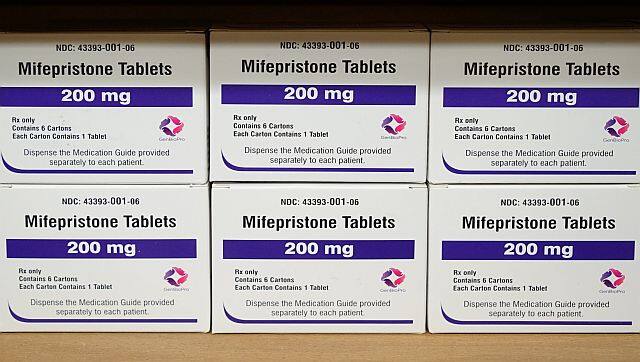
Comstock has also been cited by Republican state officials seeking to stop national pharmacy chains from shipping abortion pills to their states. AP[/caption]"The fact that pills can be mailed is an existential crisis for the anti-abortion movement — it's hard to police, it's hard to track, it's difficult to enforce," said Rebouché. "If courts are willing to breathe new life into Comstock, it has the potential to shut down the uptake of medication abortion across the country."Comstock has also been cited by Republican state officials seeking to stop national pharmacy chains from shipping abortion pills to their states.In February, attorneys general in 20 conservative-led states warned CVS and Walgreens that they could face legal consequences if they sell abortion pills by mail in their states. Most of those states have laws restricting abortion broadly or the pills specifically, but the attorneys general said mail-order mifepristone also runs afoul of the Comstock Act.How have courts treated the Comstock Act in the past?Beginning in the 1930s, federal courts issued rulings drastically narrowing how the law could be applied. Read literally, the law could be interpreted to outlaw almost any medical item that could be used in an abortion."The interpretation being advanced would apply to all kinds of articles – like surgical gloves — that are just basic equipment for health care," Rebouché said.A key 1936 ruling concluded that the law could only apply when the person mailing an item or drug specifically intended it to be used illegally for abortion.In December, the Biden administration's Justice Department attempted to bolster that interpretation, issuing an opinion that Comstock could not be used to outlaw the mailing of abortion pills because of their many legal uses, including during miscarriages and under abortion-ban exceptions.Again, Kacsmaryk rejected that view, stating that the law "plainly does not require intent on the part of the seller."What happens next?The Supreme Court has never weighed in on Comstock and — assuming the justices take up the case— the ruling could have far-reaching consequences for American women, abortion providers and their opponents.Kacsmaryk's order is limited to mifepristone, but the same approach could potentially be used for other drugs.Mifepristone is currently taken in combination with a second pill, misoprostol. Abortion clinics have said that if mifepristone were pulled from the market, they would switch to using only the second drug, which is also used to treat other medical conditions.But whether Comstock could be used to also curtail shipments of misoprostol is not clear, since it is widely prescribed for stomach ulcers and other uses.What if the supreme court upholds the abortion pill ruling?Even if the Supreme Court affirms the Texas ruling and orders mifepristone off the market, experts say there could be more legal battles ahead.The FDA has its own procedures for revoking drug approvals, which involve public hearings and internal agency reviews. The process can take months or years. If those steps are skipped, mifepristone-maker Danco Laboratories, which is a party to the case, could potentially sue under "due process" claims, according to experts.The FDA is also facing pressure to essentially ignore a negative court decision, given there is almost no legal precedent for a judge overruling the agency's medical determinations."There is no way this decision has a basis in law," said Democratic Senator Ron Wyden, of Oregon, in a statement Friday. "The FDA, doctors, and pharmacies can and must go about their jobs like nothing has changed."Legal experts point out that the FDA has traditionally had broad leeway in deciding how to use its authority. For instance, the agency allows a number of unproven remedies and supplements to remain on the market because they are essentially harmless and removing them would drain limited agency resources.Given that mifepristone remains safe and effective for ending pregnancy, some experts say the agency should simply allow the pill to remain on the market as an unapproved medication."Even if a court wants to order that the FDA does something, the agency still has discretion in how it does that thing," Rebouché said.Read all the Latest News, Trending News, Cricket News, Bollywood News,India News and Entertainment News here. Follow us on Facebook, Twitter and Instagram.

Military drones & police check-ups: How Sri Lanka is fighting against worst dengue outbreak in a decade
How Facebook job ad lured 2 Karnataka men into Myanmar cyber scam camp
Why is India seeing 95% cloud cover despite a Super El Niño?
What is CJP’s fourth demand to the government as protests in Delhi intensify?
The new geography of war: Why the Houthis can no longer be ignored