


India’s energy future looks green, could reach 405 GW by 2030, says report
The Indian government's own projections estimate the country will produce even more renewable energy — 500 gigawatts — in the same time frame

Bengaluru: India's renewables sector is booming, with the country projected to add 35 to 40 gigawatts of renewable energy annually until 2030, enough to power up to 30 million more homes each year, a report said Thursday.
The Institute for Energy Economics and Financial Analysis (IEEFA) and Climate Energy Finance estimated that India, the third largest energy-consuming country in the world, will reach 405 gigawatts of renewable energy capacity by 2030. It's expected to surpass the government's target of producing 50 per cent of its electricity from non-fossil fuel sources by the end of the decade.
The Indian government's own projections estimate the country will produce even more renewable energy — 500 gigawatts — in the same time frame. Currently, fossil fuels account for 59 per cent of India's installed energy capacity, but are expected to make up just 31.6 per cent of the energy mix by 2030.
 More from Explainers
She added that the low cost of renewables as well as the need for cleaner energy sources to curb climate change have driven the growth of the sector in the country, which is the world's third-largest renewable energy market."India is energy hungry and this hunger will only increase with our economic and population growth."
No other country's energy needs are expected to balloon as much as India's in the coming years as living standards improve and its 1.3 billion population grows.
The report, which analysed data from various green energy corporations and publicly funded energy companies, also found that 151 gigawatts of renewable energy will be added by private clean energy companies alone. Adani Green Energy, a private company, will account for the largest single addition, going from 5.8 gigawatts to 45 gigawatts of renewable energy production.
Although the country has made significant strides in clean energy, experts say there is still room for improvement.
India's "ambitious renewable energy policies" haven't yet halted the country's coal pipeline, said Nandini Das, a climate and energy economist at the Berlin-based think tank, Climate Analytics.
Recent estimates say India will require around $223 billion of investment to meet its 2030 energy goals.But shutting down coal and moving towards greener energy needs financing.
Long-time observers of India's clean energy transition point out rooftop solar energy is also lacking: the country has just 7.5 gigawatts of rooftop solar installed of a planned 40 gigawatts by the end of the year.
"The challenge is that different states have different rooftop solar policies. We don't have a holistic national policy for this segment," said Aditya Lolla of the London-based environmental think tank, Ember.[caption id="attachment_11464521" align="alignnone" width="640"]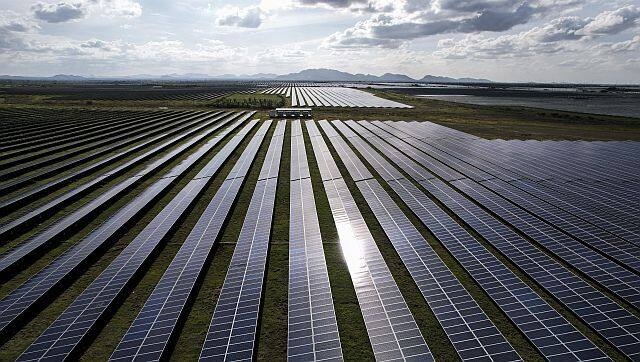
No other country's energy needs are expected to balloon as much as India's in the coming years as living standards improve and its 1.3 billion population grows. AP[/caption]Lolla added that other renewable energy projects also need to be ramped up.
"We really need to increase the build rates. This year we are installing an average of 1.7 gigawatts every month and we need to be hitting 3.7 gigawatts," he said.
"We can do many things to ramp up but that is the foremost thing that needs to happen and this needs to happen very soon."Read all the Latest News, Trending News, Cricket News, Bollywood News,India News and Entertainment News here. Follow us on Facebook, Twitter and Instagram.

Military drones & police check-ups: How Sri Lanka is fighting against worst dengue outbreak in a decade
How Facebook job ad lured 2 Karnataka men into Myanmar cyber scam camp
Why is India seeing 95% cloud cover despite a Super El Niño?
What is CJP’s fourth demand to the government as protests in Delhi intensify?
The new geography of war: Why the Houthis can no longer be ignored