
Advertisement


Sections
Explained: How the UK police can address its institutional racism and sexism
The Met's commissioner accepted the Casey review's findings that London's Metropolitan police force is institutionally racist, misogynistic, and homophobic, and acknowledged that more work is needed. However, he rejects the term ‘institutional’ to describe the Met's problems

Baroness Louise Casey has found that London’s Metropolitan police force is institutionally racist, misogynistic and homophobic. We heard similar 24 years ago when, after the incompetent investigation into the murder of Stephen Lawrence, Sir William MacPherson reported that the Met was institutionally racist.The Met’s commissioner, Sir Mark Rowley, has accepted the findings of the Casey review and acknowledged that work needs to be done. Yet he rejects the “institutional” label to describe the Met’s problems.In fact, the review reveals exactly what it means for these problems to be institutional.Racism and sexism by officers towards their own colleagues and the public has been allowed to flourish unchecked by the organisation. For Rowley to quibble about phraseology, and disagree with this term because it is “political”, is a sign that he is already trying to protect the Met from external criticism — an example of the harmful and excessive hubris Casey describes.What stands out most to me is that the good people within the Met workforce are scared. They are afraid of their own colleagues, but also scared of speaking out about them because they fear their managers are just as bad. And they are worried about losing their jobs if they rock the boat. As one officer told the inquiry team in a chilling comment:![]() Racism and sexism by officers towards their own colleagues and the public has been allowed to flourish unchecked by the organisation. AFP[/caption]A polygraph could be another screening tool for prospective officers. It is already used within the English criminal justice system to monitor convicted sex offenders, with a claimed 80-90 per cent reliability.To use it as a screening tool for police applicants — not to bar them if they fail, but to determine whether further enquiries are necessary — does not seem far-fetched in the current climate.It is not unusual for private organisations such as banks to use “mystery shoppers” to monitor how their staff interact with their customers, or to implement random drug testing.The Met needs intrusive workplace monitoring that includes similar tactics, including covert listening devices in briefing rooms and patrol cars, and random screenings of officers’ phones and social media.The Casey review details horrific initiation rituals and bullying of young officers, female officers, and Black, Asian and minority ethnic officers — those who are perhaps most malleable when it comes to a toxic culture, or at least unlikely to speak out against it.Such officers could be selected, tasked and supported by the Directorate of Professional Standards to act as undercover operatives who monitor integrity and behaviour in specific departments and report on any wrongdoing.
Racism and sexism by officers towards their own colleagues and the public has been allowed to flourish unchecked by the organisation. AFP[/caption]A polygraph could be another screening tool for prospective officers. It is already used within the English criminal justice system to monitor convicted sex offenders, with a claimed 80-90 per cent reliability.To use it as a screening tool for police applicants — not to bar them if they fail, but to determine whether further enquiries are necessary — does not seem far-fetched in the current climate.It is not unusual for private organisations such as banks to use “mystery shoppers” to monitor how their staff interact with their customers, or to implement random drug testing.The Met needs intrusive workplace monitoring that includes similar tactics, including covert listening devices in briefing rooms and patrol cars, and random screenings of officers’ phones and social media.The Casey review details horrific initiation rituals and bullying of young officers, female officers, and Black, Asian and minority ethnic officers — those who are perhaps most malleable when it comes to a toxic culture, or at least unlikely to speak out against it.Such officers could be selected, tasked and supported by the Directorate of Professional Standards to act as undercover operatives who monitor integrity and behaviour in specific departments and report on any wrongdoing.![The Conversation]() This article is republished from The Conversation under a Creative Commons license. Read the original article.Read all the Latest News, Trending News, Cricket News, Bollywood News,India News and Entertainment News here. Follow us on Facebook, Twitter and Instagram.
This article is republished from The Conversation under a Creative Commons license. Read the original article.Read all the Latest News, Trending News, Cricket News, Bollywood News,India News and Entertainment News here. Follow us on Facebook, Twitter and Instagram.
I am scared of the police. I don’t trust my own organisation.Many would argue that it is the public — especially the women and people from diverse cultures living in London — who need protecting from bad officers.I agree, but the way to achieve that is, first, to create an environment whereby the decent members of the Met workforce can police themselves and help clear out the toxic rubbish.If the Met is to survive in its current form, good officers need to feel they are on the right side of history. And bad officers must be made to feel they are no longer in a workplace where they can speak and act with impunity. This will need intrusive and aggressive vetting and monitoring in the workplace.Changing institutional cultureThe recently sacked Met police officer and serial rapist David Carrick apparently posed with his gun to intimidate and control women. When someone is accepted into the police, even if not a firearms officer, they are given another powerful and sinister weapon — a credit card-sized piece of plastic called a warrant card. This, according to Casey’s review, is what Wayne Couzens used to trick Sarah Everard into his car before raping and murdering her.In an earlier article, I wrote about how weak and passive the vetting of new police recruits is. The vetting team can find out if a candidate has convictions or debts, but they don’t really learn what a candidate thinks.To close that vital gap, they need to proactively interview the applicant’s friends, family and colleagues, and intrusively delve into their social media use.[caption id="attachment_12331012" align="alignnone" width="640"]
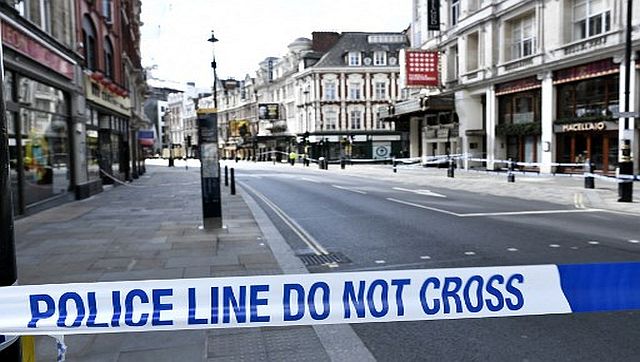 Racism and sexism by officers towards their own colleagues and the public has been allowed to flourish unchecked by the organisation. AFP[/caption]A polygraph could be another screening tool for prospective officers. It is already used within the English criminal justice system to monitor convicted sex offenders, with a claimed 80-90 per cent reliability.To use it as a screening tool for police applicants — not to bar them if they fail, but to determine whether further enquiries are necessary — does not seem far-fetched in the current climate.It is not unusual for private organisations such as banks to use “mystery shoppers” to monitor how their staff interact with their customers, or to implement random drug testing.The Met needs intrusive workplace monitoring that includes similar tactics, including covert listening devices in briefing rooms and patrol cars, and random screenings of officers’ phones and social media.The Casey review details horrific initiation rituals and bullying of young officers, female officers, and Black, Asian and minority ethnic officers — those who are perhaps most malleable when it comes to a toxic culture, or at least unlikely to speak out against it.Such officers could be selected, tasked and supported by the Directorate of Professional Standards to act as undercover operatives who monitor integrity and behaviour in specific departments and report on any wrongdoing.
Finally, the decent people in the Met must feel safer in their own workplace.They need to be able to report inappropriate behaviour safely and confidentially, so an external whistleblowing service is a must. They are unlikely to have confidence in any whistleblowing line run by the Met, or even the Independent Office for Police Conduct, who many officers view with distrust.The Met needs to create a hostile environment for racists and misogynists in which they are worried they will be caught whenever they are at work, not just when they know an investigation is brewing.It doesn’t matter that officers will then be more careful what they say openly and what they say on WhatsApp. That is the point. What I am proposing is a significant disruption to normal workplace privacy and would likely be met with resistance. But if sold correctly, it should empower the good officers, giving them confidence that the commissioner is serious about protecting them.Breaking up the MetIn another article, I suggested a way to break up and restructure the Met. For decades, London’s massive force has been too large to govern effectively, and its pattern of misogyny, racism, misconduct and outright crime has dragged down the reputation of every other police force in the country. Only one in five people report feeling “very positive” towards the police in England and Wales.This review has come to a similar conclusion.Baroness Casey has recommended that the Met be given one last chance to reform, or risk being completely restructured.Yet the Met has already had ample chances to change since its first so-called “reforming commissioner” in the 1970s. Now, both officers and the public are fed up and disgusted.We entrust the police with great power — but with that comes enormous responsibility to act with integrity. The police in London have abused their power and our trust. The officers in the Met, and their powerful Police Federation, must accept that their workplace needs to be intrusively monitored, or reformed immediately. Instead of giving them another chance, why not take this opportunity and get it done?
 This article is republished from The Conversation under a Creative Commons license. Read the original article.Read all the Latest News, Trending News, Cricket News, Bollywood News,India News and Entertainment News here. Follow us on Facebook, Twitter and Instagram.
First Published:Mar 22, 2023, 11:10:08 IST
Advertisement
Advertisement

Military drones & police check-ups: How Sri Lanka is fighting against worst dengue outbreak in a decade
Sri Lanka is fighting its most severe dengue outbreak in nearly a decade, with infections rising sharply across the nation. Military drones have been deployed to tackle the outbreak, which has claimed 56 lives. Health officials said the outbreak is being driven primarily by the DENV-2 variant of the virus
3 min read
How Facebook job ad lured 2 Karnataka men into Myanmar cyber scam camp
The Karnataka Cyber Command has rescued two youths from a scam compound in Myanmar operated by Chinese fraudsters. The duo from Karnataka were lured on the pretext of data-entry jobs. They were asked to work for 16 hours a day and were expected to sleep for six hours daily
4 min read
Why is India seeing 95% cloud cover despite a Super El Niño?
India is witnessing nearly 95 per cent cloud cover despite a Super El Niño, a climate event usually linked to weaker monsoons. Regional weather systems, cyclonic circulations, the monsoon trough and moisture from two seas are temporarily overpowering one of the world's strongest climate phenomena
5 min read
What is CJP’s fourth demand to the government as protests in Delhi intensify?
The protest by the Cockroach Janta Party at Delhi’s Jantar Mantar refuses to die down. The group have made a fourth demand to the Centre, asking that no FIRs are filed against the agitators and that no legal action be taken. The government has expressed willingness to speak to the protesters, but refused to accede on the resignation of Education Minister Dharmandra Pradhan
5 min read
The new geography of war: Why the Houthis can no longer be ignored
The rise of the Houthis marks the emergence of a new geography of war — one in which influence flows not only from capitals and conventional armies, but also from rugged mountains overlooking vital sea lanes
6 min read
Advertisement
Advertisement