


Explained: How the earthquake brings Syrian city of Jableh its ‘first catastrophe’
Jableh's residential areas have long been run-down, but they have escaped the scars of Syria's years of conflict. However, more than 50 apartment buildings in the city and its environs have completely collapsed as a result of the quake, and at least 50 more are in danger of collapsing

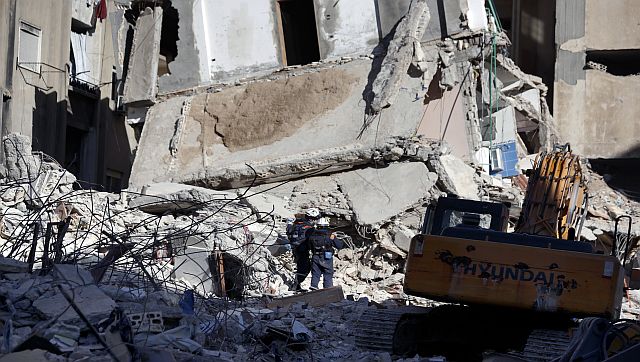
With flattened buildings, civilians trapped under rubble and residents forced to flee their homes, Jableh is no longer sheltered from the kind of devastation that has long plagued neighbouring regions. AP[/caption]On Friday, a rescue force from the United Arab Emirates operated on a completely flattened building that initially split in half when the quake hit.The first section fell immediately, with the remaining part following shortly after. At least 15 people were killed.Imad al-Daou barely made it out alive with his wife and two children when the floor crumbled beneath their feet."This is the first catastrophe of its kind that I ever experienced in my life," said the 42-year-old merchant."They had to pull me out using an excavator."Jableh is part of a Syrian coastal region that includes the government strongholds of Latakia and Tartus — too, largely spared the impact of the conflict.The area is known as a recruiting ground for President Bashar al-Assad's forces, with much of his military hailing from the area.Assad's Russian allies also have major stakes in the region. The Russian airbase in Hmeimim is five kilometres (three miles) from Jableh, and the naval port of Tartus lies roughly 60 kilometres to the south.'Tent on the street'Syria's war, which started in 2011 with a brutal crackdown on anti-regime protests, has killed nearly half a million people and has forced at least half of the country's pre-war population from their homes.The vast majority of the country has seen major population movement due to fighting.But the residents of Jableh were not forced to flee their homes until the quake hit.In the city's Al-Fayed neighbourhood, dozens of evacuees huddled in a mosque-turned-shelter waiting to hear if their homes are safe for return.With nowhere else to go, they have been living there for five days, barely able to afford food, let alone temporary accommodation."I'll pitch a tent on the street" if I can't go back home, said Fatima Hammoud.The 42-year-old mother of three fled her damaged home with her husband and children on Monday, fearing the roof would cave in over their heads."I can't sleep. Anytime I feel a minor movement I remember all the shaking," she said.Sprawled on the floor nearby, Halima al-Aswad also said she has been stalked by dread since the disaster."Where will I go? The only safe place is the mosque," the mother of three said, fighting back tears."Wherever is safe, I will go there."Read all the Latest News, Trending News, Cricket News, Bollywood News,India News and Entertainment News here. Follow us on Facebook, Twitter and Instagram.

Military drones & police check-ups: How Sri Lanka is fighting against worst dengue outbreak in a decade
How Facebook job ad lured 2 Karnataka men into Myanmar cyber scam camp
Why is India seeing 95% cloud cover despite a Super El Niño?
What is CJP’s fourth demand to the government as protests in Delhi intensify?
The new geography of war: Why the Houthis can no longer be ignored