
Advertisement


Sections
Gyanvapi mosque case: What is carbon dating, demanded by the Hindu side, for the 'shivling'?
A Varanasi district court has allowed the Hindu side’s petition seeking carbon dating of the structure found inside the Gyanvapi mosque complex, which they claim is a ‘shivling’. But what is carbon dating and how does it work?

On Thursday, a Varanasi district court admitted a plea seeking carbon dating of a structure found inside the Gyanvapi mosque complex, which the Hindu side claims is a ‘shivling’.The court also issued notices to Anjuman Intezamia Masajid, which manages the Gyanvapi mosque complex, to file its objection to the plea by the next date of hearing which is 29 September.Vishnu S Jain, representing the Hindu petitioners, told ANI that the court also rejected the Gyanvapi mosque management’s plea for eight weeks’ time to prepare for the next hearing.“Our plea seeking permission for carbon dating of the Shivling-like structure found on the Gyanvapi mosque compound, walls and other structures on the masjid complex was admitted in the court of district judge Ajay Krishna Vishvesh after which the court has issued notice and has sought reply of the Muslim side,” Madan Mohan, one of the counsel representing the Hindu plaintiffs, was quoted as saying by Hindustan Times.Earlier on 12 September, the court had rejected the plea of the Gyanvapi mosque management questioning the maintainability of the case filed by five Hindu women, seeking permission to worship the idols of Shringar Gauri on the outer wall of the masjid complex.The Gyanvapi mosque management committee maintains that the structure in question is a part of the fountain system of the ‘wazu khana', a small reservoir used by Muslims to perform ablutions before offering namaz.But what is carbon dating that the Hindu side has demanded and how does it work?Let’s decode the topic:What is carbon dating?Developed by American chemist Willard Libby in 1946, carbon dating is a method used to determine the age of matter that was once living.Radiocarbon dating or carbon-14 dating compares the three different isotopes of carbon.![Gyanvapi mosque]() A Varanasi district court has allowed the Hindu side’s petition seeking carbon dating of the 'shivling' found inside the Gyanvapi mosque complex. PTI File Photo[/caption]Plants absorb carbon through photosynthesis, while humans and animals get it via food. As they get their carbon from the atmosphere, they also intake carbon-12 and carbon-14 isotopes in almost the same proportion as present in the atmosphere, reports Indian Express.Once the living being dies, the carbon intake from the atmosphere stops. While carbon-12 is stable, carbon-14, which is radioactive, disintegrates to one-half of itself in around 5,730 years.This residual radioactive carbon decays at this constant rate and can be measured to get an estimate of when did the organism die.The method is used by experts to date trees, plants, and animal remains as well as human artefacts made of wood or leather.Can it be used to determine the age of non-living this?
A Varanasi district court has allowed the Hindu side’s petition seeking carbon dating of the 'shivling' found inside the Gyanvapi mosque complex. PTI File Photo[/caption]Plants absorb carbon through photosynthesis, while humans and animals get it via food. As they get their carbon from the atmosphere, they also intake carbon-12 and carbon-14 isotopes in almost the same proportion as present in the atmosphere, reports Indian Express.Once the living being dies, the carbon intake from the atmosphere stops. While carbon-12 is stable, carbon-14, which is radioactive, disintegrates to one-half of itself in around 5,730 years.This residual radioactive carbon decays at this constant rate and can be measured to get an estimate of when did the organism die.The method is used by experts to date trees, plants, and animal remains as well as human artefacts made of wood or leather.Can it be used to determine the age of non-living this?![Gyanvapi masjid case]() The next hearing in the Gyanvapi mosque case is is 29 September. AFP File Photo[/caption]As per Indian Express, one of the methods of carbon dating requires examining trapped organic material beneath the structure which would involve uprooting it. In such a scenario, this method might not be a feasible option.With inputs from agenciesRead all the Latest News, Trending News, Cricket News, Bollywood News,India News and Entertainment News here. Follow us on Facebook, Twitter and Instagram.
The next hearing in the Gyanvapi mosque case is is 29 September. AFP File Photo[/caption]As per Indian Express, one of the methods of carbon dating requires examining trapped organic material beneath the structure which would involve uprooting it. In such a scenario, this method might not be a feasible option.With inputs from agenciesRead all the Latest News, Trending News, Cricket News, Bollywood News,India News and Entertainment News here. Follow us on Facebook, Twitter and Instagram.
All living beings absorb carbon from the atmosphere, including natural radioactive carbon-14.The most abundant carbon isotope is carbon-12 which remains stable in the environment, as per The Conversation, while the other isotope carbon-14 decays over time.[caption id="attachment_11321511" align="alignnone" width="640"]
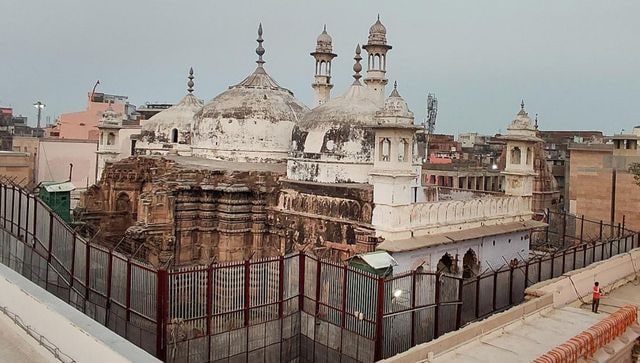 A Varanasi district court has allowed the Hindu side’s petition seeking carbon dating of the 'shivling' found inside the Gyanvapi mosque complex. PTI File Photo[/caption]Plants absorb carbon through photosynthesis, while humans and animals get it via food. As they get their carbon from the atmosphere, they also intake carbon-12 and carbon-14 isotopes in almost the same proportion as present in the atmosphere, reports Indian Express.Once the living being dies, the carbon intake from the atmosphere stops. While carbon-12 is stable, carbon-14, which is radioactive, disintegrates to one-half of itself in around 5,730 years.This residual radioactive carbon decays at this constant rate and can be measured to get an estimate of when did the organism die.The method is used by experts to date trees, plants, and animal remains as well as human artefacts made of wood or leather.Can it be used to determine the age of non-living this?
Carbon dating is used to determine the age of objects younger than 50,000 years.It is not used to ascertain the age of non-living things like rocks, stones, etc.There are other methods applied to calculate the age of non-living objects. But carbon dating can be used indirectly to date rocks if they have any organic material such as dead plants or insects attached to them.Those dead organisms can help in deciding when that inanimate object reached that place, as per Indian Express.Is carbon dating always apt?Not always.The method assumes the amount of carbon-14 in the atmosphere has been constant in time and space, which is not true, as per Nature.Moreover, carbon emissions from fossil fuels are disturbing the ratio of carbon-12 and carbon-14 in the atmosphere, reports Smithsonian magazine."In a couple of decades, we will not be able to distinguish if any radiocarbon age we get out or carbon might be from the past or from the future," fears Peter Köhler, a physicist at the Alfred Wegener Institute for Polar and Marine Research.Can carbon dating be used in the Gyanvapi case?It remains unclear if carbon dating is a suitable method to determine that the structure, which the Hindu side claims is a ‘shivling’, existed much before the mosque was built in 1669.[caption id="attachment_11321531" align="alignnone" width="640"]
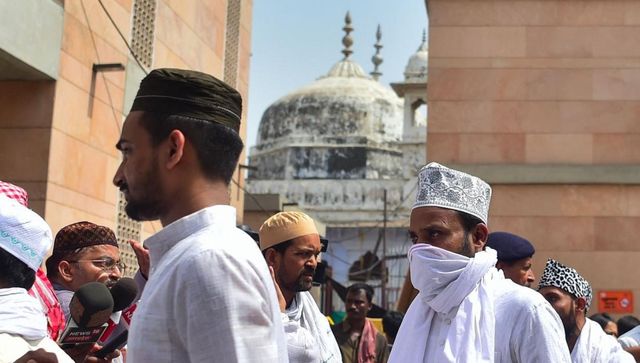 The next hearing in the Gyanvapi mosque case is is 29 September. AFP File Photo[/caption]As per Indian Express, one of the methods of carbon dating requires examining trapped organic material beneath the structure which would involve uprooting it. In such a scenario, this method might not be a feasible option.With inputs from agenciesRead all the Latest News, Trending News, Cricket News, Bollywood News,India News and Entertainment News here. Follow us on Facebook, Twitter and Instagram.
First Published:Sep 23, 2022, 21:36:46 IST
Advertisement
Advertisement

Military drones & police check-ups: How Sri Lanka is fighting against worst dengue outbreak in a decade
Sri Lanka is fighting its most severe dengue outbreak in nearly a decade, with infections rising sharply across the nation. Military drones have been deployed to tackle the outbreak, which has claimed 56 lives. Health officials said the outbreak is being driven primarily by the DENV-2 variant of the virus
3 min read
How Facebook job ad lured 2 Karnataka men into Myanmar cyber scam camp
The Karnataka Cyber Command has rescued two youths from a scam compound in Myanmar operated by Chinese fraudsters. The duo from Karnataka were lured on the pretext of data-entry jobs. They were asked to work for 16 hours a day and were expected to sleep for six hours daily
4 min read
Why is India seeing 95% cloud cover despite a Super El Niño?
India is witnessing nearly 95 per cent cloud cover despite a Super El Niño, a climate event usually linked to weaker monsoons. Regional weather systems, cyclonic circulations, the monsoon trough and moisture from two seas are temporarily overpowering one of the world's strongest climate phenomena
5 min read
What is CJP’s fourth demand to the government as protests in Delhi intensify?
The protest by the Cockroach Janta Party at Delhi’s Jantar Mantar refuses to die down. The group have made a fourth demand to the Centre, asking that no FIRs are filed against the agitators and that no legal action be taken. The government has expressed willingness to speak to the protesters, but refused to accede on the resignation of Education Minister Dharmandra Pradhan
5 min read
The new geography of war: Why the Houthis can no longer be ignored
The rise of the Houthis marks the emergence of a new geography of war — one in which influence flows not only from capitals and conventional armies, but also from rugged mountains overlooking vital sea lanes
6 min read
Advertisement
Advertisement