


What makes 43°C in Europe more unbearable than 43°C in India?
The heatwave in Europe has left residents struggling. The temperature in countries such as Poland, Slovakia and Germany has risen to anywhere between 41°C and 43°C. The hot conditions have left many wondering why the European summer seems more brutal than the Indian one. The answer, however, lies in geography, housing design, and weather patterns

Look at the headlines across global websites, and you will find that they are talking about Europe’s deadly heatwave. Social media is also flooded with posts about the unbearable heat gripping the continent.
Temperatures have shattered all-time highs across the continent, and the heat has now shifted east towards the Balkans and Ukraine. On Monday, Belgrade and Bucharest reached 38 degrees Celsius and 37 degrees Celsius, while Slovakia set a new temperature record, reaching 40.5°C in a southern border town, beating a previous record of 40.3°C set in 2007.
And it’s not just high temperatures. The heatwave has caused over 1,000 deaths since 21 June, said the WHO, including children who died in locked cars and young people who drowned seeking relief in unsupervised swimming spots.
However, even as the temperatures show no signs of reducing in Europe, it has sparked a debate in India, with one X user writing, “Is 43°C in Europe different than 43°C in India? What’s so rona dhona about it? Here, the temperature even touches 48°C.”
 More from Explainers
For those who have thought the same, science has the answer. We explain.
Europe bakes in the heat
Europe is in the grips of its most severe heatwave, setting new temperature records in eastern parts of the continent. The scorching heat, which first smothered western Europe last week, has already set records in Poland, the Czech Republic, and Germany as it moved east in recent days.
On Monday, Slovakia registered a new record temperature of 41°C in Turna nad Bodvou in the southeast, the Slovak Hydrometeorological Institute (SHMU) said. The mercury reached 41.8°C in Aszod in central Hungary, just below the country’s absolute heat record of 41.9°C from 2007.

Earlier, Germany recorded its highest temperature for a third consecutive day on Sunday, with data from the weather service showing 41.7 degrees Celsius in Coschen, Brandenburg. The extreme heat disrupted transport in several cities after tram tracks buckled, while Berlin police deployed water cannon to cool crowds gathering in public spaces.
The heatwave has also resulted in a shocking death toll across the continent, with France being the hardest hit. The country’s national health agency recorded around 1,000 more deaths than expected since June 24 alone, with the majority among people aged 65 and over. At least 74 drowning deaths have been reported in France since June 18.
Commenting on the situation, WHO chief Tedros Adhanom Ghebreyesus warned that Europe is the fastest-warming continent on Earth, heating at twice the global average, and even called on European governments to implement heat action plans.
Europe’s heat vs India’s heat
As temperatures soar in Europe, it has sparked intense discussions online, with many asking what makes the condition in the continent more alarming than it is in India.
As X user Umed Pratap Singh pointed out, temperatures in India have even reached the 48 degrees Celsius mark. In fact, in late May, a heatwave gripped the country, pushing the mercury level to 46°C across large parts of the country. Balangir in Odisha clocked 48°C.

Same temperatures but different feelings
But there’s an answer to why the same temperature can feel much harsher in Europe than it does in many parts of India.
Experts note that there are multiple reasons why people in Europe would feel differently than in India. Humidity, geographical location, housing infrastructure, and urban design can all make one temperature seem different in different parts of the country.
As energy and climate policy expert Siddharth Singh wrote in an X post, a lot has to do with Europe’s location and how the sun hits the continent. Firstly, much of Europe lies significantly farther north than India.
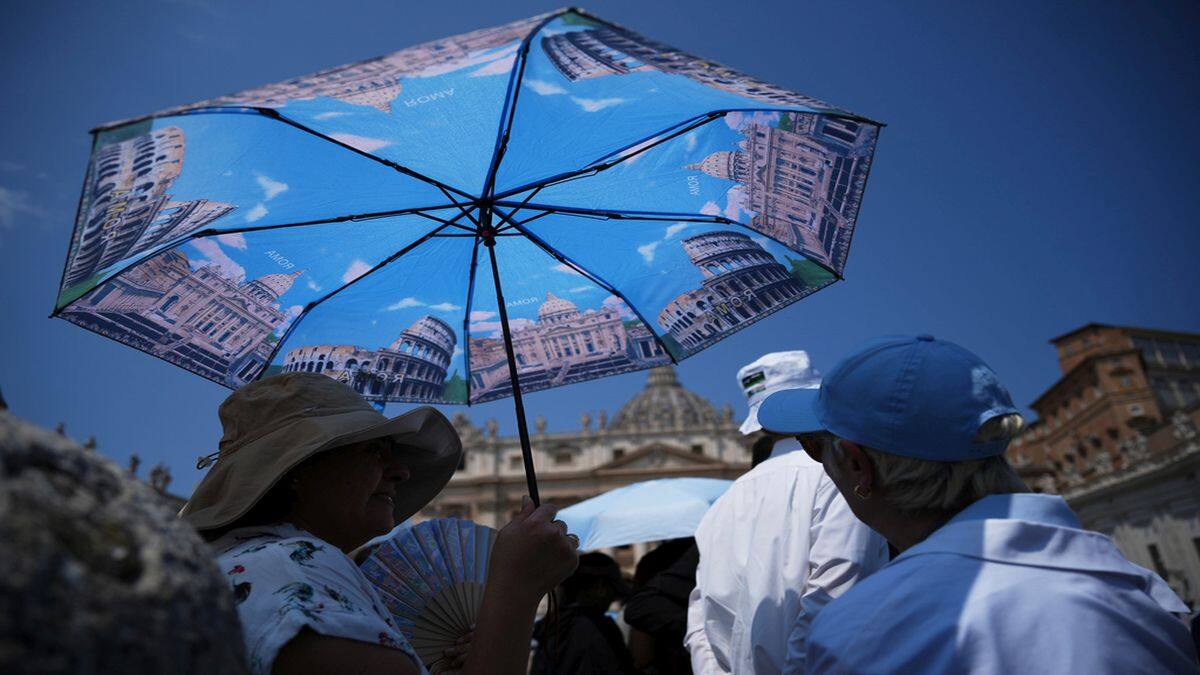
“In India, the sun hits from the top. In Europe, it hits at an angle, and significantly longer summer days can yield strong solar loads through the course of a day. So the sun feels different,” Singh explained.
As a result, the summer sun reaches Europe at a lower angle but remains above the horizon for much longer. During peak summer, many European cities experience 15-17 hours of daylight, allowing buildings, roads, and pavements to absorb solar energy throughout the day. Meanwhile, in India, the sun climbs much higher overhead, producing more direct radiation but over comparatively shorter daylight periods.
Others also noted that Europe’s geography matters. As one wrote on X, “I think it’s more about geography and acclimatisation. India lies closer to the Equator, while most of Europe is at higher latitudes. Temperatures of 40–42°C are relatively more common in many parts of India, whereas they’re far less common in Europe.”

Acclimation also matters. Repeated exposure changes the way the human body responds to heat. People living in hot climates gradually become acclimatised by sweating earlier, producing more sweat, and improving cardiovascular efficiency during heat stress. But in Europe, where hot conditions have been rare, that’s not been the case.
There’s also the humidity factor. It is, in fact, one of the biggest reasons why the same temperature can feel so different. Large parts of India frequently experience high humidity during the summer and the monsoon season. Moist air slows the evaporation of sweat — the body’s natural cooling mechanism — making 43°C feel considerably hotter.
One other component attributing to different feelings is, believe it or not, pollution. Singh writes in his post that “India’s air pollution (suspended particulate matter) dulls the sun a bit. The sun feels sharper in Europe due to the clear skies, while pollution in India scatters and dissipates heat differently”.
Singh also added that Europe’s heatwaves are accompanied by very low or zero winds. In comparison, India’s heat is often coupled with hot, dry winds in northwestern regions or humid air. These conditions can make it feel different from Europe’s unusually still heat.
Housing matters
The other big factor that contributes to scorching heat in Europe feeling significantly worse than that in India is about how buildings are made in both countries.
The houses in Europe, which have relatively enjoyed cooler weather, have been designed to remain warm. Experts note that European houses are designed to keep heat in with heavy insulation. So a standard 43°C hits higher indoors than it would in India, where houses are built to be cool.
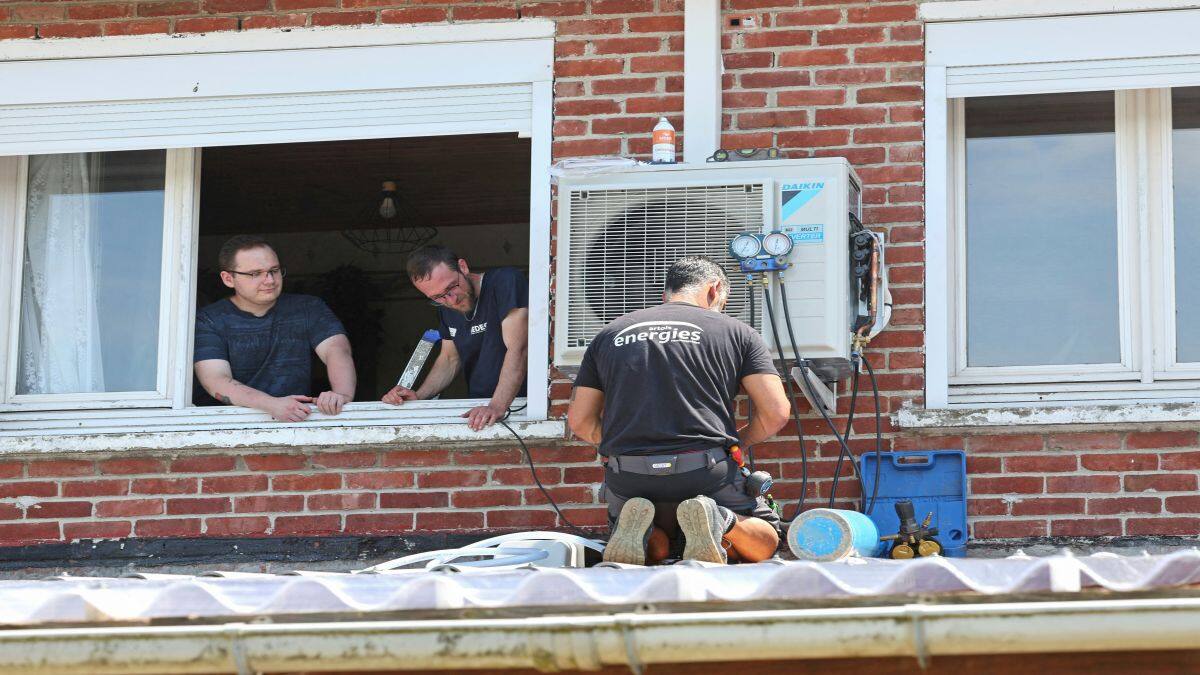
Think about it: most houses in India have stone and tiled flooring, shaded courtyards, verandas, higher ceilings, and cross-ventilation. These features inherently keep the residence cool in the summer.
Dr Palleti Siva Karthik Reddy, MBBS, MD General Medicine, FAIG, Consultant Physician at Elite Care Clinic, in an Indian Express report said, “Many European homes are designed to retain heat during long winters rather than dissipate it during summer,” adding that thick insulation, smaller windows and limited cross ventilation can trap heat indoors, causing indoor temperatures to remain dangerously high even after sunset.
Many houses in Europe also don’t have fans, let alone air conditioning. This makes matters worse. Traditionally, Europe doesn’t have an air conditioning culture. But recent heatwaves have made many Europeans resort to buying air conditioners to keep cool in the heat. Air conditioners have even become a matter of debate in France.
For now, Europeans will have to deal with a cruel summer.
With inputs from agencies

Military drones & police check-ups: How Sri Lanka is fighting against worst dengue outbreak in a decade
How Facebook job ad lured 2 Karnataka men into Myanmar cyber scam camp
Why is India seeing 95% cloud cover despite a Super El Niño?
What is CJP’s fourth demand to the government as protests in Delhi intensify?
The new geography of war: Why the Houthis can no longer be ignored