


How Europe’s cruel summer will continue into July
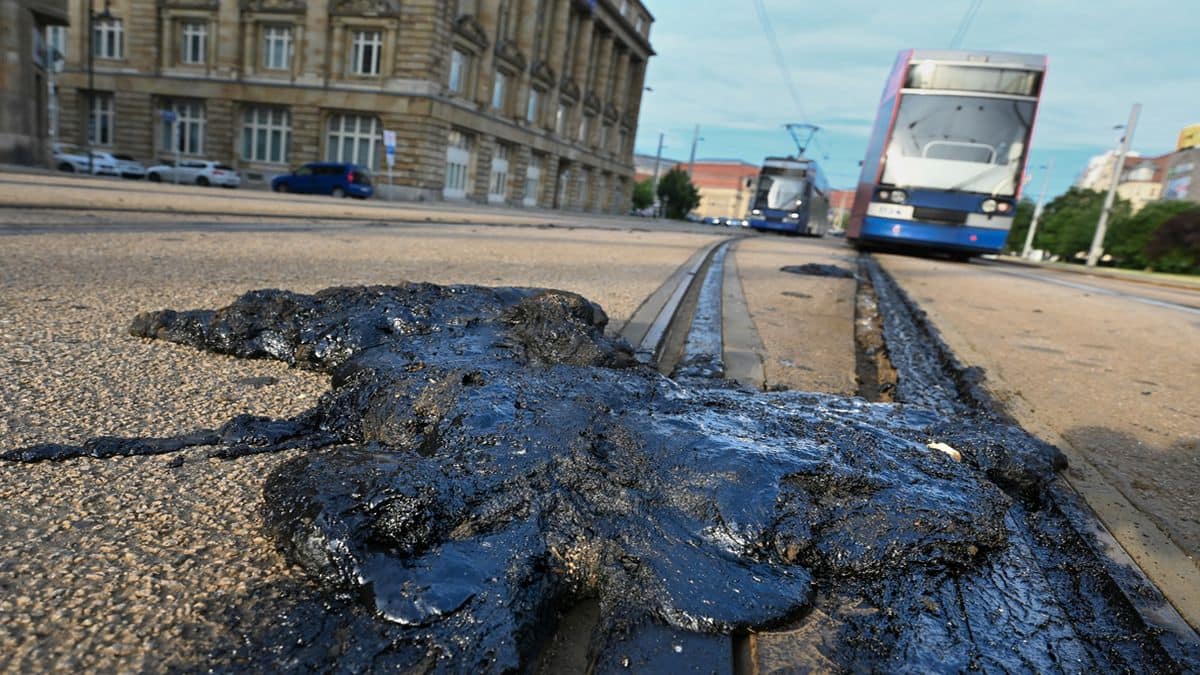
The mercury in Europe continues to soar. Germany, Poland, and the Czech Republic all reached record temperatures of more than 40 degrees Celsius over the weekend, with tramlines even melting in Leipzig. But there’s little respite for Europeans as weather experts note that another heat dome could envelope the region between July 7 and July 10

It’s sizzling hot in Europe. More than 191 million people across Europe are facing temperatures higher than 35 degrees Celsius, with Germany, Czechia, Poland, and Hungary reaching record temperatures of more than 40 degrees Celsius on Sunday.
Such is the heat that in Germany, sections of the Autobahn suffered damage after concrete slabs expanded and cracked under intense heat, forcing temporary road closures. If that’s not bad enough, the World Health Organization (WHO) said it had recorded more than 1,300 excess deaths in Europe since June 21.
The extreme heatwave has all of Europe asking — when is it going to cool down? And those who were hoping for a temperature drop, brace yourselves. That’s because weather models are increasingly pointing to another prolonged spell of extreme heat in early July.
Europe’s feeling hot, hot, hot!
Europe’s deadly heatwave pushed further east on Sunday, causing temperatures to soar in Germany, the Czech Republic, Hungary, and Poland on Sunday. In Germany’s Coschen, near the Polish border in eastern Brandenburg, the mercury rose to a record high of 41.7 degrees Celsius. This broke the previous record of 41.5°C set a day earlier in Drewitz.
 More from Explainers
In Leipzig, it was announced that the tram service was being paused temporarily. This came after the soaring temperatures melted asphalt and otherwise damaged the tracks and points in multiple locations around the city.
The country’s famous Autobahn was overwhelmed, too. In two places outside Berlin, the concrete of the A2 burst due to the high temperatures, and the highway had to be closed. Other highway damage was reported across the country, according to the German daily Bild.
In fact, all-time temperature records were broken in Poland and the Czech Republic, as well as for June in the UK and in Switzerland.
Nordic countries have also begun to sweat in the heatwave. Denmark’s Meteorological Institute reported a record 37 degrees Celsius in Ødum, north of Aarhus — the warmest day since records there began in 1874. In Switzerland, a record 38.8 C was set in Basel.

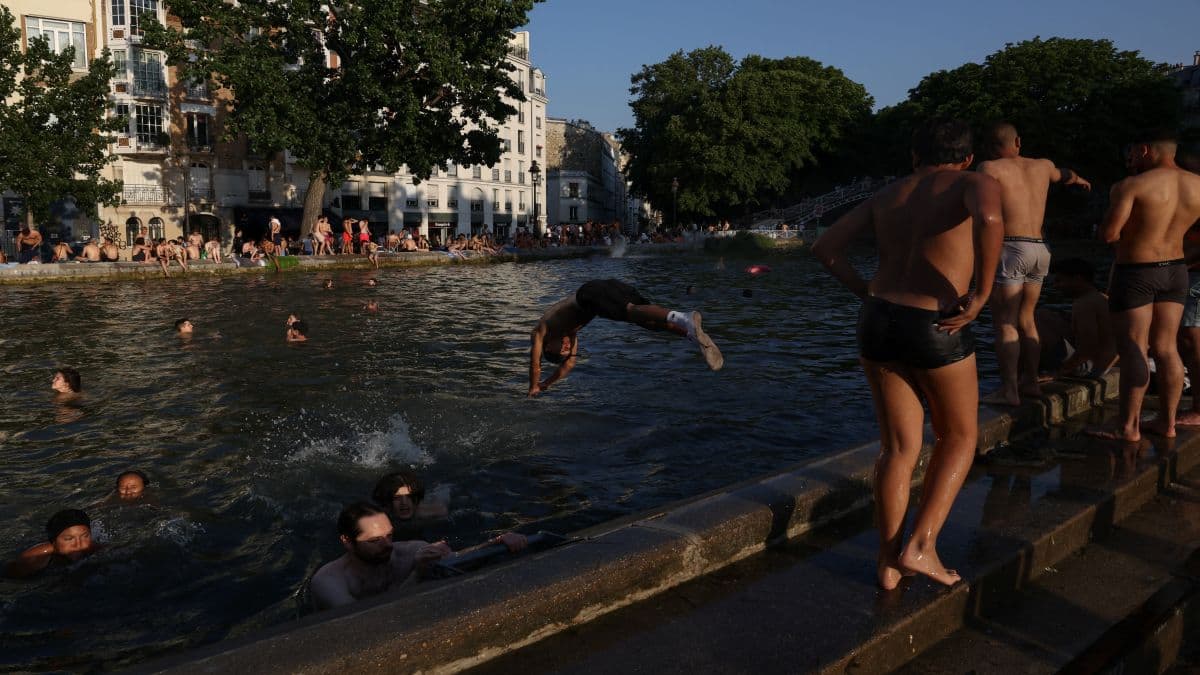
Meanwhile, France saw a minor respite from the extreme heat when storms struck the area. But the European nation has already recorded a frightening amount of deaths from the heat — at least 1,000. A report by the Associated Press reveals that the heatwave has pushed mortuaries in Paris to their limits. Zouhaeir Hertelli, a mortuary owner in Paris, told the news agency, “We’re dealing with an enormous spike of deaths because of the heat wave, and we're really full, full, full.”
Spain and the UK saw a small respite from the heat as temperatures cooled a bit. Meanwhile, Italy continues to be under a red alert, including popular tourism hubs like Venice, Florence, Bologna, and Milan.
Reasons behind the record heatwave
Scientists say Europe is the fastest-warming continent on Earth, warming much faster than the global average. According to the EU’s Copernicus Climate Change Service, the world is currently about 1.4°C warmer than pre-industrial levels (1850-1900), with Europe warming by around 2.4°C — nearly twice as much.
Presently, Europe has been left sweating owing to an “omega block” weather pattern, while the May heatwave was caused by a “heat dome.”

But one study has noted that these extreme temperatures would have been impossible if it weren’t for climate change. A study by World Weather Attribution (WWA) categorically stated that climate change was to be “unequivocally to blame” for the European heatwave.
The World Weather Attribution estimated that a heatwave with similar characteristics occurring in the climate of June 1976 – when Europe was also hit by persistently high temperatures – would have been about 3.5 degrees Celsius cooler. During another episode in 2003, temperatures would have been about two degrees Celsius cooler, the research suggests. The analysis shows that intense heat is increasing rapidly, even within living memory, “with such events tens to hundreds of times more likely since only 2003 and virtually impossible just 50 years ago,” the study said.

No relief from the heat
So, when will Europeans be able to breathe a sigh of relief? The current heatwave is expected to ease in some areas once the omega-block weather pattern breaks down and cooler Atlantic air moves in.
However, the respite may be short-lived. That’s because weather models predict a second prolonged spell of extreme heat in early July, with forecasters warning that this event could last significantly longer than the one that scorched western Europe in late June.
The European Centre for Medium-Range Weather Forecasts (ECMWF) has predicted that another powerful ridge of high pressure could develop between July 7 and July 10, stretching across western Europe, bringing with it high temperatures.

In the UK, climate experts warned that periods of high temperature will continue to become more frequent, intense, and prolonged. Dr Helen Millman from the University of Exeter’s Global Systems Institute told the BBC the temperature would continue to get “hotter and hotter”, adding “we’ll look back on this in decades to come and think, that heat wave wasn’t actually too bad”.
Another BBC report also stated that an area of high pressure could park over the UK and parts of western Europe from the weekend and into early next week. There’s a high possibility that this could turn into another heat dome, causing temperature to surge.
With inputs from agencies

Military drones & police check-ups: How Sri Lanka is fighting against worst dengue outbreak in a decade
How Facebook job ad lured 2 Karnataka men into Myanmar cyber scam camp
Why is India seeing 95% cloud cover despite a Super El Niño?
What is CJP’s fourth demand to the government as protests in Delhi intensify?
The new geography of war: Why the Houthis can no longer be ignored