
Advertisement


Sections
Will Russia’s war with Ukraine push 141 million people into ‘extreme poverty’?
Research published in the journal Nature Energy has said that soaring energy prices triggered by Russia’s conflict with Ukraine could push millions of people across the world into ‘extreme poverty’. The authors have urged governments to protect vulnerable households from the crisis

Soaring energy prices set off by Russia’s war in Ukraine could push millions of people across the world into “extreme poverty”, a report has found.Published in the journal Nature Energy on Thursday (16 February), the study was carried out by researchers from the Netherlands, the United Kingdom, China and the United States.They studied the direct and indirect impacts of high energy prices in 116 countries, covering around 90 per cent of the global population. The researchers used World Bank's 2017 poverty assessment to define “extreme poverty” as those living on less than $2.15 a day, noted Forbes.What did the researchers find and how has the war affected people worldwide? Let’s take a closer look.Energy crisis to spiral into poverty crisisThe researchers estimated that total household energy costs rose between 63 and 113 per cent since last February when Russia invaded Ukraine, leading to people shelling out more for fuel, food and other goods.The study said multiple factors including the Ukraine conflict, high dependence on fossil fuels, post-pandemic economic recovery and inconsistency between energy demand and supply contributed to the global energy crisis.It also found that household spending increased up to 4.8 per cent on average due to the rise in energy prices, as per CNN.![surge in food prices]() 'Rising energy prices impose a huge burden on food consumption of the bottom 10 per cent of the population', the study said. AP (Representational Image)[/caption]“As surging energy prices affect different populations in different ways, we hope to identify vulnerable households and help policymakers provide more targeted support,” co-author Shan Yuli, a climate change expert at the University of Birmingham in Britain, said, as per South China Morning Post (SCMP).“While the energy crisis worsens extreme poverty worldwide, it also provides an opportunity to accelerate energy transitions in Europe and elsewhere in the world,” Guan Yuru, a co-author of the paper and PhD student at the University of Groningen in the Netherlands, told SCMP.Countries such as Estonia (82.3 per cent), Poland (78 per cent) and the Czech Republic (75.5 per cent) suffer more from hikes in energy rates “mainly due to their relatively high dependence on energy-intensive industries”, the study noted.ALSO READ: German economy unexpectedly shrinks due to fallout from Ukraine warWhat has been done to curb the crisis?According to the researchers, governments around the world have taken steps to lessen the impact of soaring energy prices on households, such as by reducing taxes on energy, price caps, and discounts or subsidies on energy bills.The authors also said that some methods to provide relief from the energy crisis such as fuel subsidies solve the short-term problem but delay the climate-mitigation efforts globally.The report also underscored that this energy crisis should be a reminder of the risks of “an energy system highly reliant on fossil fuels.”“There is increasing awareness that a system that relies on fossil fuels is not reliable. In Europe, there have been new policies to speed up energy transitions and boost investments in renewable energies, which will hopefully lead a trend worldwide,” Guan told SCMP.The authors have also urged governments to provide support to vulnerable households and ensure they have access to affordable energy and other necessities, Forbes reported.How Russian war affected energy prices?Russia is a major exporter of oil and natural gas. In 2021, the country accounted for 12.3 per cent of the total global supply of oil and 23.6 per cent of natural gas.After the war, the European Union (EU) stopped imports of Russian oil that came by sea, while Western sanctions targeted Russian gas.[caption id="attachment_12171552" align="alignnone" width="640"]
'Rising energy prices impose a huge burden on food consumption of the bottom 10 per cent of the population', the study said. AP (Representational Image)[/caption]“As surging energy prices affect different populations in different ways, we hope to identify vulnerable households and help policymakers provide more targeted support,” co-author Shan Yuli, a climate change expert at the University of Birmingham in Britain, said, as per South China Morning Post (SCMP).“While the energy crisis worsens extreme poverty worldwide, it also provides an opportunity to accelerate energy transitions in Europe and elsewhere in the world,” Guan Yuru, a co-author of the paper and PhD student at the University of Groningen in the Netherlands, told SCMP.Countries such as Estonia (82.3 per cent), Poland (78 per cent) and the Czech Republic (75.5 per cent) suffer more from hikes in energy rates “mainly due to their relatively high dependence on energy-intensive industries”, the study noted.ALSO READ: German economy unexpectedly shrinks due to fallout from Ukraine warWhat has been done to curb the crisis?According to the researchers, governments around the world have taken steps to lessen the impact of soaring energy prices on households, such as by reducing taxes on energy, price caps, and discounts or subsidies on energy bills.The authors also said that some methods to provide relief from the energy crisis such as fuel subsidies solve the short-term problem but delay the climate-mitigation efforts globally.The report also underscored that this energy crisis should be a reminder of the risks of “an energy system highly reliant on fossil fuels.”“There is increasing awareness that a system that relies on fossil fuels is not reliable. In Europe, there have been new policies to speed up energy transitions and boost investments in renewable energies, which will hopefully lead a trend worldwide,” Guan told SCMP.The authors have also urged governments to provide support to vulnerable households and ensure they have access to affordable energy and other necessities, Forbes reported.How Russian war affected energy prices?Russia is a major exporter of oil and natural gas. In 2021, the country accounted for 12.3 per cent of the total global supply of oil and 23.6 per cent of natural gas.After the war, the European Union (EU) stopped imports of Russian oil that came by sea, while Western sanctions targeted Russian gas.[caption id="attachment_12171552" align="alignnone" width="640"]![russia ukraine war]() Russia's war with Ukraine increased energy, food and fuel prices globally. AP File Photo[/caption]This exacerbated the energy crisis, which affected everything from transportation, and production, food prices to the cost of living.However, these inflated prices benefitted oil and gas companies such as BP, Shell, Chevron and ExxonMobil, which made record profits in 2022, as per Forbes.Last November, the International Monetary Fund (IMF) warned that a fall in remittances from Russia and the increasing cost of living could push one million people into poverty in the Caucasus and Central Asia.With inputs from agenciesRead all the Latest News, Trending News, Cricket News, Bollywood News,India News and Entertainment News here. Follow us on Facebook, Twitter and Instagram.
Russia's war with Ukraine increased energy, food and fuel prices globally. AP File Photo[/caption]This exacerbated the energy crisis, which affected everything from transportation, and production, food prices to the cost of living.However, these inflated prices benefitted oil and gas companies such as BP, Shell, Chevron and ExxonMobil, which made record profits in 2022, as per Forbes.Last November, the International Monetary Fund (IMF) warned that a fall in remittances from Russia and the increasing cost of living could push one million people into poverty in the Caucasus and Central Asia.With inputs from agenciesRead all the Latest News, Trending News, Cricket News, Bollywood News,India News and Entertainment News here. Follow us on Facebook, Twitter and Instagram.
“Rising energy prices impose a huge burden on food consumption of the bottom 10 per cent of the population”, the study said.The study noted that, in low-income countries, poorer households – already struggling with food shortages – were more susceptible to poverty due to higher energy costs.In higher-income countries, people that felt the burden of increased energy costs were more likely to absorb them in their household budgets, CNN reported.The study said that between 78 million to 141 million people around the globe could be pushed into extreme poverty as a result of the high energy prices.[caption id="attachment_12171562" align="alignnone" width="640"]
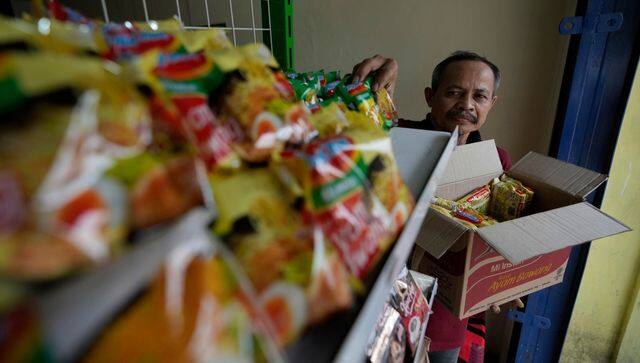 'Rising energy prices impose a huge burden on food consumption of the bottom 10 per cent of the population', the study said. AP (Representational Image)[/caption]“As surging energy prices affect different populations in different ways, we hope to identify vulnerable households and help policymakers provide more targeted support,” co-author Shan Yuli, a climate change expert at the University of Birmingham in Britain, said, as per South China Morning Post (SCMP).“While the energy crisis worsens extreme poverty worldwide, it also provides an opportunity to accelerate energy transitions in Europe and elsewhere in the world,” Guan Yuru, a co-author of the paper and PhD student at the University of Groningen in the Netherlands, told SCMP.Countries such as Estonia (82.3 per cent), Poland (78 per cent) and the Czech Republic (75.5 per cent) suffer more from hikes in energy rates “mainly due to their relatively high dependence on energy-intensive industries”, the study noted.ALSO READ: German economy unexpectedly shrinks due to fallout from Ukraine warWhat has been done to curb the crisis?According to the researchers, governments around the world have taken steps to lessen the impact of soaring energy prices on households, such as by reducing taxes on energy, price caps, and discounts or subsidies on energy bills.The authors also said that some methods to provide relief from the energy crisis such as fuel subsidies solve the short-term problem but delay the climate-mitigation efforts globally.The report also underscored that this energy crisis should be a reminder of the risks of “an energy system highly reliant on fossil fuels.”“There is increasing awareness that a system that relies on fossil fuels is not reliable. In Europe, there have been new policies to speed up energy transitions and boost investments in renewable energies, which will hopefully lead a trend worldwide,” Guan told SCMP.The authors have also urged governments to provide support to vulnerable households and ensure they have access to affordable energy and other necessities, Forbes reported.How Russian war affected energy prices?Russia is a major exporter of oil and natural gas. In 2021, the country accounted for 12.3 per cent of the total global supply of oil and 23.6 per cent of natural gas.After the war, the European Union (EU) stopped imports of Russian oil that came by sea, while Western sanctions targeted Russian gas.[caption id="attachment_12171552" align="alignnone" width="640"]
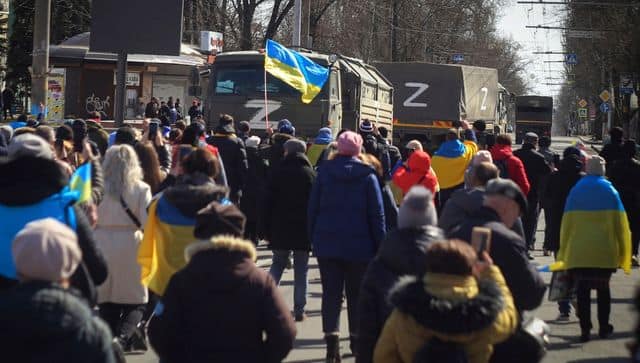 Russia's war with Ukraine increased energy, food and fuel prices globally. AP File Photo[/caption]This exacerbated the energy crisis, which affected everything from transportation, and production, food prices to the cost of living.However, these inflated prices benefitted oil and gas companies such as BP, Shell, Chevron and ExxonMobil, which made record profits in 2022, as per Forbes.Last November, the International Monetary Fund (IMF) warned that a fall in remittances from Russia and the increasing cost of living could push one million people into poverty in the Caucasus and Central Asia.With inputs from agenciesRead all the Latest News, Trending News, Cricket News, Bollywood News,India News and Entertainment News here. Follow us on Facebook, Twitter and Instagram.
First Published:Feb 17, 2023, 20:46:53 IST
Advertisement
Advertisement

Military drones & police check-ups: How Sri Lanka is fighting against worst dengue outbreak in a decade
Sri Lanka is fighting its most severe dengue outbreak in nearly a decade, with infections rising sharply across the nation. Military drones have been deployed to tackle the outbreak, which has claimed 56 lives. Health officials said the outbreak is being driven primarily by the DENV-2 variant of the virus
3 min read
How Facebook job ad lured 2 Karnataka men into Myanmar cyber scam camp
The Karnataka Cyber Command has rescued two youths from a scam compound in Myanmar operated by Chinese fraudsters. The duo from Karnataka were lured on the pretext of data-entry jobs. They were asked to work for 16 hours a day and were expected to sleep for six hours daily
4 min read
Why is India seeing 95% cloud cover despite a Super El Niño?
India is witnessing nearly 95 per cent cloud cover despite a Super El Niño, a climate event usually linked to weaker monsoons. Regional weather systems, cyclonic circulations, the monsoon trough and moisture from two seas are temporarily overpowering one of the world's strongest climate phenomena
5 min read
What is CJP’s fourth demand to the government as protests in Delhi intensify?
The protest by the Cockroach Janta Party at Delhi’s Jantar Mantar refuses to die down. The group have made a fourth demand to the Centre, asking that no FIRs are filed against the agitators and that no legal action be taken. The government has expressed willingness to speak to the protesters, but refused to accede on the resignation of Education Minister Dharmandra Pradhan
5 min read
The new geography of war: Why the Houthis can no longer be ignored
The rise of the Houthis marks the emergence of a new geography of war — one in which influence flows not only from capitals and conventional armies, but also from rugged mountains overlooking vital sea lanes
6 min read
Advertisement
Advertisement