
Advertisement


Sections
Elon Musk’s SpaceX ‘blew up’ world’s most powerful rocket: Why Starship launch is still considered a win
Starship, the world’s biggest and most powerful, exploded minutes after it took off. To everyday observers that appears like a failure. But Elon Musk’s SpaceX has touted it as a success. Here’s why

Elon Musk’s new space vehicle Starship was fuelled up and ready to go. All eyes were on the biggest and most powerful rocket ever built, as it was set to take off from the southern tip of Texas, near the Mexican border. People gathered at the launch site to witness history in the making. But minutes after the liftoff, it exploded. The nearly 120-metre spaceship carried no people or satellites.This futuristic rocket built by Musk’s private spaceflight company SpaceX is touted as a game-changer for space travel. It’s in this vehicle that NASA will fly its astronauts for the Atremis 3 Mission to the moon’s south pole in 2025. Someday Musk wants to use it to transport people to Mars. For now, that seems aeons away.Yet the maiden flight has been called a success by SpaceX and experts. We tell you why.Why did Starship explode?SpaceX’s launch vehicle is made up of the Super Heavy booster and the Starship spacecraft. Together, they are known as Starship.Its first flight lasted a little less than four minutes.Thirty of its 33 engines fired and the “Super Heavy” boosters lifted off its launch pad. About a minute later, the vehicle passed through a period of maximum aerodynamic pressure, a key moment for the launch of any rocket.Two minutes on, the rocket had reached an altitude of 20 kilometres and was travelling at 1,600 kph. But by now two of its engines had shut down.Into the third minute, it was clear something was amiss. The rest of the engines had not separated at the expected time and the rocket appeared to be changing its course.The separation of the second stage, the prototype spaceship called Starship, from the Super Heavy was not progressing as intended, according to a report in The Economist. The rocket began to tumble and burst into flames over the Gulf of Mexico.The explosion came after an earlier attempt to launch the rocket on Monday was aborted because of a frozen valve.If the launch was successful, the rocket was supposed to reach 223 km above the Earth. SpaceX had planned for it to last for an hour and 30 minutes.“Starship experienced a rapid unscheduled disassembly before stage separation,” SpaceX said, in a statement on Twitter.The firm now claims that it pulled the trigger that detonated Starship mid-air, according to media reports.[caption id="attachment_12485902" align="alignnone" width="640"]![]() Minutes after blasting off on its first test flight, Starship crashed into the Gulf of Mexico. AP[/caption]What is Elon Musk saying?SpaceX acknowledged that several of the Super Heavy’s 33 powerful Raport engines malfunctioned on the ascent and that the booster rocket and Starship failed to separate as designed before the ill-fated flight was terminated.But executives at the company including Musk hailed the test flight for achieving the major objective of getting the vehicle off the ground while providing a wealth of data that will advance Starship’s development, according to Reuters.Musk has congratulated the SpaceX team on the “exciting test launch” on Starship. “Learned a lot for the next test launch in a few months,” he wrote on Twitter.Even before the launch, Musk had tempered expectations. It might take several tries before Starship succeeds at its first test, he had said.Yet, the test launch has been called a success. And not by Musk alone. Bill Nelson, the NASA administrator, also lauded the company. “Every great achievement throughout history has demanded some level of calculated risk, because with great risk comes great reward,” he tweeted.Also read: SpaceX Starship: What to know about the world’s biggest rocketThe blowing up of the rocket looks like a failure to everyday observers but those in the space business seem to count the test flight as a win.“It may look that way to some people, but it’s not a failure,” Daniel Dumbacher, executive director of the American Institute of Aeronautics and Astronautics and a former high-level NASA official told The New York Times. “It’s a learning experience.”[caption id="attachment_12485942" align="alignnone" width="640"]
Minutes after blasting off on its first test flight, Starship crashed into the Gulf of Mexico. AP[/caption]What is Elon Musk saying?SpaceX acknowledged that several of the Super Heavy’s 33 powerful Raport engines malfunctioned on the ascent and that the booster rocket and Starship failed to separate as designed before the ill-fated flight was terminated.But executives at the company including Musk hailed the test flight for achieving the major objective of getting the vehicle off the ground while providing a wealth of data that will advance Starship’s development, according to Reuters.Musk has congratulated the SpaceX team on the “exciting test launch” on Starship. “Learned a lot for the next test launch in a few months,” he wrote on Twitter.Even before the launch, Musk had tempered expectations. It might take several tries before Starship succeeds at its first test, he had said.Yet, the test launch has been called a success. And not by Musk alone. Bill Nelson, the NASA administrator, also lauded the company. “Every great achievement throughout history has demanded some level of calculated risk, because with great risk comes great reward,” he tweeted.Also read: SpaceX Starship: What to know about the world’s biggest rocketThe blowing up of the rocket looks like a failure to everyday observers but those in the space business seem to count the test flight as a win.“It may look that way to some people, but it’s not a failure,” Daniel Dumbacher, executive director of the American Institute of Aeronautics and Astronautics and a former high-level NASA official told The New York Times. “It’s a learning experience.”[caption id="attachment_12485942" align="alignnone" width="640"]![]() Onlookers watch as SpaceX's Starship ahead of the launch. A version of this rocket will fly its astronauts for the Atremis 3 Mission to the Moon’s South Pole in 2025. AP[/caption]Why is the launch considered a success?The rocket lifted for a few minutes but it helped achieve some milestones for SpaceX. For starters, clearing the launchpad and flying for four minutes mattered. A major goal of the launch was to gather data ready for the next test flight. The flight produced loads of that for engineers, which will help them understand how the vehicle performed despite the explosion.According to experts in aerospace engineering and planetary science, the test flight delivered benefits.Also read: SpaceX says they intentionally blew up their Starship rocket during launch, calls launch a success“This is a classical SpaceX successful failure,” Garrett Reisman, an astronautical engineering professor at the University of Southern California who is a former NASA astronaut and is also a senior adviser to SpaceX told Reuters. He called the Starship test flight a hallmark of a SpaceX strategy that sets Musk’s company apart from traditional aerospace companies and even NASA by “this embracing of failure when the consequences of failure are low.”Reisman said that SpaceX takes less time to identify and correct engineering flaws by taking more risks in the development process rather than keeping “a large team working for years and years and years trying to get it perfect before you even try it”. “I would say the timeline for transporting people (aboard Starship) is accelerated right now compared to what it was a couple of hours ago,” he added.[caption id="attachment_12485972" align="alignnone" width="640"]
Onlookers watch as SpaceX's Starship ahead of the launch. A version of this rocket will fly its astronauts for the Atremis 3 Mission to the Moon’s South Pole in 2025. AP[/caption]Why is the launch considered a success?The rocket lifted for a few minutes but it helped achieve some milestones for SpaceX. For starters, clearing the launchpad and flying for four minutes mattered. A major goal of the launch was to gather data ready for the next test flight. The flight produced loads of that for engineers, which will help them understand how the vehicle performed despite the explosion.According to experts in aerospace engineering and planetary science, the test flight delivered benefits.Also read: SpaceX says they intentionally blew up their Starship rocket during launch, calls launch a success“This is a classical SpaceX successful failure,” Garrett Reisman, an astronautical engineering professor at the University of Southern California who is a former NASA astronaut and is also a senior adviser to SpaceX told Reuters. He called the Starship test flight a hallmark of a SpaceX strategy that sets Musk’s company apart from traditional aerospace companies and even NASA by “this embracing of failure when the consequences of failure are low.”Reisman said that SpaceX takes less time to identify and correct engineering flaws by taking more risks in the development process rather than keeping “a large team working for years and years and years trying to get it perfect before you even try it”. “I would say the timeline for transporting people (aboard Starship) is accelerated right now compared to what it was a couple of hours ago,” he added.[caption id="attachment_12485972" align="alignnone" width="640"]![]() NASA astronauts Sunita Williams, and Haley Esparza ride horseback as they visit SpaceX's Starship, the world's biggest and most powerful rocket, ahead of the launch. Though the vehicle exploded, experts say the maiden flight was not a complete failure. AP[/caption]According to Margaret Weitekamp, the chair of the space history department at the National Air and Space Museum in Washington, there is something to be learned from any sort of test. “Engineers will tell you that they can learn as much from failure as success,” told Washington Post.Planetary scientist Tanya Harrison, a fellow at the University of British Columbia's Outer Space Institute, told Reuters that clearing the launch tower and ascending through a critical point known as maximum aerodynamic pressure were major feats on the first flight of such a large, complex launch system.“It’s part of the testing process,” she said in an interview. “There are a lot of accidents that happen when you’re trying to design a new rocket. The fact that it launched at all made a lot of people really happy.”Talking about SpaceX’s rapid pace of development since its 2002 founding, Harrison concluded, “It wouldn't surprise me if we had humans on Mars with Starship in the next decade.”With inputs from agencies Read all the Latest News, Trending News, Cricket News, Bollywood News,India News and Entertainment News here. Follow us on Facebook, Twitter and Instagram.
NASA astronauts Sunita Williams, and Haley Esparza ride horseback as they visit SpaceX's Starship, the world's biggest and most powerful rocket, ahead of the launch. Though the vehicle exploded, experts say the maiden flight was not a complete failure. AP[/caption]According to Margaret Weitekamp, the chair of the space history department at the National Air and Space Museum in Washington, there is something to be learned from any sort of test. “Engineers will tell you that they can learn as much from failure as success,” told Washington Post.Planetary scientist Tanya Harrison, a fellow at the University of British Columbia's Outer Space Institute, told Reuters that clearing the launch tower and ascending through a critical point known as maximum aerodynamic pressure were major feats on the first flight of such a large, complex launch system.“It’s part of the testing process,” she said in an interview. “There are a lot of accidents that happen when you’re trying to design a new rocket. The fact that it launched at all made a lot of people really happy.”Talking about SpaceX’s rapid pace of development since its 2002 founding, Harrison concluded, “It wouldn't surprise me if we had humans on Mars with Starship in the next decade.”With inputs from agencies Read all the Latest News, Trending News, Cricket News, Bollywood News,India News and Entertainment News here. Follow us on Facebook, Twitter and Instagram.
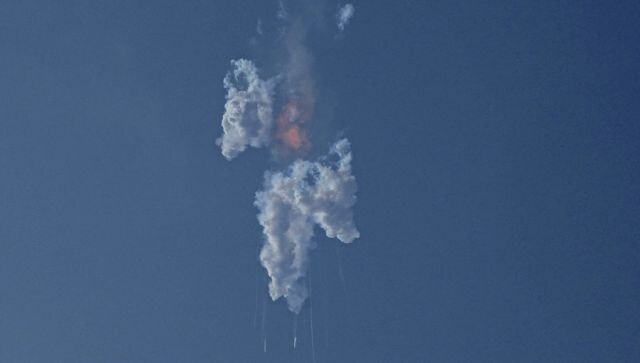 Minutes after blasting off on its first test flight, Starship crashed into the Gulf of Mexico. AP[/caption]What is Elon Musk saying?SpaceX acknowledged that several of the Super Heavy’s 33 powerful Raport engines malfunctioned on the ascent and that the booster rocket and Starship failed to separate as designed before the ill-fated flight was terminated.But executives at the company including Musk hailed the test flight for achieving the major objective of getting the vehicle off the ground while providing a wealth of data that will advance Starship’s development, according to Reuters.Musk has congratulated the SpaceX team on the “exciting test launch” on Starship. “Learned a lot for the next test launch in a few months,” he wrote on Twitter.Even before the launch, Musk had tempered expectations. It might take several tries before Starship succeeds at its first test, he had said.Yet, the test launch has been called a success. And not by Musk alone. Bill Nelson, the NASA administrator, also lauded the company. “Every great achievement throughout history has demanded some level of calculated risk, because with great risk comes great reward,” he tweeted.Also read: SpaceX Starship: What to know about the world’s biggest rocketThe blowing up of the rocket looks like a failure to everyday observers but those in the space business seem to count the test flight as a win.“It may look that way to some people, but it’s not a failure,” Daniel Dumbacher, executive director of the American Institute of Aeronautics and Astronautics and a former high-level NASA official told The New York Times. “It’s a learning experience.”[caption id="attachment_12485942" align="alignnone" width="640"]
 Onlookers watch as SpaceX's Starship ahead of the launch. A version of this rocket will fly its astronauts for the Atremis 3 Mission to the Moon’s South Pole in 2025. AP[/caption]Why is the launch considered a success?The rocket lifted for a few minutes but it helped achieve some milestones for SpaceX. For starters, clearing the launchpad and flying for four minutes mattered. A major goal of the launch was to gather data ready for the next test flight. The flight produced loads of that for engineers, which will help them understand how the vehicle performed despite the explosion.According to experts in aerospace engineering and planetary science, the test flight delivered benefits.Also read: SpaceX says they intentionally blew up their Starship rocket during launch, calls launch a success“This is a classical SpaceX successful failure,” Garrett Reisman, an astronautical engineering professor at the University of Southern California who is a former NASA astronaut and is also a senior adviser to SpaceX told Reuters. He called the Starship test flight a hallmark of a SpaceX strategy that sets Musk’s company apart from traditional aerospace companies and even NASA by “this embracing of failure when the consequences of failure are low.”Reisman said that SpaceX takes less time to identify and correct engineering flaws by taking more risks in the development process rather than keeping “a large team working for years and years and years trying to get it perfect before you even try it”. “I would say the timeline for transporting people (aboard Starship) is accelerated right now compared to what it was a couple of hours ago,” he added.[caption id="attachment_12485972" align="alignnone" width="640"]
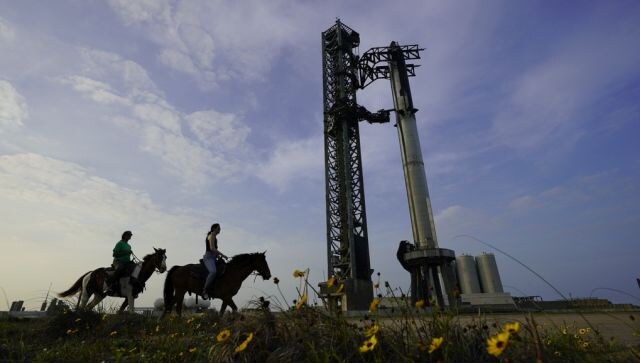 NASA astronauts Sunita Williams, and Haley Esparza ride horseback as they visit SpaceX's Starship, the world's biggest and most powerful rocket, ahead of the launch. Though the vehicle exploded, experts say the maiden flight was not a complete failure. AP[/caption]According to Margaret Weitekamp, the chair of the space history department at the National Air and Space Museum in Washington, there is something to be learned from any sort of test. “Engineers will tell you that they can learn as much from failure as success,” told Washington Post.Planetary scientist Tanya Harrison, a fellow at the University of British Columbia's Outer Space Institute, told Reuters that clearing the launch tower and ascending through a critical point known as maximum aerodynamic pressure were major feats on the first flight of such a large, complex launch system.“It’s part of the testing process,” she said in an interview. “There are a lot of accidents that happen when you’re trying to design a new rocket. The fact that it launched at all made a lot of people really happy.”Talking about SpaceX’s rapid pace of development since its 2002 founding, Harrison concluded, “It wouldn't surprise me if we had humans on Mars with Starship in the next decade.”With inputs from agencies
First Published:Apr 21, 2023, 13:14:20 IST
Advertisement
Advertisement

Military drones & police check-ups: How Sri Lanka is fighting against worst dengue outbreak in a decade
Sri Lanka is fighting its most severe dengue outbreak in nearly a decade, with infections rising sharply across the nation. Military drones have been deployed to tackle the outbreak, which has claimed 56 lives. Health officials said the outbreak is being driven primarily by the DENV-2 variant of the virus
3 min read
How Facebook job ad lured 2 Karnataka men into Myanmar cyber scam camp
The Karnataka Cyber Command has rescued two youths from a scam compound in Myanmar operated by Chinese fraudsters. The duo from Karnataka were lured on the pretext of data-entry jobs. They were asked to work for 16 hours a day and were expected to sleep for six hours daily
4 min read
Why is India seeing 95% cloud cover despite a Super El Niño?
India is witnessing nearly 95 per cent cloud cover despite a Super El Niño, a climate event usually linked to weaker monsoons. Regional weather systems, cyclonic circulations, the monsoon trough and moisture from two seas are temporarily overpowering one of the world's strongest climate phenomena
5 min read
What is CJP’s fourth demand to the government as protests in Delhi intensify?
The protest by the Cockroach Janta Party at Delhi’s Jantar Mantar refuses to die down. The group have made a fourth demand to the Centre, asking that no FIRs are filed against the agitators and that no legal action be taken. The government has expressed willingness to speak to the protesters, but refused to accede on the resignation of Education Minister Dharmandra Pradhan
5 min read
The new geography of war: Why the Houthis can no longer be ignored
The rise of the Houthis marks the emergence of a new geography of war — one in which influence flows not only from capitals and conventional armies, but also from rugged mountains overlooking vital sea lanes
6 min read
Advertisement
Advertisement