


What is the unique code on electoral bonds that Supreme Court has told SBI to disclose?
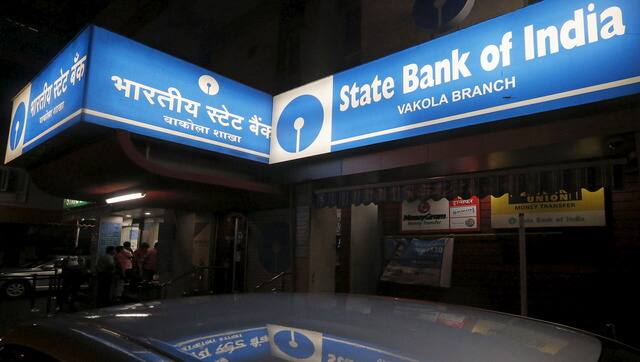
The Supreme Court has issued notice to the State Bank of India (SBI) for not disclosing the unique alphanumeric code on electoral bonds to the Election Commission of India. This number is present on each bond which is only visible in specific light

The Supreme Court on Friday (15 March) sought a reply from the State Bank of India (SBI) for not disclosing the unique alphanumeric code on electoral bonds to the Election Commission of India (ECI). A month ago, the apex court had ordered India’s largest lender to submit complete donation details to the poll body, including the date of purchase of the electoral bonds, name of the buyer and denomination of each bond. The information on bonds encashed by political parties, the date of encashment, and denominations of the electoral bonds were also to be furnished.
Earlier this week, the SBI told the apex court that it had provided the details of the purchase and redemption of electoral bonds to the ECI. However, a five-judge bench headed by Chief Justice of India (CJI) DY Chandrachud observed on Friday that the public sector bank has not fully abided by the top court’s 11 March order in which it had directed the SBI to disclose all details related to electoral bonds.
 More from Explainers
This comes a day after the ECI uploaded the details on electoral bonds issued from 12 April 2019 to 15 February 2024 that it got from the SBI, in two separate lists.
What are the unique alphanumeric codes on electoral bonds? Why did the SBI not share them with the ECI? What has the Supreme Court said? Let’s take a closer look.
What are the unique codes on electoral bonds?
A unique alphanumeric code is printed on each electoral bond issued by the State Bank of India that is only visible in a specific light. This number could be used to match each donation to the political party that received it, as per Indian Express.
The existence of such a number came to light in April 2018 when The Quint’s investigation found that electoral bonds have unique hidden alphanumeric numbers not visible to the naked eye. The report stated this unique number could be used to link buyers of electoral bonds with the political parties to whom they made the donations.
The SBI had told The Quint that this number was a “security feature”, claiming there was “no way to connect” which donor donated to which party.
“The process of issuance and payment has been designed in such a manner that the bank will not have any record of the above number either for the donor or political party,” the bank had reportedly said.
In a press release issued by the Finance Ministry at the time, the government said that the “random serial number” was not noted by the SBI in “any record associated with the buyer or political party depositing a particular electoral bond”.
“It is thus not linked to any party transaction when the Bank issues a bond to the buyer. As such the number is not being used nor can be used to track the donation or the buyer,” the ministry had said.
However, a HuffPost India report published in November 2019 claimed that the alphanumeric code was used by the SBI to track the buyers of electoral bonds and to which political parties these donations were eventually made.
ALSO READ: With Rs 1,368 crore, ‘Lottery King’ Santiago Martin is biggest electoral bonds donor. Who is he?
Why has SBI not shared electoral bond numbers?
According to the SBI, the unique alphanumeric code was not recorded in the system. Former Finance Secretary Subhash Chandra Garg, who served as the Economic Affairs Secretary when the Electoral Bonds scheme was conceived in 2017, said the unique code was a “security feature”, which was not recorded either at the time of sale of the bond or when it was deposited by a political party, reported Indian Express.
“Without this, it would be impossible to match the donor with the party”, he said.
Supreme Court raps SBI
The Supreme Court categorically said that the SBI has to disclose electoral bonds' numbers, as per LiveLaw.
“In our judgment of 15 February, we had directed disclosure specifically of all the details of the electoral bonds, including date of their purchase, the amount, names of purchasers, the political parties which redeemed the bonds, etc. But the bank has not disclosed the numbers of the bonds purchased and encashed. Why?” CJI Chandrachud asked during the hearing, as per a report by The Hindu.
The five-judge bench, also comprising Justices Sanjiv Khanna, BR Gavai, JB Pardiwala and Manoj Misra, was hearing a plea by the election commission seeking the retrieval of electoral bond documents submitted in sealed covers or boxes to the top court.
Senior lawyer Prashant Bhushan, who appeared for the petitioner Association for Democratic Reforms (ADR), argued that the SBI had said in its application seeking more time that it has bond numbers, reported Indian Express.
Taking objection to the SBI not furnishing the electoral bond numbers, the CJI said, “Really speaking…we can take exception to what they have disclosed because they were duty bound…”
The court then issued a notice to the bank and listed the case for hearing on 19 March.
In a landmark judgement on 15 February, the apex court struck down the electoral bonds scheme, deeming it “unconstitutional”.
With inputs from agencies

Military drones & police check-ups: How Sri Lanka is fighting against worst dengue outbreak in a decade
How Facebook job ad lured 2 Karnataka men into Myanmar cyber scam camp
Why is India seeing 95% cloud cover despite a Super El Niño?
What is CJP’s fourth demand to the government as protests in Delhi intensify?
The new geography of war: Why the Houthis can no longer be ignored