


E20 is the Word of the Week: The ethanol-blended fuel that has ignited debate in India
India’s use of E20 fuel has sparked debate, raising questions about fuel economy and maintenance costs. While social media posts have fuelled concerns about engine damage, the government has vehemently defended the ethanol-blended petrol, saying it helps reduce oil imports and cut carbon dioxide emissions

‘Kitna deti hain (how much does she give)’ is a catchphrase that all Indians are aware of. It reflects just how much Indians care about their cars’ mileage. Amid this drive for fuel efficiency, India’s shift to E20 fuel has ignited a huge debate.
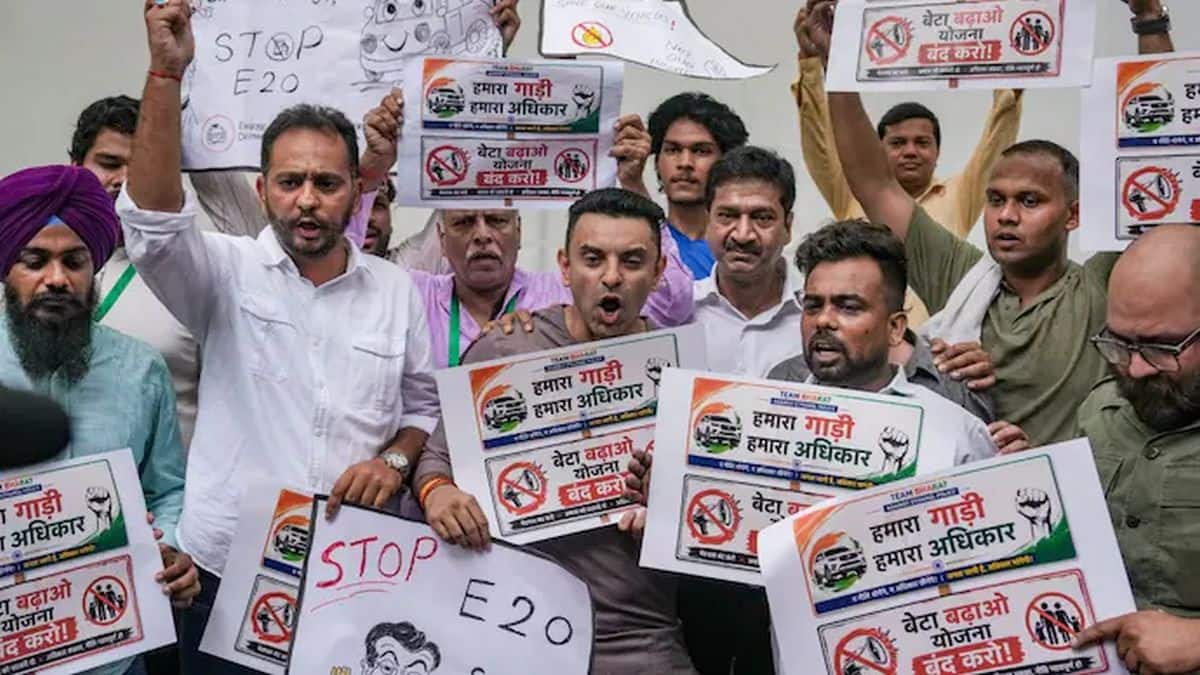
In the past week, there’s been growing frustration over the Indian government’s E20 ethanol-blended fuel policy. Last Sunday, motorists even took to the streets in Delhi seeking an option between regular diesel and petrol and E20 fuel.
On social media, E20 has faced criticism, with motorists questioning whether older vehicles designed for lower ethanol blends could suffer corrosion, wear, or reduced performance.
All of this brouhaha has led us to choose E20 as our Word of the Week.
What is E20 fuel?
E20 fuel is petrol blended with 20 per cent ethanol. Basically, E20 petrol has 20 per cent ethanol and 80 per cent petrol. Ethanol is a biofuel made from agricultural feedstocks such as sugarcane, maize, and surplus food grains.
 More from Explainers
Mixing ethanol with petrol can help reduce oil imports, cut carbon dioxide emissions, and support farmers through increased demand for crops like sugarcane. It reportedly helps reduce waste, as ethanol is not just made from sugarcane, but also from surplus rice, maize, damaged food grains, and agricultural residues.
Using ethanol-blended petrol generally leads to reductions in harmful exhaust emissions, particularly carbon monoxide (CO), hydrocarbons (HC), and particulate matter (PM). This is thanks to ethanol’s oxygen content, which helps achieve cleaner combustion.
Why has E20 fuelled a row in India?
In the last week or so, the government’s E20 fuel has come under attack with social media posts claiming that the fuel could cause damage to engines and reduce mileage. Questions have also been raised over the safety of using E20 in older vehicles.
Car owners, especially those who possess vehicles bought before 2023, have also raised concerns, as these four-wheelers were not all originally certified for E20 use.
The government’s announcement that it has transitioned fully to 20 per cent ethanol blending in petrol, way ahead of its 2030 schedule, has also prompted speculation that it could be moving towards a higher blend of ethanol fuel E25 — comprising 75 per cent petrol and 25 per cent ethanol.
While no formal date has been announced for dispensing E25 blended petrol, two government decisions over the last six weeks triggered fresh concerns: one, central excise duty exemption for blended fuel (22-30 per cent ethanol) and two, fuel standards notified by BIS for these blends.
Adding fuel to the fire, Aam Aadmi Party chief Arvind Kejriwal on Tuesday alleged that the government was misleading consumers by asking automobile manufacturers to publicly endorse the fuel despite cautionary provisions in their own vehicle manuals.
He also sent letters to several leading automakers, including Maruti Suzuki India Limited, Toyota Kirloskar Motor, and Hero MotoCorp, citing their recent public statements that E20 fuel does not reduce vehicle mileage. Referring to those claims, Kejriwal urged the companies to explain the basis of their assertions and provide consumers with a clear response on the issue within a week.
What has been the government’s response to the fuel debate?
The Centre has vehemently defended its E20 fuel mandate. Union Minister Nitin Gadkari, who’s been a champion of it, dared critics to identify a single car that faced problems due to the mixed fuel.
Speaking at the ‘Viksit Bharat Conclave’, Gadkari said, “There is no case of any car facing issues due to E20 petrol. Has there been any car in the country that faced issues due to the use of E20 petrol? Just name one. False narratives are being spread about the roll-out of higher ethanol-blended petrol. These are paid campaigns.”
Union Minister for Petroleum and Natural Gas Hardeep Singh Puri also dismissed concerns over E20 fuel, calling reports of consumer problems with the fuel a “misrepresentation”.
Puri said both automobile manufacturers and vehicle service providers have found no major issues with E20, while consumers have also accepted the fuel. “The automobile manufacturers, as well as the people who service these vehicles, all say there is no difficulty. Why this sudden interest? It is a misrepresentation, and I don’t want to use stronger words,” he said.
So, does E20 really affect the vehicles?
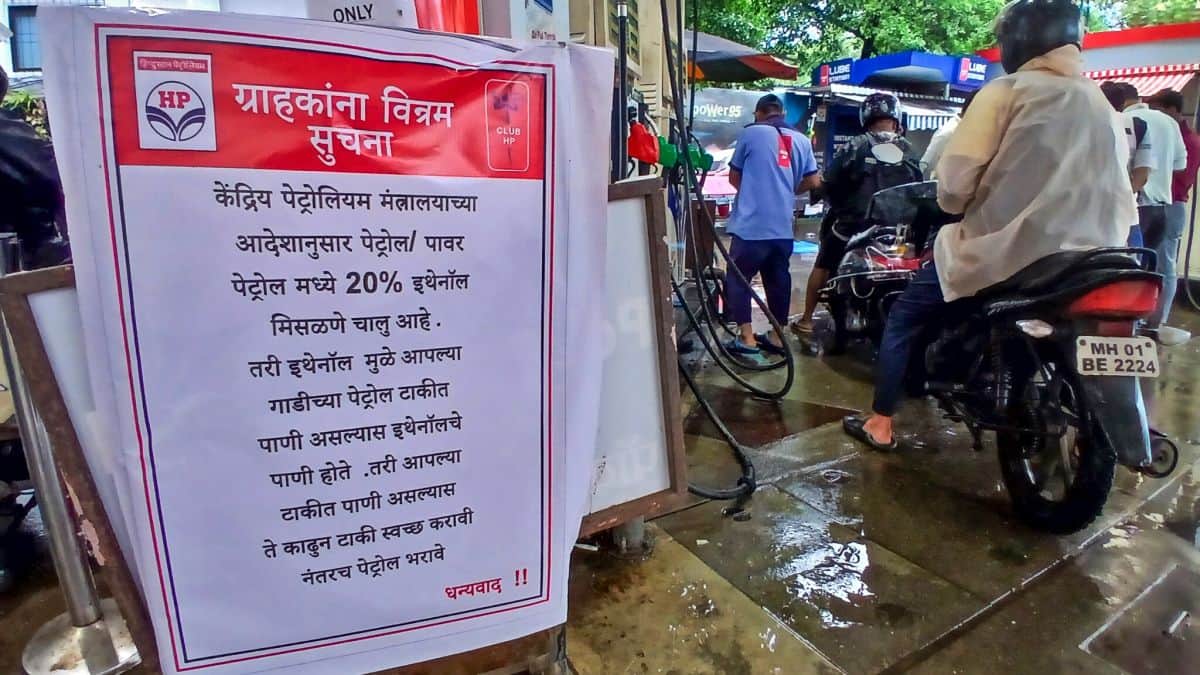
The government has stated categorically that there is no evidence of widespread engine damage or vehicle breakdowns caused by E20 petrol. It further noted that E20 supplied by oil marketing companies meets Bureau of Indian Standards (BIS) specifications and was introduced only after extensive testing and consultations with automobile manufacturers and other stakeholders.
The Centre also dismissed social media claims that E20 leads to widespread engine failures, attracts ants because it contains ethanol, or automatically invalidates vehicle insurance.
Maruti Suzuki India, backing the government’s claims, also stated that it serviced around 2.84 crore vehicles during FY26, including more than 1.5 crore vehicles that were over three years old and were not originally certified for E20. According to the company, its service records did not show evidence of engine damage linked to E20 fuel.
Hero MotoCorp, the largest two-wheeler manufacturer in India by volume, also did not find any damage that could be attributed to E20 fuel.
And what about mileage? The government and automakers have admitted that E20 can reduce a car’s mileage by anywhere between three-four per cent compared to E10.
Hormazd Sorabjee, editor of Autocar India, noted that the publication’s real-world tests have recorded fuel economy losses of roughly four to 12 per cent, depending on the vehicle.
Experts have also noted that E20 could result in higher maintenance costs, particularly for older vehicles. They explained that as ethanol is more corrosive than conventional petrol, it could speed up the wear and tear of certain parts of the car. However, it is not to be mistaken with catastrophic engine failure.
It’s left to be seen if the government’s repeated clarification will help drive away the concerns over the use of E20 fuel.

Military drones & police check-ups: How Sri Lanka is fighting against worst dengue outbreak in a decade
How Facebook job ad lured 2 Karnataka men into Myanmar cyber scam camp
Why is India seeing 95% cloud cover despite a Super El Niño?
What is CJP’s fourth demand to the government as protests in Delhi intensify?
The new geography of war: Why the Houthis can no longer be ignored