


Doublet is our Word of the Week. How rare are two back-to-back earthquakes that hit Venezuela?
Venezuela is left picking up the pieces after two powerful earthquakes, 7.2 and 7.5 in magnitude, hit the country on Wednesday, killing over 1,400 people and causing damage worth millions. It was a rare earthquake doublet, which last shook up Turkey and Syria in 2023

June 24 was a national holiday in the South American country of Venezuela, commemorating the 1821 Battle of Carabobo, a decisive victory by Venezuelan independence leader Simón Bolívar against the Spanish colonial power.
Most people were at home in the evening around 6 pm when a powerful 7.2-magnitude earthquake struck near San Felipe, the capital of the state of Yaracuy. Just 39 seconds later, another temblor, a 7.5, struck near the town of Yumare, within five to 10 kilometres from the first one.
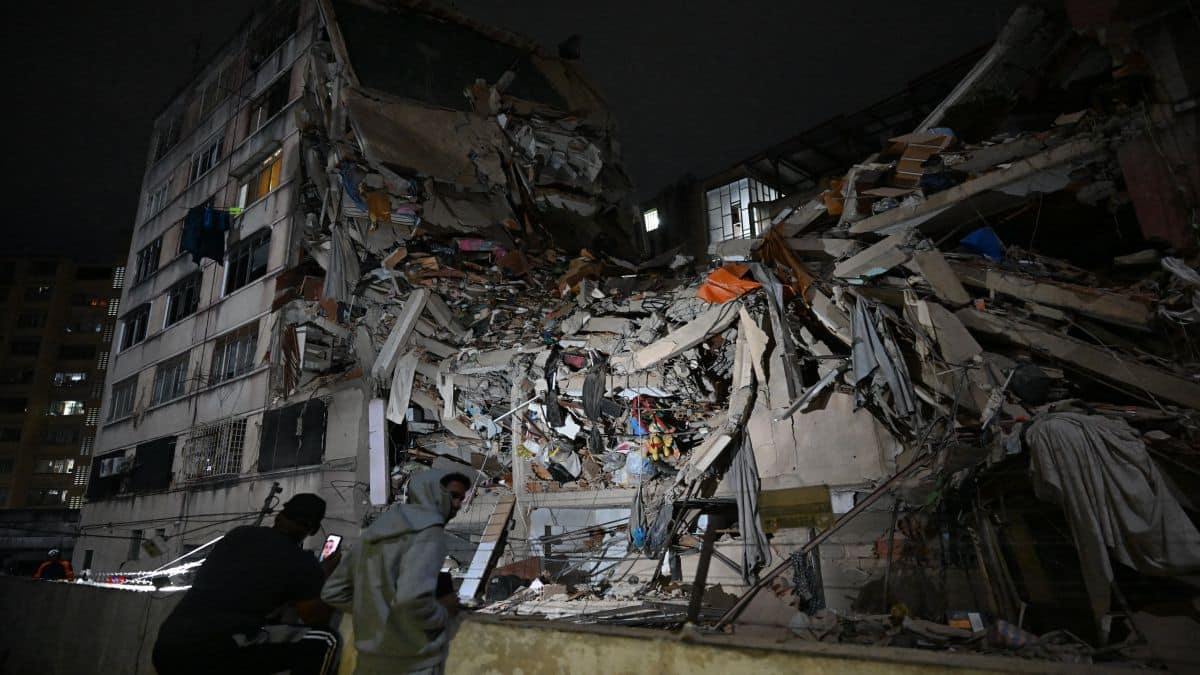
Powerful ground shaking was felt across the region, including in Venezuela’s capital, Caracas, about 150 km east of the earthquake epicentres. What followed was widespread destruction with buildings collapsing, roads cracking, and 1,430 people dying.
Amid this devastation, the world learnt a term that has been relatively unknown until now — earthquake doublet. As Venezuela picks up the pieces, we explore what this term means and how devastating it can be in our ‘Word of the Week’ series.
 More from Explainers
An earthquake doublet, explained
As the name suggests, an earthquake doublet is a pair of earthquakes that happen within a short time and distance from each other.
Unlike a typical earthquake sequence, where a larger earthquake is followed by significantly smaller aftershocks, doublets are earthquakes of similar magnitude that are causally linked, but seismologically distinct. This means the seismic waves from each quake are separated by a gap in time, and/or originate from distinct sources.
Experts note that for two earthquakes to be considered a doublet, both have to have similar magnitudes, occur within a relatively short time interval, and originate from closely related fault systems.
The Seismological Society of America notes that such a phenomenon occurs when stress released by the first rupture rapidly transfers to a neighbouring fault segment, triggering another large rupture before the crust has time to stabilise.
Earthquake doublets are unusual but have occurred in the past. In 2023, an earthquake doublet struck Turkey and Syria, measuring at magnitudes of 7.8 and 7.7. These happened just 95 kilometres and nine hours apart, affecting 14 million people and causing widespread damage.
Another famous example of an earthquake doublet is Pakistan’s 1997 Harnai earthquake. The second temblor occurred just 19 seconds after the first, causing unprecedented damage.
Another example was the 2006 Kuril Islands earthquake sequence in the northwest Pacific, which researchers studied extensively to understand how one large rupture can immediately influence another.
Interestingly, in addition to a doublet, there also exists an earthquake triplet; in 1988, such a phenomenon occurred in Tennant Creek in Australia when three separate temblors hit just half an hour apart from each other.
Venezuela slammed by a doublet
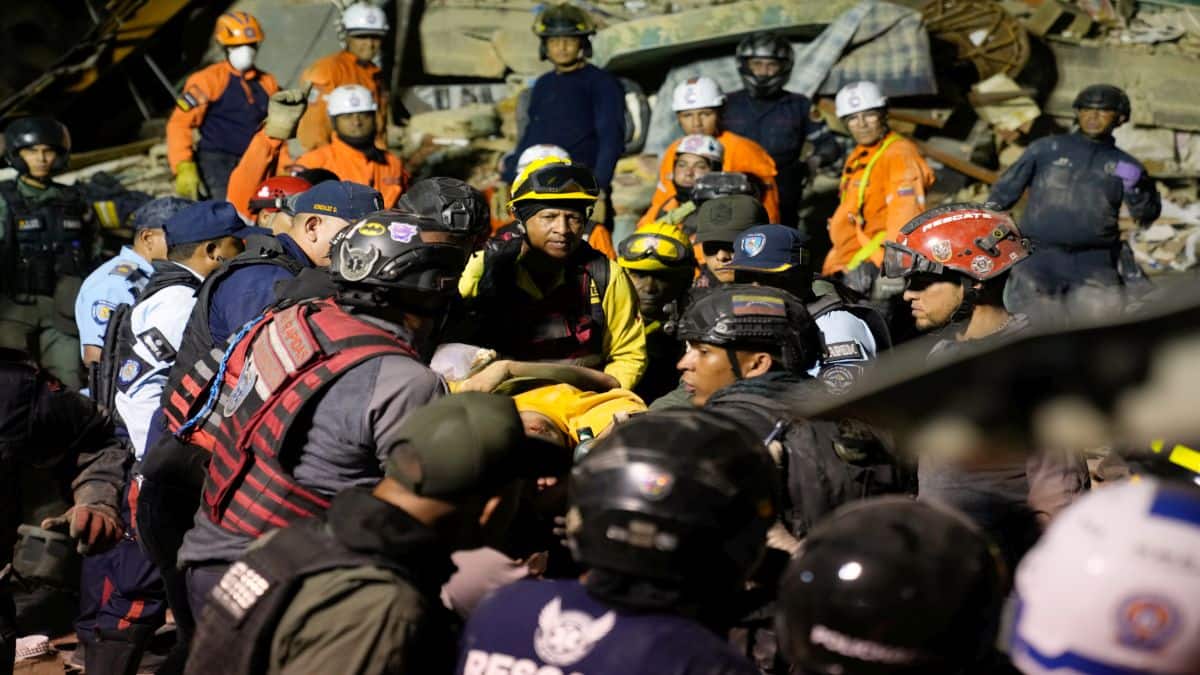
On Wednesday evening, two powerful earthquakes jolted Venezuela, killing over 1,400 people and injuring many more. The United States Geological Survey (USGS) noted that the first quake, measuring 7.2, was centred 21 kilometres (13 miles) west of the coastal town of Moron, occurring at 6.04 pm local time. Within 39 seconds, a 7.5-magnitude quake struck just a close distance away.
“This earthquake was the second event in a doublet. This magnitude 7.5 mainshock was preceded by 39 seconds by a 7.2 foreshock,” USGS said.
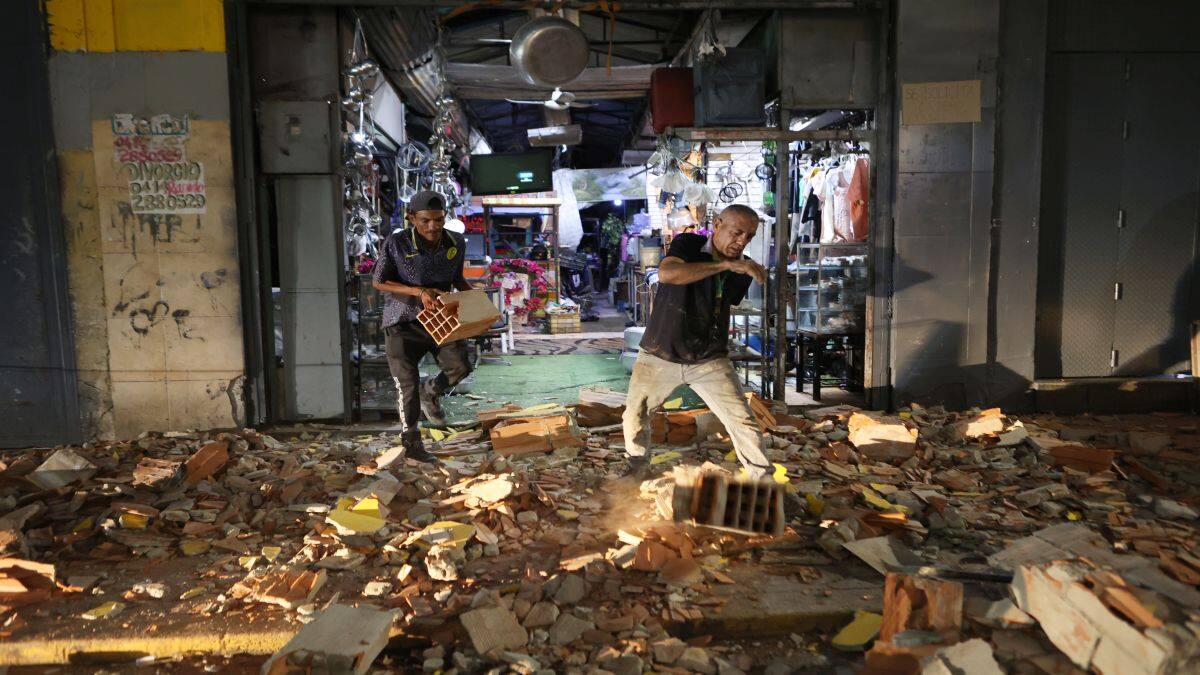
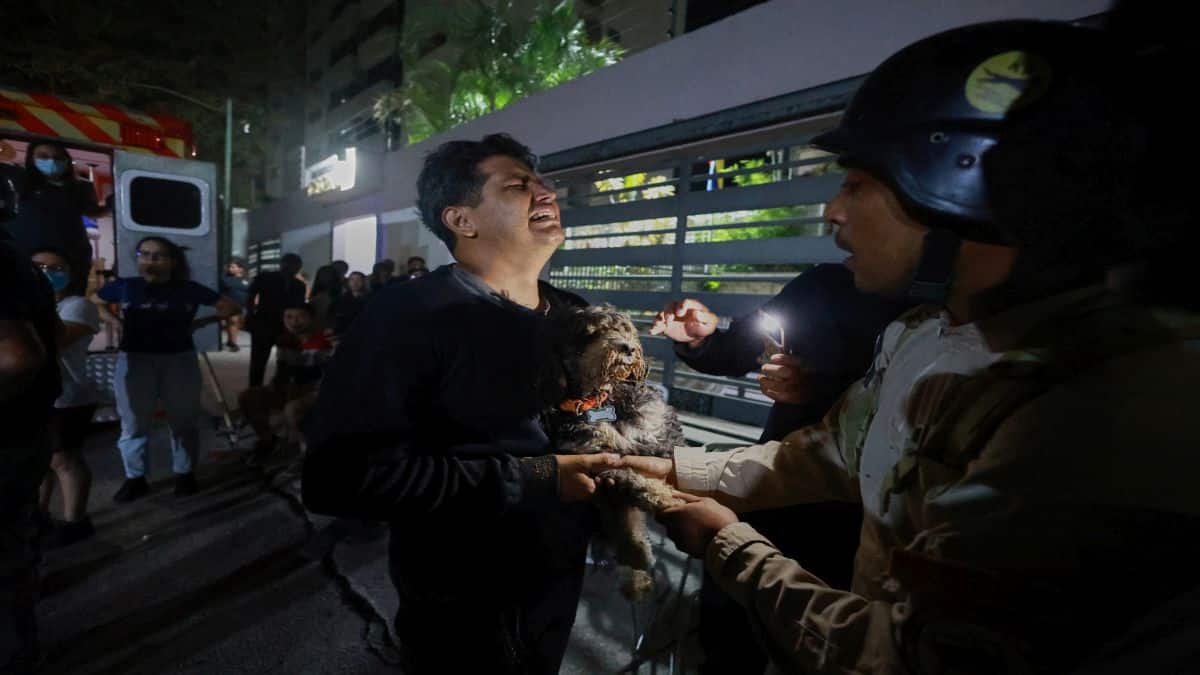
The back-to-back powerful quakes have caused buildings to collapse and even caused significant damage at the Maiquetia International Airport, located near Caracas. The quakes also triggered panic in the capital and drove people into the streets.
“The stairs came away, the whole wall cracked. Things fell from the ceiling. It was horrible,” said 54-year-old bank employee Odalis Escalona, to AFP. An AFP journalist saw a 22-storey building completely destroyed in the capital’s Altamira neighbourhood.
Another resident, Roberto Damas, speaking from Caracas, noted the moment he experienced the tremors. “The building really shook from side to side. Unreal. The force was incredibly strong. We were walking, and it was tossing us around. Everything in the apartment fell. Well, thank God we were able to get out.”
The earthquakes, among the strongest to strike Venezuela in more than a century, prompted interim leader Delcy Rodriguez to announce a state of emergency, shutting down schools and airports.
It has also prompted world leaders, including Prime Minister Narendra Modi, to extend assistance to the South American nation. Earlier, US President Donald Trump said he had “instructed all agencies of our government to get ready to move quickly”, while US Secretary of State Marco Rubio said the country was “immediately deploying search and rescue teams, medical resources, and humanitarian assistance” to Venezuela.
Venezuela’s history of quakes
While doublet earthquakes are rare in Venezuela, the country is prone to tectonic activity. That’s because the country sits along one of South America’s most active tectonic boundaries, where the Caribbean Plate slides eastward relative to the South American Plate.
Experts note that this means an estimated 80 per cent of the country’s population lives in these active seismic zones, putting a huge number of people at direct risk.
The strongest tremors in the country occurred in 1997, killing 73 people, and in Caracas in 1967, when 236 people died. And according to the USGS, an estimated 30,000 people were killed in 1812 when a powerful earthquake devastated the cities of Merida and Caracas.

Military drones & police check-ups: How Sri Lanka is fighting against worst dengue outbreak in a decade
How Facebook job ad lured 2 Karnataka men into Myanmar cyber scam camp
Why is India seeing 95% cloud cover despite a Super El Niño?
What is CJP’s fourth demand to the government as protests in Delhi intensify?
The new geography of war: Why the Houthis can no longer be ignored