


Why Iran has emerged as the bigger winner from the peace deal with US
After months of fighting and negotiations, Donald Trump has signed a 14-point Memorandum of Understanding that aims to end the war with Iran. The deal allows the reopening of the Strait of Hormuz, which Washington has touted as a big win. However, the pact offers Tehran much more, including a $300 billion fund for the ‘reconstruction’ and waivers for the export of oil

At a candlelit dinner in the stately Palace of Versailles in France, US President Donald Trump signed the deal putting an end to the Iran war after over 100 days of fighting. “Just signed it,” Trump told reporters as he emerged from the palace.
Almost simultaneously, Iran’s President Masoud Pezeshkian also signed the deal, with Iranian Foreign Ministry spokesman saying the document “was finalised with the signatures of the presidents”.
At less than 800 words, the Memorandum of Understanding (MoU) aims to expand on the ceasefire between Iran and the US and get traffic flowing through the Strait of Hormuz. However, it leaves a lot of details for later, including the touchy subject of Iran’s nuclear programme.
 More from Explainers
While the Trump administration has touted the deal as a victory, many note that it offers Iran much more, prompting the US president to state that “the alternative would be a worldwide depression”, arguing that if he had not struck a deal, “the strait [of Hormuz] would never have been opened”.
But what’s in the deal? Who emerges as the biggest winner from the agreement?
An end to conflict ‘on all fronts’
The first of the 14-point deal notes that the US, Iran, and allies will declare an “immediate and permanent termination of military operations on all fronts - including Lebanon”.
According to this deal, it is a ceasefire between not only Iran and the US, but also Israel and Hezbollah in Lebanon. This was a major precondition for Iran. This has been a major sticking point in the talks with Israel’s Prime Minister Benjamin Netanyahu, stating that his nation wouldn’t halt attacks on the Iran-backed group in Lebanon.
However, now, the spokesperson for the Iranian Ministry of Foreign Affairs has noted that any continuation of Israeli military operations in Lebanon would constitute a “violation of the understanding” and “necessary measures will be taken”.
The second point in the deal also mentions that the US and Iran agree to “respect each other’s sovereignty and territorial integrity, and to refrain from interfering in each other’s internal affairs”.
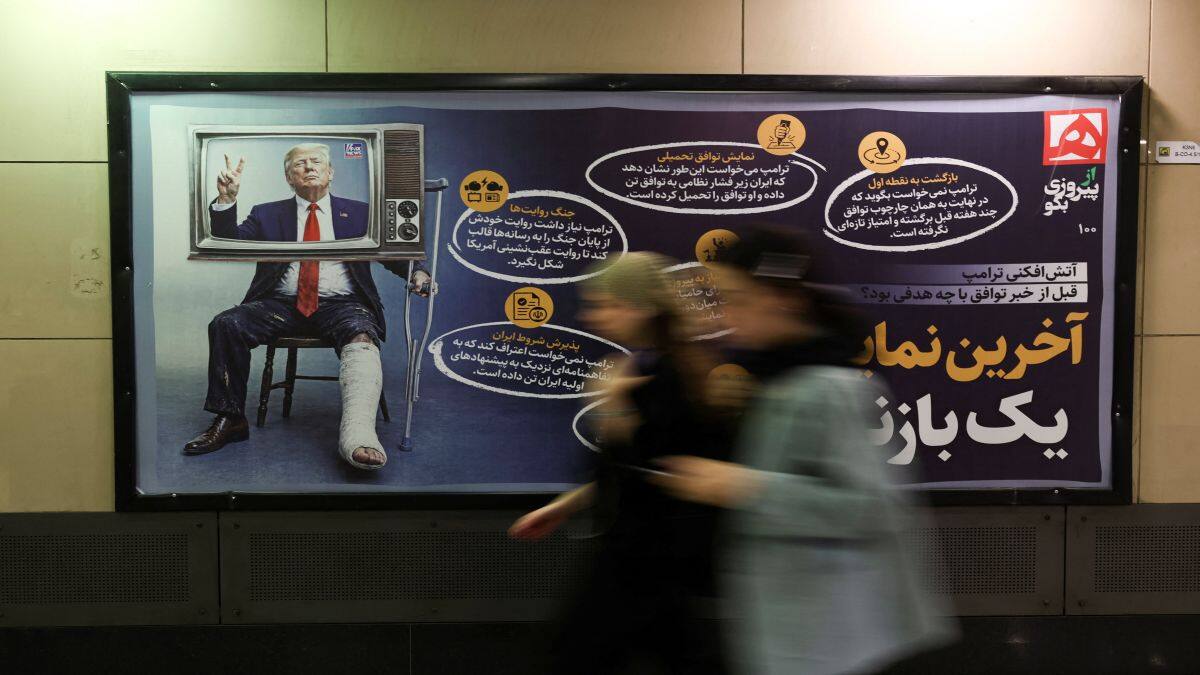
While this may seem symbolic, it has significance. That’s because both countries have accused each other of attempting to meddle in the other’s internal affairs. Moreover, some suggested that this is America’s way of indicating that it would not provoke opposition to the Iranian regime or push for regime change.
The Strait of Hormuz and the US blockade
Point four of the deal states that once the MoU is signed, the US will begin removing its naval blockade and “any disturbances or impediments” that have been placed on Iranian ports. The blockade will end fully within 30 days, according to the agreement.
However, it leaves unaddressed as to whether Iran will ultimately retain control over the Strait of Hormuz.
The very next point in the agreement states that Iran will “make arrangements using its best efforts” to allow safe passage of commercial vessels through the Strait of Hormuz — with no charge. The document notes that traffic will start flowing “immediately”, taking into account the need to remove technical and military “obstacles” and conduct de-mining operations.
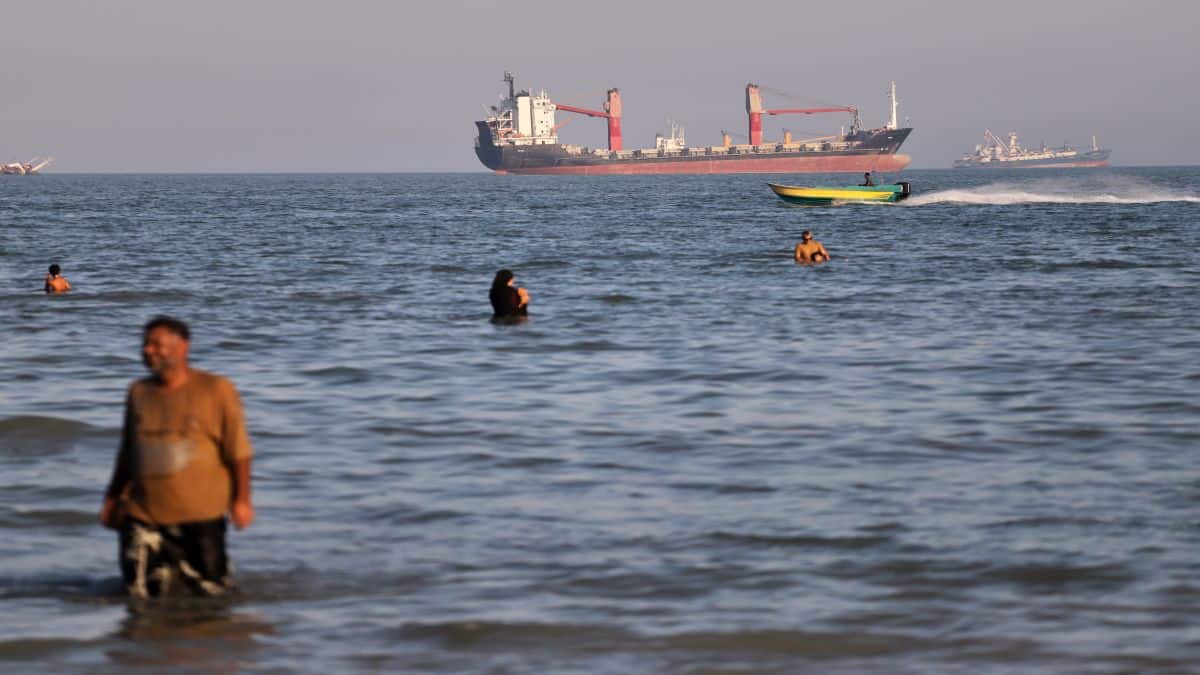
However, Iran is agreeing to allow tanker traffic to pass unobstructed through the Strait of Hormuz with no fee or toll only for 60 days. In the longer term, the document notes that Iran and its Persian Gulf neighbours, including Oman, will determine a new system that complies with international law.
This means that there could be a new fee structure to pass through the Strait of Hormuz in the future, which many suggest could be a huge permanent new revenue stream for Iran.
Fund for reconstruction of Iran and cancellation of sanctions
As per the deal signed by Trump and his Iranian counterpart, the US will undertake to “develop a definitive, mutually agreed plan with at least $300 billion for the reconstruction and economic development” of Iran.
The deal notes that the final mechanism will be agreed within 60 days of the final deal. This means that by the end of the summer, Tehran could have access to $300 billion for economic development.
Many have pointed out that this amount is far more than Iran’s frozen assets or what it would make through years of charging fees for ships to pass through the Strait of Hormuz.
It’s important to note that Trump has made it clear that the US will not pay into it. But this has become a rather touchy issue given Trump’s constant criticism of Barack Obama for shipping $1.7 billion in cash to Iran as part of the 2015 nuclear deal.
Point seven of the deal also states that the US will terminate all economic sanctions against Iran, including those included in UN Security Council resolutions and those implemented unilaterally by the US.
While the timeline for this move is unclear, it is a huge win for the Islamic Republic, which has been struggling economically for a long time owing to the punitive measures.
Point 10 of the deal also notes that the US Department of the Treasury will issue waivers for the export of Iranian crude oil, petroleum products, and derivatives, and all associated services, including banking transactions, insurance, transportation, etc.
Several have noted that this seems to be a reward by Trump to Iran. As Miad Maleki, a senior fellow at the Foundation for Defense of Democracies, was quoted as telling the New York Times, “The United States would be trading away its most durable economic lever before the hard part of the negotiation has even started.”
Iran’s nuclear weapons and future of its programme
The deal also mentions that Iran has agreed not to procure or buy a nuclear weapon, and both sides have agreed to deal with the enriched uranium Tehran already has.
While this may seem like a huge win for the US, it doesn’t address the issue of Tehran’s wider nuclear programme. Many who have read the text of the deal note that it leaves a huge number of issues to be resolved in the next negotiation: whether Iran will keep the nuclear material, whether it will have to shutter all of its major nuclear facilities, whether it will be allowed to continue enriching new material, or suspend that work for something between 13 and 20 years.
A CNN report also added that the language is not as strong as what was in the 2015 deal, where Iran reaffirmed “that under no circumstances will Iran ever seek, develop or acquire nuclear weapons.”
Endorsed by UNSC
The last and final point of the US-Iran deal states that “the final deal will be endorsed by a binding UNSC resolution”.
Notably, Iran had demanded this clause, and while it may seem insignificant, it is not. That’s because this means that the deal will be blessed by the entire UN Security Council, and reneging on it would be more of a global concern and more difficult for a future US administration or Iranian regime.
With inputs from agencies

Who is Sandeep Lamba, the Delhi cop removed from protest site duty after slapping female protester?
Explorers discover wreckage of plane 72 years later. Will this help in finding MH370?
Cruise missiles, drones and more... The deadly arsenal of the Houthis
Why India may not witness a medal rush at 2026 Commonwealth Games
Delhi Police asks personnel to wear uniform: What the law says on cops in plainclothes during protests