


Why Trump is struggling to gain full control of the Strait of Hormuz
On Tuesday (July 14), Donald Trump reimposed a naval blockade on Iranian ports after the US military carried out strikes yet again for a fourth consecutive day. The move aims at gaining full control of the Strait of Hormuz. However, a return to pre-war conditions in the vital waterway is easier said than done. Here’s why

For four consecutive days, the United States has struck Iranian targets. And on Tuesday (July 14), the US also restarted the naval blockade against vessels transiting to and from Iranian ports and coastal areas.
It is the latest escalation in the war that the US and Israel launched against Iran on February 28. It comes as Tehran and Washington have stepped up attacks in the past week, leaving their tentative ceasefire in tatters with no sign of progress toward a final deal to end the war.
US President Donald Trump, while backtracking on his 20 per cent toll to pass the Strait, warned that he would expand strikes on Iran next week to target power plants and bridges if Tehran does not agree to a deal. “Next week it gets really bad for them because next week comes the power plants. Next week comes the bridges,” said the US president in an interview on Fox News. “We’re going to knock out all their power plants. We’re going to knock out all their bridges unless they get to the table and negotiate.”
 More from Explainers
- Catch the latest updates from the US-Iran war here
However, Trump’s demand that shipping in the Strait of Hormuz return to pre-war conditions hasn’t been met yet, with Tehran displaying stiff resistance. As Jason H Campbell, a senior fellow at the Middle East Institute and a former Pentagon official, told the Associated Press, “I think they’re (Iran) starting to demonstrate why no other US president since Reagan has elected to engage at this level of conflict with Iran, because they have that ability to completely disrupt the Strait of Hormuz.”
What’s the latest in the Strait of Hormuz?
Just a day after making the announcement that all vessels transiting the Strait of Hormuz — including those of US allies — must pay a 20 per cent fee to reimburse the US “for any and all costs necessary to do the job of providing safety and security to this very volatile section of the world”, Donald Trump dropped the proposal, saying that he would strike “trade and investment deals” with America’s Gulf allies.
The US president also announced that the Iranian blockade would resume on Tuesday, amidst a flurry of new US military strikes on targets across Iran. This blockade comes after a similar one was imposed on Iran from April 13 to June 18.
Responding to the naval blockade, Iran’s Deputy Foreign Minister Kazem Gharibabadi said that the decision “has, in a way, dismantled the Islamabad memorandum”.
Additionally, Iran's paramilitary Revolutionary Guard has threatened to halt West Asia energy exports.
Who controls the Strait of Hormuz currently?
Here’s the tricky part. Both sides — the US and Iran — claim to be in control of the vital chokepoint.
Earlier on Monday, Trump said the US “will be, from this point forward, known as the guardian of the Hormuz Strait.”
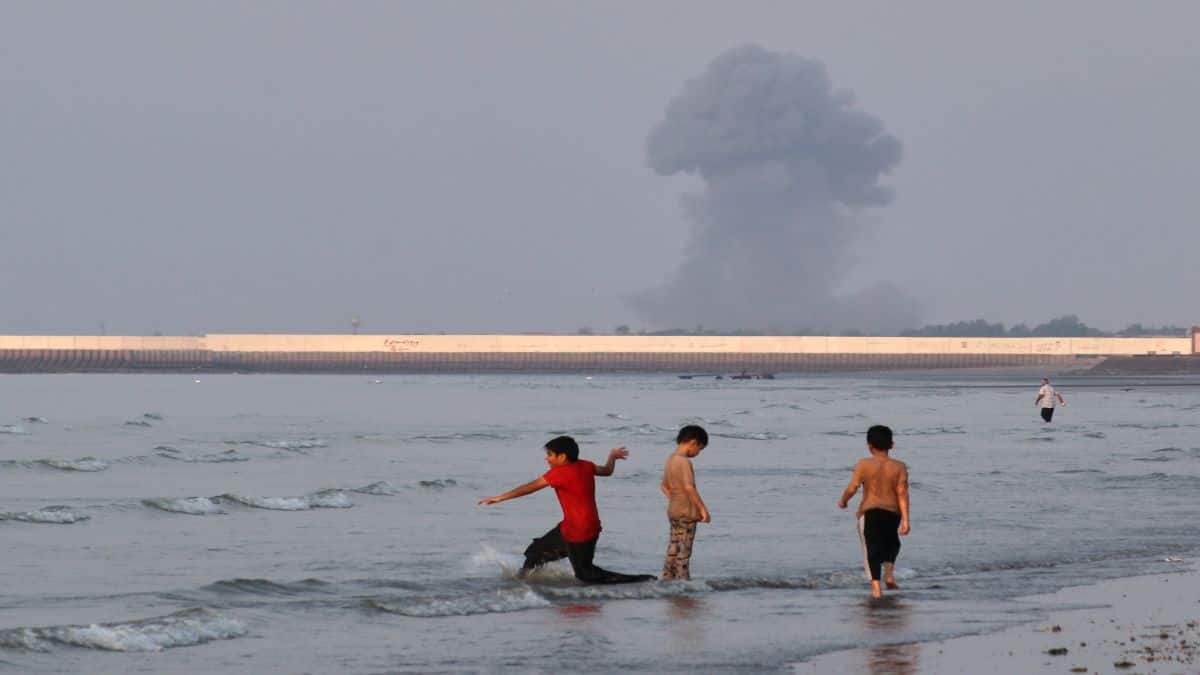
Meanwhile, Iran’s Revolutionary Guard has asserted that Tehran controls the waterway. “We will not allow a rogue and child-killing army from the other side of the world to continue its illegal interference in it,” said the IRGC on Sunday.
International law, however, maintains that no country has the right to claim international waters and all ships have the right of unimpeded passage.
Why do US and Iran differ on Strait of Hormuz?
This ‘no war, no peace’ kind of situation in the Strait of Hormuz is primarily owing to the status of the strategic Strait of Hormuz and the language used in the framework deal signed between Trump and Iran last month.
At the time, Trump had hailed the document, writing on social media, “Ships of the world, start your engines. Let the oil flow!”
However, Tehran found backing in the vagueness of the language. Tehran reads the 14-point plan as giving it power over the management of this critical maritime corridor. In fact, point five reads: “The Islamic Republic of Iran will make arrangements using its best efforts for the safe passage of commercial vessels.”
Michael Ratney, a retired career diplomat who was the most recent US ambassador to Saudi Arabia, told the New York Times, “No one should be surprised that Iran views that as explicitly giving them an enduring role controlling passage through Hormuz. Iran’s control obviously gives them powerful leverage, and they appear to be willing to risk a resumption of conflict, perhaps even a collapse of the ceasefire, to maintain that leverage.”
Can Trump gain full control of the Strait of Hormuz?
For Trump, the return to prewar conditions is necessary but very difficult. That’s because the war has been unpopular with many Americans and could factor into the upcoming midterm elections, with gas prices high.
According to Eric Lob, a nonresident scholar at the Carnegie Endowment for International Peace's Middle East programme and a professor of politics and international relations at Florida International University, the control of the Strait of Hormuz is a “test of wills”.
“It’s really a kind of test of wills to see how much economic pain the Iranians are willing to absorb and then how much economic pain and even political liability this could be for Trump and the Republicans heading into November,” Lob said to the Associated Press.
Many experts also believe that for Trump to gain full control and allow for the free passage of ships in the strait, it would require a ground operation, which is fraught with risk.
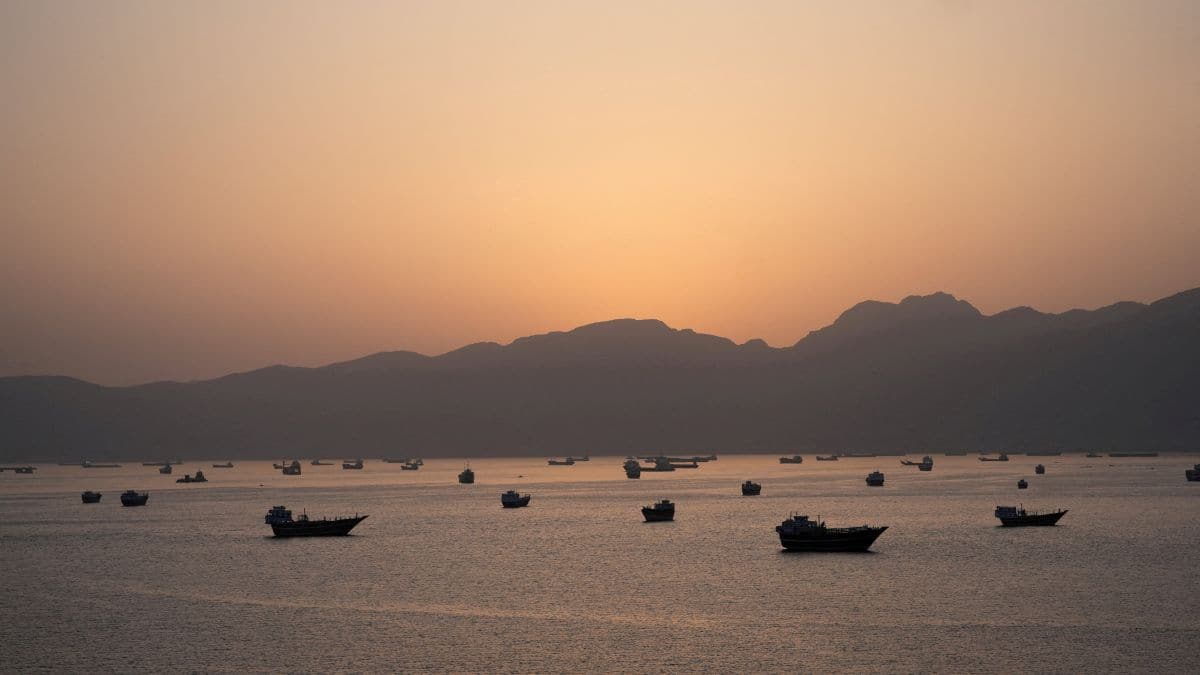
Defence analysts note that Iran has placed munitions across the Strait of Hormuz, and it would require several ground forces to secure the waterway as well as the inland territory. In doing so, they would be putting themselves at risk from insurgent attacks.
Experts note another way to facilitate the safe passage of vessels through the strait would be the continuation of US warships guiding civilian vessels. But it comes with its own challenges and costs.
Michael Eisenstadt, a former US military analyst, noted that such an effort would require a very large part of the US naval fleet for an indefinite period of time. He added that it is a much more complicated environment today as Iran has amassed advanced capabilities, including its ability to launch drone and missile strikes.
“If we were to do what we need to do in order to make this work, which might involve putting people ashore in order to clear anti-cruise missile and drone launch sites, the losses of US service members can go up, and if you’re going to do an escort operation also, the losses can potentially go up,” Eisenstadt was quoted as saying.
Others also noted that Iran doesn’t have to fire missiles or drones to exert its power over the Strait of Hormuz — it only has to issue threats.
A threat is enough to scare away vessels, said experts, adding that this makes it even more difficult for Trump to claim control over the waterway.
It’s to be seen what Trump’s next step is in the Strait of Hormuz. Some observers note that there is little possibility of a compromise. “I don’t think there are any great solutions out there, but the sweet spot could be in some sort of arrangement in which no tolls are charged for ships passing through the strait, but there could be some sort of shipping fees which allow Iran to show it retains its authority,” former senior British diplomat Simon Gass told the BBC.
With inputs from agencies

Who is Sandeep Lamba, the Delhi cop removed from protest site duty after slapping female protester?
Explorers discover wreckage of plane 72 years later. Will this help in finding MH370?
Cruise missiles, drones and more... The deadly arsenal of the Houthis
Why India may not witness a medal rush at 2026 Commonwealth Games
Delhi Police asks personnel to wear uniform: What the law says on cops in plainclothes during protests