


How Delhi retained title of being world's most polluted capital city
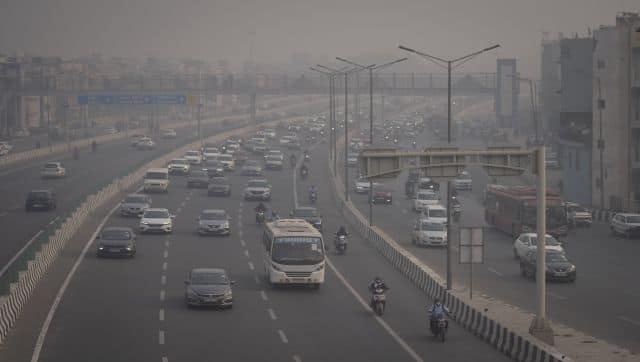
The World Air Quality Report 2023 published by the Swiss organisation IQAir has deemed Delhi as the world’s most polluted capital city. As per the study, PM2.5 levels in the capital worsened from 89.1 micrograms per cubic metre in 2022 to 92.7 micrograms per cubic metre in 2023

Delhi is once again the world’s most polluted capital city, marking the fourth consecutive year since 2018, according to a new report from the World Air Quality Report 2023 published by the Swiss organisation IQAir. The report also reveals that India has emerged as the third worst country in terms of air quality, with Begusarai in Bihar topping the charts as the world's most polluted metropolitan area.
Here's a closer look.
How bad is the pollution in Delhi?
Delhi has consistently held the title of the world's most polluted capital city for several years. This trend continued in 2023, with the city experiencing a worsening of air quality as PM2.5 levels increased from 89.1 micrograms per cubic metre in 2022 to 92.7 micrograms per cubic metre.
 More from Explainers
In 2021, Delhi maintained its position at the top of the list among 107 capital cities globally. This trend began in 2018 when Delhi was first identified as the most polluted capital city. In 2020, among 92 such cities, Delhi again claimed the dubious distinction of being the most polluted capital city. The trend continued in 2019, with Delhi holding the same position among 85 capital cities for its poor air quality.
Begusarai stood out as the most polluted metropolitan area globally with an average PM2.5 concentration of 118.9 micrograms per cubic metre. The city did not figure in the 2022 rankings.
What about India?
With an average annual PM2.5 concentration of 54.4 micrograms per cubic metre, India had the third worst air quality out of 134 countries in 2023 after Bangladesh (79.9 micrograms per cubic metre) and Pakistan (73.7 micrograms per cubic metre), according to the report.
In 2022, India was ranked as the eighth most polluted country with an average PM2.5 concentration of 53.3 micrograms per cubic metre.
It is estimated that 1.36 billion people in India experience PM2.5 concentrations exceeding the World Health Organisation (WHO) recommended annual guideline level of five micrograms per cubic metre, the report said.
Also, 1.33 billion people, 96 per cent of the Indian population, experience PM2.5 levels more than seven times the WHO annual PM2.5 guideline. This trend is reflected in city-level data, with more than 66 per cent of the country's cities reporting annual averages greater than 35 micrograms per cubic metre.
According to the report, only seven countries — Australia, Estonia, Finland, Grenada, Iceland, Mauritius, and New Zealand — met the WHO annual PM2.5 guideline.
IQAir said the data utilised to create this report was aggregated from the global distribution of more than 30,000 regulatory air quality monitoring stations and low-cost air quality sensors operated by research institutions, governmental bodies, universities and educational facilities, non-profit non-governmental organisations, private companies and citizen scientists.
The 2022 World Air Quality Report included data from 7,323 locations in 131 countries, regions and territories. In 2023, those numbers have grown to include 7,812 locations in 134 countries, regions and territories.
How is it affecting you?
Causing an estimated one in every nine deaths worldwide, air pollution is the greatest environmental threat to human health. According to the WHO, air pollution is responsible for an estimated seven million premature deaths worldwide every year.
Exposure to PM2.5 air pollution leads to and exacerbates numerous health conditions, including but not limited to asthma, cancer, stroke and lung disease. Exposure to elevated levels of fine particles can impair cognitive development in children, lead to mental health issues, and complicate existing illnesses, including diabetes.
With inputs from PTI

Military drones & police check-ups: How Sri Lanka is fighting against worst dengue outbreak in a decade
How Facebook job ad lured 2 Karnataka men into Myanmar cyber scam camp
Why is India seeing 95% cloud cover despite a Super El Niño?
What is CJP’s fourth demand to the government as protests in Delhi intensify?
The new geography of war: Why the Houthis can no longer be ignored