


Decoding India’s DNA: What the GenomeIndia Project found and why it matters
For years, India's vast genetic diversity has been overlooked by researchers. Now, the GenomeIndia Project has collected over 20,000 blood samples from across the country that may help develop more personalised medical treatment for Indians

India has spent the past few years building its genetic map.
Since 2020, researchers in India have collected over 20,000 blood samples from across the nation with the goal of building a genetic base that reflects India’s population.
Over two dozen illustrious institutions took part in the landmark research, which mapped the DNA of rural, urban and tribal populations across all major languages. But what did the findings reveal? And why does it matter?
Let’s take a closer look.
A brief look at DNA and the human genome
First, let’s take a brief look at DNA and the human genome. DNA carries genetic information in most living organisms – essentially an instruction manual. All the DNA within a living organism is known as the genome. It consists of genetic material organised into chromosomes within the cell’s nucleus. It is considered the building block of organisms – be they bacteria, plants or humans (though some viruses use RNA instead of DNA).
 More from Explainers
In human beings, for example, the genome comprises around 3 billion nucleotides. This unfolds in a four-letter alphabet – A, T, C, G – which are present in almost every cell in our bodies. Within a human genome, there are around 20,000 genes that produce the proteins the body needs. While human beings share 99.9 per cent of their genome, it is that 0.1 per cent that makes all the difference – particularly when it comes to health, disease and how medicine works. This is precisely where this research comes in.
Who did the research?
It was the Department of Biotechnology (DBT) that launched the GenomeIndia Project in January 2020. Conducted under the auspices of the Ministry of Science and Technology, the idea was to build a genome database that reflected Indians’ genetics – essentially a DNA map.
The effort was led by the Centre for Brain Research (CBR) at the Indian Institute of Science in Bengaluru. It involved nearly two dozen elite institutions, including the Council of Scientific and Industrial Research–Institute of Genomics and Integrative Biology (CSIR–IGIB) in Delhi, the CSIR–Centre for Cellular and Molecular Biology (CCMB) in Hyderabad, and the Biotechnology Research and Innovation Council–National Institute of Biomedical Genomics (BRIC–NIBMG) in Kalyani.
How they did it
The research collected around 20,000 samples from unrelated, healthy Indians. This comprised 83 population groups, including dozens of tribal and non-tribal groups – 36.7 per cent from rural populations, 32.2 per cent from urban populations, and 31.1 per cent from tribal populations. The project collected genomes from India’s four main linguistic families – Indo-European, Dravidian, Austro-Asiatic and Tibeto-Burman.
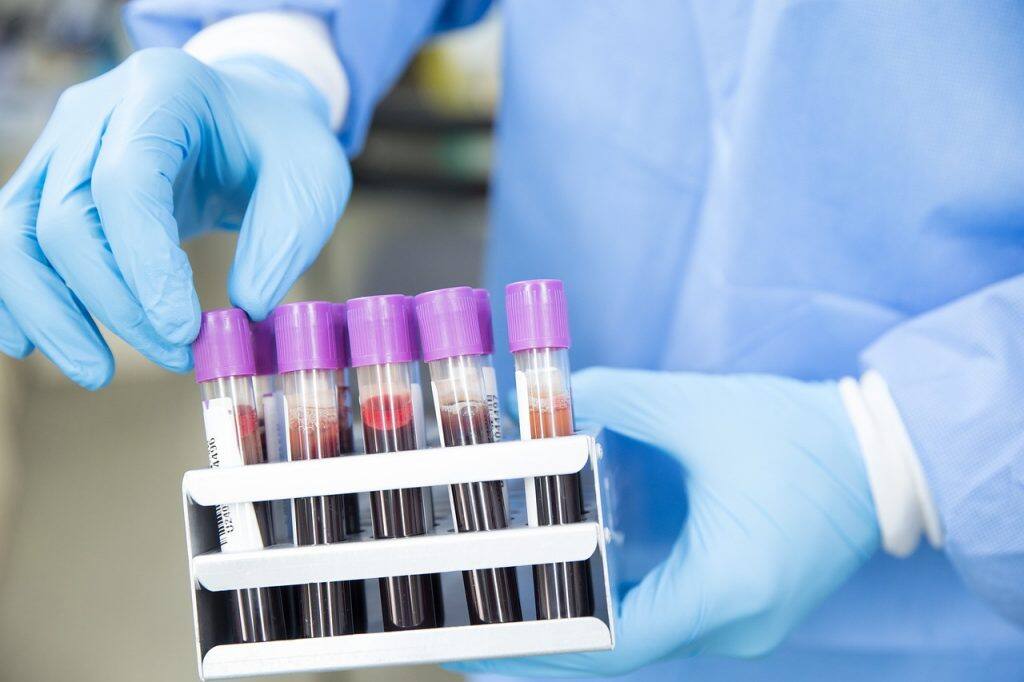
The over 20,000 samples are now stored in a biobank at CBR in Bengaluru. Of these, 9,768 have undergone genotyping. According to The Times of India, the country as a whole has around 4,600 distinct population groups. The sequenced samples represent around 2 per cent of these groups.
Why it matters
Because India is a vast country with a complex genetic heritage. According to ORF Online, a study by the University of California, Berkeley; the All India Institute of Medical Sciences (AIIMS), Delhi; the University of Southern California (USC); and the University of Michigan, through the Longitudinal Aging Study in India–Diagnostic Assessment of Dementia (LASI-DAD), traced Indian ancestry to a migration out of Africa around 50,000 years ago, as well as later movements from Central Asia. The project has identified over 44 million previously unknown genetic variants.
This is important because Indians have been underrepresented in global genetics databases, which have been Eurocentric in nature. According to The Times of India, a 2022 study showed that individuals of European ancestry comprised 86.3 per cent of participants in genome studies aimed at identifying genetic markers linked to diseases or traits. South Asian populations have historically been underrepresented in such studies. Which means that researchers and pharma firms have designed medicine and treatment plans often based on non-Indian populations.

This has real-world implications. As per ORF Online, a mutation in the Butyrylcholinesterase (BCHE) gene affects the body’s ability to break down certain anaesthetic drugs. This is prevalent in certain Indian communities such as the Vysya community in Andhra Pradesh and Telangana. It can lead to prolonged muscle paralysis after surgery if standard doses are used. The study also identified several genetic variants that affect how Indians metabolise drugs, meaning standard dosages may not always be effective or safe.
Sickle cell disease is another example. India accounts for a significant share of global cases, partly due to consanguinity, or marriages between close relatives, which increase the likelihood of inheriting such disorders. While this was previously thought to be limited to tribal populations, recent studies, including one in Chamarajanagar, Karnataka, show that the disease is also present in non-tribal groups.
What are experts saying?
Experts say this data is helpful.
Bratati Kahali, a geneticist and computational biologist at the Indian Institute of Science and principal investigator in the GenomeIndia Project, told Nature.com that the data has “broader clinical relevance”. Kahali said it could result in anaesthesia doses being adjusted for certain groups.
Molecular geneticist Meera Purushottam at the National Institute of Mental Health and Neurosciences in Bengaluru cautiously agreed. “More data has to accrue before these predictions can be made with confidence. But these early insights, when combined with pharmacogenomic studies in the clinic, may lead us towards clinically usable precision medicine tools,” she said.
However, experts add that this is only the beginning. Analabha Basu, a population geneticist at the BRIC–National Institute of Biomedical Genomics in Kalyani, told Nature.com that more work is needed to translate these insights into clinical practice across health systems.
FAQs
1. What is the GenomeIndia Project?
The GenomeIndia Project is a government-led initiative launched in 2020 to build a genetic database that reflects India’s population. By sequencing genomes from different communities, it aims to create a more accurate DNA map of the country.
2. Why does India need its own DNA map?
Most global genetic research has been based on European populations, which means medical data does not always apply well to Indians. India’s diversity makes this gap even more significant, as different communities can have different disease risks and responses to medicines.
3. What difference will this make to healthcare?
It could help move towards more personalised treatment, where doctors can choose medicines and dosages based on a patient’s genetic profile. It also improves understanding of diseases that are more common in certain communities, making prevention and treatment more effective.
With inputs from agencies

Military drones & police check-ups: How Sri Lanka is fighting against worst dengue outbreak in a decade
How Facebook job ad lured 2 Karnataka men into Myanmar cyber scam camp
Why is India seeing 95% cloud cover despite a Super El Niño?
What is CJP’s fourth demand to the government as protests in Delhi intensify?
The new geography of war: Why the Houthis can no longer be ignored