


History Today: How December 25 became Christmas
On December 25, Christians around the world gather to celebrate Jesus’ birth, as many believe. With joyful carols, special liturgies and festive foods, it's considered an important cultural event. But, how did December 25 come to be associated with Jesus’ birthday? We take you through the history behind the date

It's a Christian holiday, and widely celebrated as a way to spend time with family and friends through the act of gift-giving. Today, many Christians probably cannot even think of any other date to celebrate Christmas but December 25.
If you are a history geek who loves to learn about important events from the past, Firstpost Explainers’ ongoing series, History Today, will be your one-stop destination to explore key events.
We take you through the history behind how December 25 became Christmas
December 25 became Christmas
Throughout history, December 25 was not celebrated as Christmas Day; in fact, the most significant holidays were Epiphany on January 6 and Easter, which celebrated Jesus’ resurrection. December 25 as a holiday honouring Jesus’ birthday was first officially mentioned in a Roman calendar from AD 336.
 More from Explainers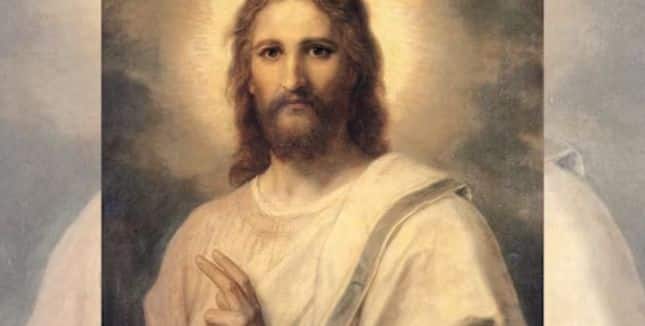
But the bigger question remains: Was Jesus born on December 25? Perhaps not. The Bible does not mention Jesus' exact birthday. Christian tradition places the Annunciation, when Mary was told by the angel Gabriel on March 25th (exactly nine months before December 25) that she would conceive Jesus, which is celebrated as the Feast of the Annunciation. Many Christian believed that March 25 was the day when the world was created.
According to history.com, when the Church was established on December 25 at the end of the third century, early Christian Church leaders wanted the date to coincide with pagan festivals honouring Saturn (the honoured Roman god of agriculture). This way, it became easier for them to convince Rome’s pagans to accept Christianity as the empire’s official religion.
According to the Biblical Archaeology Society, scholars believe that Jesus was likely born in spring or autumn, not winter, and they place his birthday between 2 BCE and 7 BCE, likely around 3 or 4 BCE, which is based on historical records related to King Herod’s death.
December 25, a date that is shaped by meaning, may not mark the birthday of Jesus, but a notion that has lasted for thousands of years.
Mikhail Gorbachev resigned as president of Soviet Union
Marking the end of an era, on this day in 1991, Mikhail Gorbachev announced his resignation as President of the Soviet Union. Gorbachev was the last Premier of the Soviet Union.
In his farewell speech, Gorbachev asserted that he stood on his record. He also hinted that the establishment of the Commonwealth of Independent States (CIS) was the primary motive for his resignation. Gorbachev was adamant that he “never had any regrets” about the policies he brought to the table.
Even before the establishment of CIS, under Gorbachev, the economy was unstable, no one was pleased with him, and some opponents demanded political freedom. Gorbachev survived a coup attempt in 1991 with the assistance of Russian Federation president Boris Yeltsin. However, his power slipped away, and Yeltsin took over the Kremlin, replacing the Soviet flag with the flag of Russia.
This Day, That Year
- Charlie Chaplin, a comedic actor and director who is widely regarded as one of the most important figures in motion-picture history, died in Switzerland on this day in 1977.
- American singer and songwriter James Brown, known as “the Godfather of Soul,” died at the age of 73 on this day in 2006.
With inputs from agencies

Military drones & police check-ups: How Sri Lanka is fighting against worst dengue outbreak in a decade
How Facebook job ad lured 2 Karnataka men into Myanmar cyber scam camp
Why is India seeing 95% cloud cover despite a Super El Niño?
What is CJP’s fourth demand to the government as protests in Delhi intensify?
The new geography of war: Why the Houthis can no longer be ignored