


How deadly is the Dark Eagle missile that Trump is mulling to deploy in Iran war?
Donald Trump is mulling the deployment of the Dark Eagle missile amid the Iran war. The US army’s long-range hypersonic weapon boasts a range of approximately 2,700 kilometres and can travel at speeds reaching Mach 5

US President Donald Trump is running against time in his war against Iran. The American leader has until Friday (May 1) to halt US military operations against Iran. Under the 1973 War Powers Resolution, Trump is required to withdraw US armed forces 60 days after reporting their deployment to Congress — unless the legislative branch authorises the military action, which it has not done.
With time running out and Tehran refusing to budge on securing a peace deal, the Trump administration is now mulling the deployment of its long-range hypersonic missile, Dark Eagle, to West Asia.
If actually deployed, it will be the first time the US has deployed its hypersonic missile, which is running far behind schedule.
 More from Explainers
- Catch the latest on the Iran war here
But what do we know of this missile? How deadly can it be? What does its deployment mean for the Iran war?
US Centcom requests to deploy Dark Eagle
The US Central Command (Centcom) is believed to have requested to deploy the Dark Eagle hypersonic missile system in West Asia for “possible use against Iran”. According to a Center for Strategic and International Studies report, Centcom has made this request because it has been forced to move its launchers out of range for Washington’s Precision Strike Missile, which the US is now running low on.
There’s been rising concern among US officials that existing strike capabilities may not be sufficient to reach key Iranian missile assets.
While there has been no official comment on the possible deployment of Dark Eagle, Axios has reported that Centcom is preparing for a “short and powerful” wave of strikes on Iran, likely including key infrastructure targets.
The request comes amid a deadlock in US-Iran talks that could spark a return to all-out war. US President Donald Trump has vowed to maintain a blockade of Iranian shipping in the Persian Gulf, but Tehran says it will only come to the negotiating table if the US lifts the siege.
All about the Dark Eagle missile
The Dark Eagle missile is the US army’s long-range hypersonic weapon and is technically still listed as under development and not yet operational. The missile has a reported range of more than 1,725 miles (2,776 km), although its exact capabilities are still shrouded in secrecy.
The Dark Eagle missile boasts of travelling five times the speed of sound, reaching altitudes in the upper atmosphere, and manoeuvring itself to evade air defences.
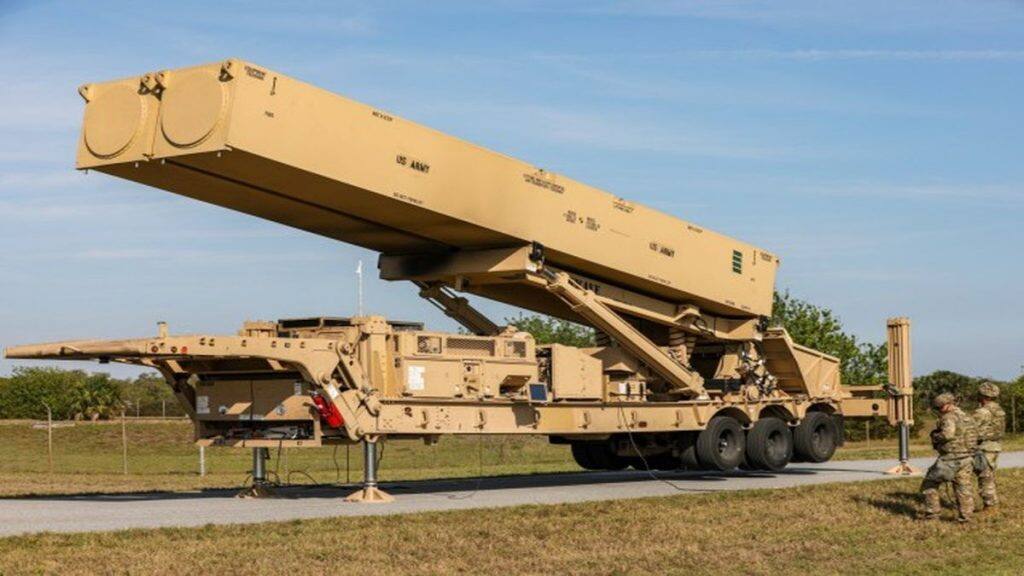
Developed by American defence giant Lockheed Martin, the Dark Eagle missile was designed to fight Chinese or Russian advanced air defences. A source told Bloomberg that each missile costs about $15 million, and there are no more than eight missiles in an individual battery. A battery will cost about $2.7 billion, making it a very expensive weapon.
According to the Library of Congress, the Dark Eagle is specifically made for “long range conventional precision strike capability” against “time-sensitive and heavily defended targets”.
Despite these capabilities, there’s concern about the missile. The Dark Eagle hasn’t even been declared ready for use, despite initial plans to make it operational by 2022.
The Dark Eagle is said to be America’s response to China and Russia’s hypersonic systems. Moscow’s Kh-47M2 Kinzhal entered combat in 2019 and has a range of 1,200 miles. Meanwhile, Beijing has the DF-17 boasting of a strike range of 1,500 miles
Trump applies pressure on Iran
Talks of a potential deployment of the Dark Eagle missile to West Asia come as US President Donald Trump continues to apply pressure on Iran — militarily and economically.
Earlier, the US president said that Iran would be “big trouble” if they don’t agree to the United States’ condition of “no nuclear weapons”. Additionally, US commanders briefed Trump on the situation, with Axios reporting that Centcom has prepared a plan for a “short and powerful” wave of strikes on Iran. The hope would be that Iran would then return to the negotiating table, showing more flexibility on the nuclear issue.
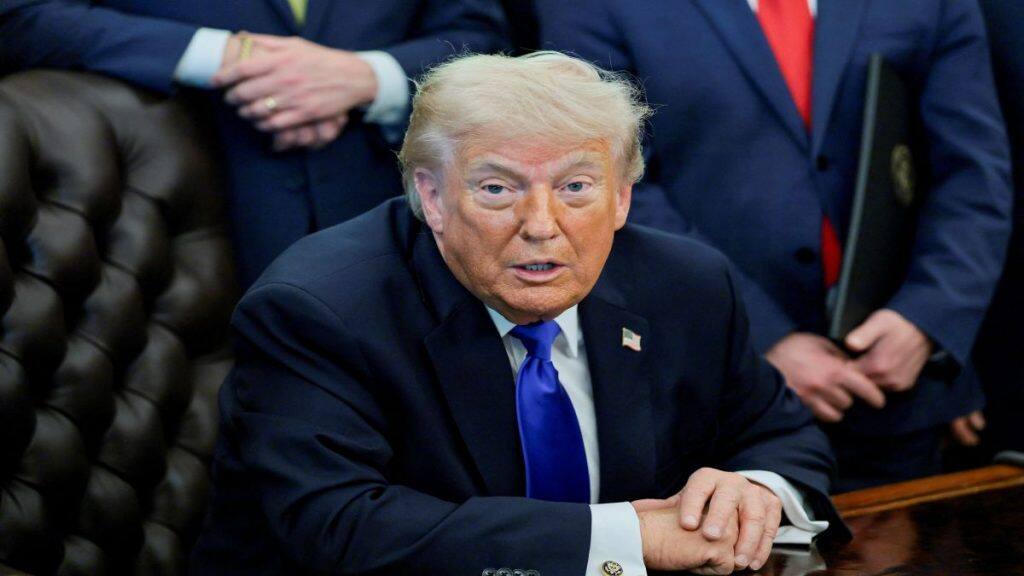
There are two other alternate plans too. One is focused on taking over part of the Strait of Hormuz to reopen it to commercial shipping. Such an operation could include ground forces, one source told Axios, while the other is a special forces operation to secure Iran’s stockpile of highly enriched uranium.
The US president is also running down the clock on the Iran war. After the US and Israel first struck Iran on February 28, the US president sent a letter notifying Congress of the action on March 2, starting a 60-day clock and setting up a May 1 deadline.
However, US Secretary of War Pete Hegseth, in his testimony to the US Senate, noted that the countdown “pauses or stops in a ceasefire. The US and Iran are currently in a ceasefire that was first announced on April 7.
Military preparations continue and diplomacy advances, with the situation being unstable. It remains uncertain if the Dark Eagle system will be deployed, but its consideration indicates that there is growing urgency to confront changing dangers throughout the region.
But as Jennifer Kavanagh, senior fellow and director of military analysis at Defense Priorities, told RS, the potential deployment of the Dark Eagle “suggests that the Pentagon has lost all perspective.”
“Iran is not an existential threat, and the United States should not be expending its highest-end missiles there, no matter what,” Kavanagh said. “The unit cost per missile is $41 million or so. Are any targets in Iran worth this much?”
With inputs from agencies

Military drones & police check-ups: How Sri Lanka is fighting against worst dengue outbreak in a decade
How Facebook job ad lured 2 Karnataka men into Myanmar cyber scam camp
Why is India seeing 95% cloud cover despite a Super El Niño?
What is CJP’s fourth demand to the government as protests in Delhi intensify?
The new geography of war: Why the Houthis can no longer be ignored