


Cyclone Mandous approaches Tamil Nadu: How deadly is this storm?
The IMD on Thursday informed that a depression has formed in the Bay of Bengal and would intensify into a cyclonic storm, causing unusually heavy rainfall in the country’s southern provinces

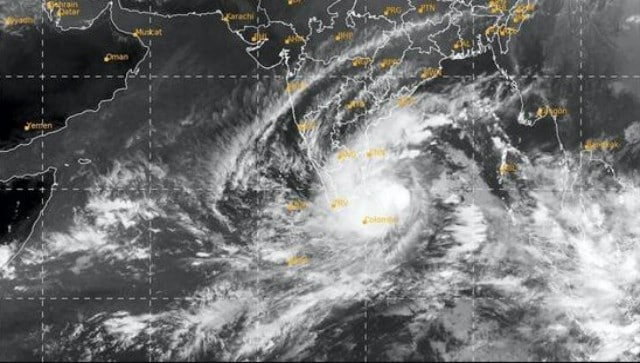
A satellite image shows Cyclone Mandous approaching the Indian shore. PTI[/caption]Also read: Weather Report: India marks warm November, another dry week expectedWhat are the precautionary measures taken?Ten teams from the National Disaster Response Force (NDRF) have been sent by the state government to Nagapattinam, Thanjavur, Tiruvarur, Cuddalore, Mayiladuthurai, Chennai, Tiruvallur, Kancheepuram, Chengalpattu, and Villupuram. Three of the NDRF teams have been stationed in Puducherry and Karaikal.The teams have erected relief camps and powerful motor pumps to drain water from low-lying areas. In vulnerable areas, boats and tree cutters have been deployed. The sea has been closed to fishermen for three days. There will also be two operational control rooms and medical facilities when the cyclone sweeps across the shore.Schools and institutions are closed today in 12 districts, including Chennai, Thiruvallur, Chengalpattu, Vellore, Ranipettai, and Kancheepuram due to the heavy rain alert.All parks and playgrounds are to be closed until further notice, per an order from the Chennai city administration. Additionally, it has been requested that people not drive beneath any trees or visit any beaches today.All stores along the beaches are closed. A total of 121 shelters and 5,093 aid centres, including 169 in Chennai, have been opened throughout Tamil Nadu. People have been warned by the Tamil Nadu government to avoid unnecessary travel and to always have a flashlight or candle, batteries, dry fruit, and water on hand. It has also requested that all precautions be taken, including a prior announcement of the release of extra water from reservoirs.Puducherry chief minister N Rangasamy chaired a review meeting and has said that 238 relief centres are installed. The Indian Navy, Indian Army, and Coast Guard relief troops have also been on standby.What is the origin of cyclone names?The Regional Specialised Meteorological Centres (RSMCs) and Tropical Cyclone Warning Centres (TCWCs) name the cyclones that are formed in any ocean basin around the world. Six RSMCs in all, including the India Meteorological Department, are located throughout the world.The United Arab Emirates (UAE) proposal, which in Arabic translates to "treasure box," inspired the name of the most recent storm.Notably, the IMD shared a list of over 169 names, including 13 names that were suggested by each member nation and are used sequentially to name tropical cyclones.The World Meteorological Organization and the Economic and Social Commission for Asia and the Pacific (WMO/ESCAP) have a panel on tropical cyclones that includes these member countries. Before the first round of the list is finished and the second round begins, Yemen is left to assign its suggested name Mocha, which is pronounced Mokha.The Indian weather department names the cyclones developing over the northern Indian Ocean, the Arabian Sea, and the Bay of Bengal. It also issues advisories to 12 other countries in the region as the cyclones and storms develop over time.When India’s turn comes around next, the cyclone will be called ‘Tej’. Other than India, Bangladesh, Iran, Maldives, Pakistan, Myanmar, Oman, Qatar, Saudi Arabia, Sri Lanka, Thailand, UAE, and Yemen are also a part of the member nations group.
Why are cyclones named?The cyclones have names to help people identify them easily as it would be challenging to memorise numbers and other technical jargon.Naming storms make it simpler for the scientific community, the media, and disaster management to recognise and record individual cyclones, issue warnings, boost community alertness, and avoid confusion in areas that witness several cyclones.With inputs from agenciesRead all the Latest News, Trending News, Cricket News, Bollywood News,India News and Entertainment News here. Follow us on Facebook, Twitter and Instagram.
Military drones & police check-ups: How Sri Lanka is fighting against worst dengue outbreak in a decade
How Facebook job ad lured 2 Karnataka men into Myanmar cyber scam camp
Why is India seeing 95% cloud cover despite a Super El Niño?
What is CJP’s fourth demand to the government as protests in Delhi intensify?
The new geography of war: Why the Houthis can no longer be ignored