
Advertisement


Sections
COVID-somnia? How coronavirus is affecting people's sleep and dreams
If you’ve had trouble sleeping during or after COVID, or are having more bad dreams than you used to, you’re not alone. Studies show sleep disturbances affect 52 per cent of people infected with coronavirus during the infection

By the end of 2022, more than 650 million COVID infections had been reported to the World Health Organization. With the true number likely much higher, and the tally increasing by hundreds of thousands every week, the scientific community has been focused on understanding the impact of COVID on our physical health, mental health and brain function.In the early stage of the pandemic, sleep scientists charted the costs and benefits of lockdowns on sleep patterns. The main finding was that we slept more in lockdown but the quality of our sleep was worse.Now a second wave of data is beginning to explain how becoming infected with COVID is affecting our sleep and even intruding into our dreams.The most recent meta-analysis, a review of all the currently available scientific literature, estimates that 52 per cent of people who contract COVID suffer from sleep disturbances during the infection.The most common type of sleep disturbance reported is insomnia. People with insomnia typically find it difficult to fall asleep or stay asleep, and often wake up early in the mornings.Worryingly, sleep problems sometimes persist even after recovery from the infection. A study in China found that 26 per cent of people who were admitted to hospital with COVID showed symptoms of insomnia two weeks after discharge.And a US study showed that people who had been infected with COVID were more likely than people who had never been infected to have trouble sleeping, even up to a month after a positive COVID test.Sleep difficulties and long COVIDWhile most people recover from COVID quickly, some continue to have symptoms in the longer term. People suffering from long COVID seem very likely to face persistent sleep problems.A 2021 study surveyed more than 3,000 people with long COVID. Almost 80 per cent of participants self-reported sleep problems, most commonly insomnia.A more recent study collected data on both sleep duration and quality using smart wristbands. Participants with long COVID slept less overall and got less deep sleep than participants who had never had COVID.[caption id="attachment_11933492" align="alignnone" width="640"]![]() Sleep problems sometimes persist even after recovery from the infection. Pixabay[/caption]Loss of deep sleep is particularly concerning, as this type of sleep reduces how tired we feel and strengthens concentration and memory. Lack of deep sleep may be partly responsible for the commonly reported “brain fog” during and after COVID.The fact COVID often interferes with sleep is also worrying because sleep helps our immune system to fight infections.Why does COVID affect our sleep?There are many reasons why a COVID infection might lead to poor sleep. One review identified physiological, psychological and environmental factors.COVID can have a direct impact on the brain, including the areas that control both wake and sleep states. We don’t yet have a clear understanding of how this works, but possible mechanisms could include the virus infecting the central nervous system or affecting the brain’s blood supply.Typical symptoms of COVID include fever, coughing and breathing difficulties. These are also well known to disturb sleep.Poor mental health can lead to sleep problems and vice versa. There’s a strong link between catching COVID and mental health issues, particularly depression and anxiety.This can be caused by worries about recovery, loneliness or social isolation. Such anxieties may make sleeping harder.Meanwhile, hospitalised COVID patients can face additional difficulties trying to sleep in busy hospital environments where sleep is often disturbed by noise, treatment and other patients.What about dreams?The International COVID-19 Sleep Study, a global research project involving sleep scientists from 14 countries, recently released its findings into dreaming.The study surveyed infected and uninfected participants about their dreams. Both groups had more dreams after the start of the pandemic than before.Intriguingly, the infected participants had more nightmares than the uninfected participants, while there was no difference between the groups before the pandemic.There’s no simple explanation for why catching COVID may increase nightmares, but mental health may again play a role. Poor mental health is often accompanied by nightmares.The International COVID-19 Sleep Study team found the infected group showed more symptoms of conditions such as anxiety and depression.Getting helpThe close links between sleep and both mental and physical health mean that prevention and treatment of disturbed sleep have never been more important, and will require creative solutions from governments and healthcare providers.If you’ve had trouble sleeping during or after COVID, or are having more bad dreams than you used to, you’re not alone.Both short- and long-term insomnia can often be treated with cognitive behavioural therapy (CBT) that you may be able to access through your doctor.For less severe sleep problems, the European Academy for Cognitive-Behavioral Treatment of Insomnia has compiled recommendations, some based on principles applied in CBT, that you can follow at home. These include:
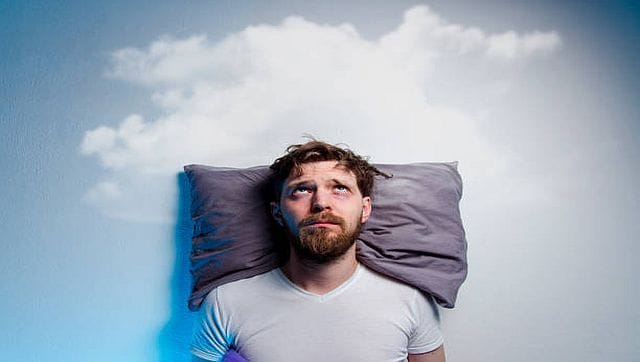
Sleep problems sometimes persist even after recovery from the infection. Pixabay[/caption]Loss of deep sleep is particularly concerning, as this type of sleep reduces how tired we feel and strengthens concentration and memory. Lack of deep sleep may be partly responsible for the commonly reported “brain fog” during and after COVID.The fact COVID often interferes with sleep is also worrying because sleep helps our immune system to fight infections.Why does COVID affect our sleep?There are many reasons why a COVID infection might lead to poor sleep. One review identified physiological, psychological and environmental factors.COVID can have a direct impact on the brain, including the areas that control both wake and sleep states. We don’t yet have a clear understanding of how this works, but possible mechanisms could include the virus infecting the central nervous system or affecting the brain’s blood supply.Typical symptoms of COVID include fever, coughing and breathing difficulties. These are also well known to disturb sleep.Poor mental health can lead to sleep problems and vice versa. There’s a strong link between catching COVID and mental health issues, particularly depression and anxiety.This can be caused by worries about recovery, loneliness or social isolation. Such anxieties may make sleeping harder.Meanwhile, hospitalised COVID patients can face additional difficulties trying to sleep in busy hospital environments where sleep is often disturbed by noise, treatment and other patients.What about dreams?The International COVID-19 Sleep Study, a global research project involving sleep scientists from 14 countries, recently released its findings into dreaming.The study surveyed infected and uninfected participants about their dreams. Both groups had more dreams after the start of the pandemic than before.Intriguingly, the infected participants had more nightmares than the uninfected participants, while there was no difference between the groups before the pandemic.There’s no simple explanation for why catching COVID may increase nightmares, but mental health may again play a role. Poor mental health is often accompanied by nightmares.The International COVID-19 Sleep Study team found the infected group showed more symptoms of conditions such as anxiety and depression.Getting helpThe close links between sleep and both mental and physical health mean that prevention and treatment of disturbed sleep have never been more important, and will require creative solutions from governments and healthcare providers.If you’ve had trouble sleeping during or after COVID, or are having more bad dreams than you used to, you’re not alone.Both short- and long-term insomnia can often be treated with cognitive behavioural therapy (CBT) that you may be able to access through your doctor.For less severe sleep problems, the European Academy for Cognitive-Behavioral Treatment of Insomnia has compiled recommendations, some based on principles applied in CBT, that you can follow at home. These include:![The Conversation]()
 Sleep problems sometimes persist even after recovery from the infection. Pixabay[/caption]Loss of deep sleep is particularly concerning, as this type of sleep reduces how tired we feel and strengthens concentration and memory. Lack of deep sleep may be partly responsible for the commonly reported “brain fog” during and after COVID.The fact COVID often interferes with sleep is also worrying because sleep helps our immune system to fight infections.Why does COVID affect our sleep?There are many reasons why a COVID infection might lead to poor sleep. One review identified physiological, psychological and environmental factors.COVID can have a direct impact on the brain, including the areas that control both wake and sleep states. We don’t yet have a clear understanding of how this works, but possible mechanisms could include the virus infecting the central nervous system or affecting the brain’s blood supply.Typical symptoms of COVID include fever, coughing and breathing difficulties. These are also well known to disturb sleep.Poor mental health can lead to sleep problems and vice versa. There’s a strong link between catching COVID and mental health issues, particularly depression and anxiety.This can be caused by worries about recovery, loneliness or social isolation. Such anxieties may make sleeping harder.Meanwhile, hospitalised COVID patients can face additional difficulties trying to sleep in busy hospital environments where sleep is often disturbed by noise, treatment and other patients.What about dreams?The International COVID-19 Sleep Study, a global research project involving sleep scientists from 14 countries, recently released its findings into dreaming.The study surveyed infected and uninfected participants about their dreams. Both groups had more dreams after the start of the pandemic than before.Intriguingly, the infected participants had more nightmares than the uninfected participants, while there was no difference between the groups before the pandemic.There’s no simple explanation for why catching COVID may increase nightmares, but mental health may again play a role. Poor mental health is often accompanied by nightmares.The International COVID-19 Sleep Study team found the infected group showed more symptoms of conditions such as anxiety and depression.Getting helpThe close links between sleep and both mental and physical health mean that prevention and treatment of disturbed sleep have never been more important, and will require creative solutions from governments and healthcare providers.If you’ve had trouble sleeping during or after COVID, or are having more bad dreams than you used to, you’re not alone.Both short- and long-term insomnia can often be treated with cognitive behavioural therapy (CBT) that you may be able to access through your doctor.For less severe sleep problems, the European Academy for Cognitive-Behavioral Treatment of Insomnia has compiled recommendations, some based on principles applied in CBT, that you can follow at home. These include:
- keeping a regular sleep-wake schedule
- restricting thinking about things that make you feel stressed to specific times of day
- using your bed only for sleep and sex
- going to bed and getting up when you naturally feel inclined to do so
- sharing feelings of stress and anxiety with family and friends
- reducing sleep disruption due to light exposure by making sure your bedroom is as dark as possible
- exercising regularly in daylight
- avoiding eating close to bedtime.
First Published:Jan 05, 2023, 14:31:38 IST
Advertisement
Advertisement

Military drones & police check-ups: How Sri Lanka is fighting against worst dengue outbreak in a decade
Sri Lanka is fighting its most severe dengue outbreak in nearly a decade, with infections rising sharply across the nation. Military drones have been deployed to tackle the outbreak, which has claimed 56 lives. Health officials said the outbreak is being driven primarily by the DENV-2 variant of the virus
3 min read
How Facebook job ad lured 2 Karnataka men into Myanmar cyber scam camp
The Karnataka Cyber Command has rescued two youths from a scam compound in Myanmar operated by Chinese fraudsters. The duo from Karnataka were lured on the pretext of data-entry jobs. They were asked to work for 16 hours a day and were expected to sleep for six hours daily
4 min read
Why is India seeing 95% cloud cover despite a Super El Niño?
India is witnessing nearly 95 per cent cloud cover despite a Super El Niño, a climate event usually linked to weaker monsoons. Regional weather systems, cyclonic circulations, the monsoon trough and moisture from two seas are temporarily overpowering one of the world's strongest climate phenomena
5 min read
What is CJP’s fourth demand to the government as protests in Delhi intensify?
The protest by the Cockroach Janta Party at Delhi’s Jantar Mantar refuses to die down. The group have made a fourth demand to the Centre, asking that no FIRs are filed against the agitators and that no legal action be taken. The government has expressed willingness to speak to the protesters, but refused to accede on the resignation of Education Minister Dharmandra Pradhan
5 min read
The new geography of war: Why the Houthis can no longer be ignored
The rise of the Houthis marks the emergence of a new geography of war — one in which influence flows not only from capitals and conventional armies, but also from rugged mountains overlooking vital sea lanes
6 min read
Advertisement
Advertisement