


Why Switzerland paying poor nations to cut emissions is ‘dangerous’
Switzerland is not doing enough within its borders to reach its climate goal. Instead, it is paying poorer nations like Ghana or Dominica to reduce emissions and taking credit for it

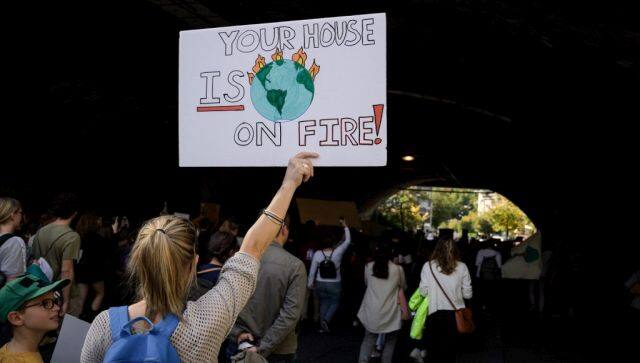
Students, activists and demonstrators hold placards during a worldwide climate strike against governmental inaction towards climate breakdown and environmental pollution in Lausanne, western Switzerland. AFP[/caption]Other rich nations to follow SwitzerlandSwitzerland has so far signed pacts with eight nations — Peru, Ghana, Senegal, Georgia, Vanuatu, Dominica, Thailand and Ukraine — and is in talks with at least three more nations. Japan and Sweden have said they intend to pursue similar arrangements.There is concern that deals such as these could end up funding projects that might have already been in the works, said Thomas Day, an expert in carbon markets at the NewClimate Institute, an organization in Cologne, Germany, that advocates bolder climate policies.For example, the Swiss initially aimed to invest in making public buildings in Georgia more energy efficient. But Georgia was already planning those upgrades. That meant Switzerland would have gotten credit for emissions cuts that would have happened anyway, he said. Then, Georgia would have to take on more difficult or expensive projects to further meet its own targets, while, in effect, giving the Swiss credit for the easier work.Rich nations such as Switzerland have an obligation to help developing nations without claiming something in return, said Jade Begay, climate justice director at NDN Collective, an Indigenous-led social and environmental organization based in Rapid City, South Dakota.A 'dangerous' dealThe rule that allows such deals is “dangerous,” Begay said, because it allows wealthier countries “to continue polluting, and to continue with business as usual, which is the root of the problem.”Mischa Classen, director at the KliK Foundation, a nonprofit in Switzerland that is working with the government to implement the agreements, said Switzerland was now planning to fund more ambitious policies in Georgia, such as investing in energy efficiency for private homes.And Georgia can authorise or reject projects covered under the agreement, Elgart said. Its partner countries are “in the driving seat,” she said. Switzerland will also ensure that the projects would not have happened otherwise, she added. The Ministry of Environmental Protection and Agriculture of Georgia did not respond to a request for comment.The debate comes as rich nations of the world face criticism for failing to compensate poorer nations as promised so they can better adapt to warming temperatures.According to an analysis by the Overseas Development Institute, Switzerland’s contributions to global climate funding fall almost 40 per cent short of what would be their share of an internationally agreed target of $100 billion a year. It is also falling behind on its goals for emissions reductions under the Paris Agreement.Hiroko Tabuchi, c.2022 The New York Times CompanyRead all the Latest News, Trending News, Cricket News, Bollywood News,India News and Entertainment News here. Follow us on Facebook, Twitter and Instagram.

Military drones & police check-ups: How Sri Lanka is fighting against worst dengue outbreak in a decade
How Facebook job ad lured 2 Karnataka men into Myanmar cyber scam camp
Why is India seeing 95% cloud cover despite a Super El Niño?
What is CJP’s fourth demand to the government as protests in Delhi intensify?
The new geography of war: Why the Houthis can no longer be ignored